
Marketers always struggle to send personalized messages to many people. AI email personalization uses artificial intelligence to make messages unique. It looks at what each person likes and does in real time.
This changes how companies talk to their customers. Traditional email marketing uses simple groups and rules. But AI does much more.
AI looks at lots of data from different places. This includes what people do online, their social media, LinkedIn, and past emails. Email marketing data collection never stops. It helps predict the best times to send emails and what to say.
With so many emails coming, it’s hard to stand out. AI helps by making messages that really speak to each person. This means more people open and act on emails.
Marketers see better results and save a lot of time. Many types of data work together to make emails that really connect with people.
Key Takeaways
- AI email personalization uses machine learning to automatically customize messages based on individual recipient behavior and preferences
- The technology analyzes real-time information from websites, social media platforms, and customer interactions to create targeted content
- AI-powered solutions process historical campaign performance and external sources to predict optimal messaging strategies
- Global email volume is expected to reach 408.2 billion by 2027, making intelligent personalization essential for inbox visibility
- Automated data analysis saves marketing teams significant time while delivering higher engagement rates and conversion improvements
- AI personalization goes beyond basic segmentation by providing predictive analytics and real-time content adaptation at scale
Understanding AI Email Personalization
Email personalization with AI is changing how marketers reach their audience. Instead of sending the same message to many, businesses now send customized content that reflects individual preferences and behaviors. This makes email marketing more effective and focused on the customer than ever.
What AI Email Personalization Really Means
AI email personalization uses machine learning to customize emails for each person. These intelligent systems analyze lots of data to find the best message, subject line, and offer for each. It’s more than just adding a first name to an email.
Two types of AI work together for this personalization. Predictive AI looks at past data to guess future behaviors and preferences. It finds patterns in how customers have interacted with emails before.
Generative AI uses these insights to create new, relevant content for each user. It can make personalized subject lines, body copy, and calls-to-action quickly and at a large scale. Together, these AI algorithms turn static email campaigns into dynamic, personalized conversations.
The automation also includes send-time optimization and audience segmentation. Customer behavior analytics help find the best time to send emails. The system learns when people usually open emails and sends them then.
Why Personalization Matters in Modern Marketing
Personalization has become a must-have in email marketing. Consumers expect brands to understand their preferences and send relevant content. Generic emails no longer grab attention in crowded inboxes.
Research shows that 73% of consumers are willing to share their data for a more personalized experience. This number goes up to 81% among Gen Z, showing younger audiences really value personalized communications.
Email is the top choice for interacting with brands, even with social media and messaging apps growing. Outbound emails have gone up 15% in recent years, showing email’s continued popularity. This makes email a great channel for personalized marketing messages.
Personalized emails lead to better business results, making the investment in AI worth it. Companies that customize their emails see higher open rates, better click-through rates, and more conversions. This is because they send messages that truly matter to recipients.
The advantages of AI-powered personalization are many:
- Enhanced customer experience: Recipients get content that matches their interests and needs
- Improved engagement metrics: Personalized emails get more opens and clicks
- Increased revenue: Relevant offers lead to higher conversion rates
- Stronger customer relationships: Personalization shows brands value individual preferences
- Operational efficiency: Automation cuts down manual work while boosting results
AI personalization algorithms make customization possible for businesses of all sizes. What used to take a lot of manual effort can now be done automatically for thousands or millions of subscribers. Marketers can now send personalized messages that build strong customer connections.
This technology helps brands show they understand and value their customers. This understanding leads to stronger relationships, more loyalty, and better business results. In today’s competitive market, personalization powered by customer behavior analytics is key to successful email marketing.
Types of Data Utilized for Personalization
Personalized email marketing starts with how companies collect and use customer info. Different sources offer varying levels of accuracy and compliance. Knowing these differences helps marketers create strategies that respect privacy and deliver results.
AI tools are great at handling lots of data from many places at once. They look for patterns to build detailed customer profiles. The quality and type of data greatly affect how well personalization works.
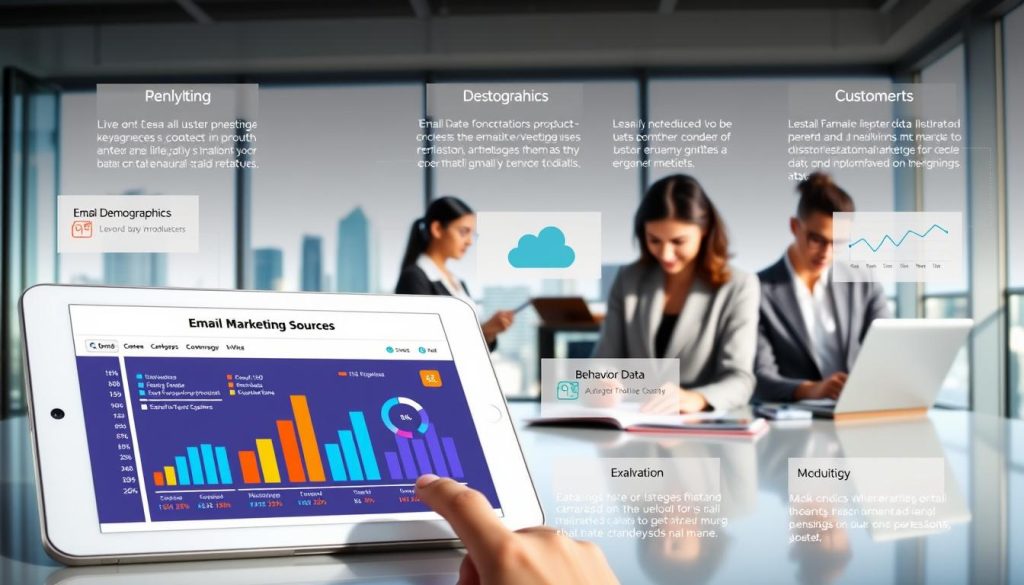
Direct Customer Information
First-party data is collected directly from customers through owned channels. It’s the most valuable for email marketing data collection because it’s from the source. Marketers get real insights into what customers like and do.
Companies get this info through many ways. Website visits show what customers like to see. Buying habits reveal what they’re interested in.
Emails show which messages hit the mark. CRM systems keep a detailed history of interactions. AI can then find patterns in this data.
Today, businesses collect first-party data in many ways:
- Website analytics track user actions and time on site
- Customer service logs questions and concerns
- Mobile app use shows preferences and session length
- Surveys give direct feedback and satisfaction scores
- Account sign-ups capture demographic info
This data is very accurate because customers share it willingly. AI tools can sort through huge amounts of data from various sources. The direct connection between brand and customer keeps the info up-to-date and relevant.
Collecting first-party data needs clear consent from the start. Being open about how data is used builds trust. Modern marketers focus more on first-party data, keeping it in line with user consent.
Partnership-Based Information Sharing
Second-party data comes from trusted partnerships where companies share their first-party info. This lets organizations learn more about their customers. The data stays high quality because it’s from another company’s direct interactions.
These partnerships often come from co-marketing or industry collaborations. Working together, both sides can improve their personalization. For example, a travel company might share customer preferences with a hotel chain.
Sharing this info helps both companies send more targeted emails. This approach respects data privacy in email marketing because customers interact with both brands. Clear agreements outline how the data can be used.
Aggregated External Sources
Third-party data comes from outside providers who gather info from many places. These vendors sell this data to marketers. This type of data offers wide reach but is less precise than direct customer info.
Many marketers used to rely on third-party data. It gave insights into demographics and behaviors. But, today’s privacy rules and consumer expectations have changed this.
Using third-party data is becoming less common. Privacy laws limit data collection and sharing. Browser updates and cookie restrictions also reduce data access.
Customers now want more control and transparency. This shift encourages marketers to focus on direct customer relationships over bought data.
Data must be collected with consent, transparency, and strong security to follow data protection laws. Regardless of the source, ethical practices protect both customers and businesses. Strong security stops unauthorized access and breaches.
The move to first-party data marks a big change in email marketing data collection strategies. Companies that connect directly with customers have an edge. AI-powered personalization works better with accurate, consented data that respects privacy and builds trust.
Consumer Behavior Data
Effective AI email personalization starts with real customer actions, not just guesses. Customer behavior analytics shows how people interact with your brand. It builds a detailed picture of their interests and plans.
AI uses this data to spot trends that humans might miss. This helps send messages that really speak to each person. It’s all about understanding their journey.
Tracking Past Transactions
Purchase history is key to knowing what customers like. AI looks at every buy to find patterns in what they choose and how often. It sees who likes high-end items and who looks for deals.
For example, someone who buys outdoor gear a lot might get a tip on new hiking boots. Or, they might see camping gear that fits what they’ve bought before. These tips feel right because they match what they’ve bought before.
AI also knows how often customers buy things. This lets businesses send reminders or special deals at the perfect time. For instance, someone who buys coffee beans every six weeks might get a reminder email in week five.
But it’s not just about what they buy. AI looks at discounts, payment methods, and cart values too. This helps sort customers into groups. High-value customers might get early looks at new products, while those who like deals get sale alerts.
Understanding Website Navigation Patterns
Even if customers don’t buy, their browsing habits are telling. AI tracks which pages they visit and how long they stay. This shows what they might want to buy next.
If someone looks at a lot of pages about digital cameras but doesn’t buy, AI knows they’re interested. It might send an email with camera comparisons or special deals. It also notices if they look at camera accessories, showing they’re serious about photography.
AI also looks at content downloads, video views, and blog article reads. If someone downloads a guide on plant-based cooking, AI knows they’re interested in that. AI uses this to send emails with recipes, product tips, and nutrition advice.
Abandoned cart data is very useful for email conversion data strategies. AI sends reminder emails with product details and sometimes special offers. These emails often lead to more sales than generic ones.
Measuring Communication Effectiveness
Engagement metrics show how well customers respond to emails. AI looks at open rates, click-through rates, and how long they spend reading. This helps make future emails better for each person.
If someone always opens emails in the evening, AI knows when to send theirs. If they click on product links but not on educational content, AI knows to send more promotional emails. AI adjusts what it sends and when based on these preferences.
AI also watches for signs that emails aren’t working, like unsubscribes or low engagement. If someone stops opening emails, AI might send fewer or try different content. This keeps emails interesting and helps avoid being marked as spam.
Forward and share rates show which emails really hit the mark. AI finds these successful emails and sends similar ones to others who might like them. This way, more people see the messages that really connect.
| Behavioral Data Type | Key Metrics Analyzed | Personalization Applications | Business Impact |
|---|---|---|---|
| Purchase History | Product categories, frequency, average order value, seasonal patterns | Product recommendations, replenishment reminders, VIP programs | Increased repeat purchases, higher customer lifetime value |
| Browsing Behavior | Page views, time on site, search queries, abandoned carts | Triggered product emails, intent-based offers, cart recovery | Improved conversion rates, reduced cart abandonment |
| Engagement Metrics | Open rates, click rates, read time, preferred content types | Optimized send times, content personalization, frequency adjustment | Better deliverability, higher engagement, reduced unsubscribes |
These data streams give a full picture of each customer’s relationship with your brand. AI uses this to send messages that really speak to each person. This approach makes emails feel personal, boosting email conversion data and overall marketing success.
Demographic Data
Understanding who your customers are is key to good email marketing. Demographic data gives AI the basics about your audience. This lets businesses send personalized content to many people at once.
Companies use this data to make detailed customer profiles. These profiles help AI know who gets each email. This leads to more relevant messages that speak to specific groups.
When AI considers demographics, it gets better at guessing what content will work. It sends messages to the right people with the right offers. This makes sure everyone gets something they’ll find interesting.
Understanding Age and Gender Dynamics
People of different ages like different ways of getting emails. Gen Z is very open to sharing data for better personalization. They like designs that are easy to use on phones and simple language.
Older people like detailed emails with lots of information. They want clear product descriptions and easy-to-follow calls-to-action. AI changes the tone and style of emails based on age.
Gender data helps suggest products, but AI must avoid making assumptions. It’s important to focus on what each person likes instead of making guesses based on gender. This keeps communication respectful and effective.
- Customize content format based on age-related technology adoption patterns
- Adjust communication tone to match generational expectations
- Respect individual identity beyond traditional demographic categories
- Use gender data to enhance relevance without reinforcing stereotypes
Leveraging Geographic Location Intelligence
Location data lets AI make emails more personal. It can change content based on where you are. This includes local weather, events, and cultural references.
For businesses in new markets, location data is very useful. They can tailor messages to fit local trends and holidays. They can also highlight nearby stores and use language that locals prefer.
Time zone data is another big plus. AI sends emails when they’re most likely to be opened. This means messages get seen when people are most likely to engage with them.
| Location Factor | Personalization Application | Business Impact |
|---|---|---|
| Regional Weather | Seasonal product recommendations and weather-specific offers | Increased relevance and conversion rates |
| Local Events | Event-based promotions and community engagement | Enhanced brand connection and loyalty |
| Time Zones | Optimized send times for maximum open rates | Improved email performance metrics |
| Store Proximity | Location-specific inventory and in-store promotions | Higher foot traffic and sales |
Targeting Based on Income Levels
Economic data helps AI match products with what customers can afford. This means recommendations are at the right price for each person. Customers get offers that fit their budget.
Segmenting by income prevents sending offers that are too expensive or too cheap. AI uses this data to create promotions that fit budgets. This approach respects customers’ financial situations while aiming for sales.
It’s important to personalize for all income levels. AI should show diverse preferences without making assumptions. This makes email marketing that respects choices and is effective.
Psychographic Data
Psychographic data shows why customers make certain choices. It looks at their interests, values, and lifestyle. This is different from just knowing who they are, like their age or where they live.
AI uses many signals to create detailed profiles. These signals include social media, what content they like, and what they say in surveys. By combining these through customer behavior analytics, AI gets a clear picture of what drives each customer. This leads to emails that feel personal, not just random.
Today’s marketing uses psychographic data to make emails feel like real conversations. It’s more than just demographics. It connects with customers based on shared values and interests.
Understanding Customer Passions and Personal Pursuits
AI finds out what customers are interested in by looking at how they interact with content. For example, someone who loves outdoor adventures will get emails about gear and trips. This makes the shopping experience feel tailored, not automated.
AI looks at what customers browse and reads. If they’re into running or learning a new language, AI sends emails with tips and products. This keeps customers engaged by acknowledging their goals and progress.
Entertainment preferences also shape email content. If someone buys mystery novels, they’ll get emails about new thrillers. Music streaming services suggest concerts and merchandise based on what they listen to. This approach works better than generic emails.
| Data Signal Type | Collection Method | Personalization Application | Impact on Engagement |
|---|---|---|---|
| Content Consumption | Website browsing tracking and time-on-page metrics | Topic-relevant product recommendations and editorial content | 42% higher click-through rates |
| Social Media Activity | API integrations and social listening tools | Lifestyle-aligned messaging and influencer partnerships | 35% increase in brand affinity |
| Product Review Engagement | Comment analysis and rating patterns | Feature highlighting and comparison content | 28% boost in conversion rates |
| Survey Responses | Direct preference questions and feedback forms | Explicit interest matching and category prioritization | 51% improved satisfaction scores |
Connecting Through Shared Principles and Daily Habits
Values-driven personalization is the deepest level of targeting. AI finds out what customers value, like eco-friendly products. This shows their environmental consciousness. Predictive email targeting then highlights eco-friendly options in all communications.
Health and wellness are also important. Customers who choose organic or natural products get emails about health benefits. This shows the brand supports their lifestyle.
Social responsibility is also key. Customers who choose fair trade or support charities get emails about company values. These emails create a connection that goes beyond just buying products.
Ecommerce platforms use these insights well. If someone buys eco-friendly items, AI suggests more sustainable products. This builds loyalty by showing shared values.
Lifestyle segmentation looks at broader patterns. Active customers get emails about fitness gear. Home improvement enthusiasts get DIY tips. Predictive email targeting uses these to suggest products at the right time.
Combining interests and values creates powerful personalization. Someone who loves outdoor activities and cares about the environment gets emails about sustainable gear. This approach makes marketing feel like helpful advice, not just ads.
Contextual Data
Email marketing gets smarter with AI’s help. It looks at when and how customers interact with emails. This way, marketers know not just who their customers are, but when they’re most receptive and what devices they use.
AI uses this context to send emails at the best time. It considers when and how customers interact. This helps create personalized messages that really connect.

Optimal Timing Through Temporal Analysis
AI looks at past email interactions to find the best send times. It knows that different people check emails at different times. Some like morning emails, others prefer evening.
AI makes sure emails are sent when they’re most likely to be read. This means emails arrive at the right time for each person. It’s not just about sending emails at any time.
By sending emails when they’re most likely to be read, engagement goes up. This approach builds stronger relationships with customers. It’s all about sending the right message at the right time.
The right message at the wrong time is the wrong message.
Seasonal patterns also play a big role. Retailers use this data for holiday promotions. AI knows when to send these emails for the best impact.
AI even looks at personal cycles. It knows when customers might need certain products. For example, gardening supplies in spring. This makes emails feel more personal and less intrusive.
Device and Platform Optimization
AI tracks which devices customers use to read emails. This is important because emails look different on each device. A great email on desktop might not work on mobile.
AI makes sure emails look good on all devices. It adjusts the layout and design for each platform. This ensures emails are easy to read and use.
Mobile usage is a big deal. AI makes sure emails work well on smartphones. It uses shorter subject lines and easy-to-tap buttons.
- Shorter subject lines that display fully on mobile screens without truncation
- Mobile-optimized calls-to-action with thumb-friendly buttons large enough to tap easily
- Streamlined content structure designed for quick scanning on smaller screens
- Faster-loading images that don’t consume excessive mobile data
Different email clients handle emails differently. AI takes this into account. This ensures emails look good no matter where they’re opened.
| Context Factor | Data Points Collected | AI Optimization Actions | Expected Outcomes |
|---|---|---|---|
| Send Time | Open rates by hour, day of week patterns, time zone data | Individualized scheduling, timezone adjustment, frequency capping | 35-50% higher open rates, reduced unsubscribes |
| Seasonality | Purchase cycles, holiday engagement, annual patterns | Seasonal content triggers, anniversary campaigns, weather-based targeting | Increased relevance, 25% higher conversion rates |
| Device Type | Mobile vs desktop usage, screen size, operating system | Responsive templates, mobile-first design, device-specific CTAs | Better readability, 40% higher mobile click-through rates |
| Email Client | Gmail, Outlook, Apple Mail rendering capabilities | Fallback content, compatibility testing, progressive enhancement | Consistent experience, reduced display errors |
AI uses timing and device data for better targeting. A retailer might send mobile-optimized flash sale emails during lunch. Desktop users get more detailed info.
AI also makes adjustments in real-time. If a subscriber uses mobile most of the time but sometimes desktop, AI adjusts the email. This adaptive responsiveness ensures the best experience.
Privacy is key when collecting data. Email marketers must get clear consent and be open about how data is used. This builds trust and keeps subscribers engaged.
Interaction Data
Every click, open, and response helps AI systems learn what recipients like. This data shows how people interact with emails, giving direct feedback for better messaging. Unlike guesses based on demographics, interaction data shows real behavior.
User engagement metrics like open rates and click-through rates show how well emails perform. AI looks at these metrics to find patterns that marketers can’t see on their own. This helps improve email campaigns over time.
How AI Analyzes Open Rate Patterns
Open rates show if emails grab attention. AI looks at many things that affect these rates, like subject lines and timing. It uses data from many campaigns to find what really works.
AI tests different subject lines to see what works best. For example, it might find that one group likes “Discover Our Summer Collection Essentials” while another prefers “Check Out Our Latest Products.”
Individual recipient patterns give even more insight. AI notices when certain customers usually open emails. This helps send emails at the best time for each person.
AI doesn’t just measure what happened—it predicts what will happen next based on millions of data points that reveal true subscriber preferences.
Sender reputation also matters for getting emails to the right inbox. AI keeps an eye on this to make sure emails land in primary inboxes. It adjusts sending patterns based on email conversion data to keep campaigns performing well.
Understanding Click-Through Performance
Click-through rates show what happens after emails are opened. They show if content and calls-to-action are working. AI looks at which parts of emails get people to take action.
AI uses dynamic content to tailor emails to what each person likes. It looks at click patterns to find out what interests different groups. This makes targeting more accurate with each campaign.
Product recommendations based on what people click on are very effective. If AI sees someone likes athletic wear but not formal clothes, it suggests more of the first. This saves time and boosts conversion rates.
Testing different parts of emails helps improve click-through rates. AI tries out:
- Call-to-action button placement and design variations
- Image selection and positioning within email layouts
- Offer presentation and promotional messaging approaches
- Content length and information density preferences
- Link quantity and strategic positioning throughout messages
AI finds the best combinations for different groups. It creates personalized experiences based on what each person has shown they like. This level of customization is hard to do by hand.
AI keeps learning from user engagement metrics to make messaging better with each campaign. It doesn’t just look at past success—it predicts future success. This makes email marketing more proactive and effective.
Machine Learning Algorithms in Personalization
Artificial intelligence turns customer data into personalized emails using machine learning. These systems use lots of data from past campaigns and customer interactions. They get smarter with each email, making every campaign better.
Today’s machine learning for email optimization uses both current and past data. This lets marketers act on what’s happening now while using past trends. This makes personalization more accurate with each email.
Types of Machine Learning Approaches
There are many AI personalization algorithms for email campaigns. Each type has its own role in making emails personal. Knowing these helps marketers see the tech behind their emails.
Supervised learning algorithms learn from labeled data to predict outcomes. They can guess who will buy something or who might leave. They also guess how much someone might spend.
Unsupervised learning algorithms find patterns without labels. They group customers in ways that might not be obvious. They also find which products go together well.
Reinforcement learning learns by trying different things. It finds the best ways to personalize emails over time. It rewards what works and changes what doesn’t.

Deep learning neural networks handle complex data that simpler systems can’t. They look at email text, images, and more to understand what’s important. They make sure every part of an email is just right.
Natural language processing makes emails sound like they were written by a person. It knows what customers want and makes subject lines that grab attention. It also makes sure emails sound like they’re from the brand.
| Algorithm Type | Primary Function | Email Application | Key Benefit |
|---|---|---|---|
| Supervised Learning | Outcome prediction | Open rate forecasting | Accurate targeting |
| Unsupervised Learning | Pattern discovery | Customer segmentation | Hidden insights |
| Reinforcement Learning | Strategy optimization | Send time testing | Continuous improvement |
| Deep Learning | Complex analysis | Content generation | Sophisticated personalization |
Processing Data for Personalization
Data processing is key for machine learning in emails. It collects, cleans, and prepares data for algorithms. This makes sure personalization is based on good data.
Data collection pipelines gather info from many places in real time. This includes CRM systems, email platforms, and social media. It gives a full view of each customer’s journey.
Cleaning and preprocessing keep data quality high. They handle missing values and remove duplicates. They also make sure data is accurate before analysis.
Feature engineering makes raw data useful for algorithms. It turns timestamps into insights like day-of-week patterns. It also calculates how quickly customers respond to emails.
Composite scores simplify complex customer traits into numbers. These scores help algorithms quickly understand customer characteristics. Predictive analytics uses these scores to forecast future behavior.
The system divides customers into groups based on many factors. This includes demographics, purchase history, and preferences. It ensures each customer gets emails that match their needs.
AI models learn from every interaction, creating a cycle of improvement. As more data comes in, emails get better without needing manual changes. This makes email campaigns more effective over time.
Real-time data lets emails respond instantly. If a customer looks at products or abandons a cart, an email can follow up right away. This turns interest into action quickly.
Looking at historical data adds context that real-time data can’t. It shows trends and preferences over time. Combining both gives the most accurate personalization.
Privacy Considerations in Data Collection
Email marketing data collection needs careful attention to privacy laws and consumer rights. As AI-driven personalization gets better, businesses must balance benefits with ethical and legal duties. Mishandling data privacy can lead to big fines, legal trouble, and harm to brand reputation.
Companies that focus on privacy while personalizing experiences gain an edge. 73% of consumers share their data for personalized experiences, with Gen Z at 81%. This shows privacy and personalization can work together if businesses are trustworthy.
Navigating Legal Frameworks and Requirements
Email marketing data collection is governed by many rules that vary by location and industry. It’s key for businesses using AI to understand these laws.
The General Data Protection Regulation (GDPR) is a big deal in the European Union. It requires businesses to get clear consent, only collect necessary data, and use it for specific purposes. GDPR also says businesses must tell people about data breaches within 72 hours.
In the United States, the California Consumer Privacy Act (CCPA) and similar laws give people rights over their data. These laws let people know what data is collected, delete it, and opt out of data sales. Businesses must treat everyone equally, no matter their privacy choices.
The CAN-SPAM Act sets rules for commercial emails. It requires accurate sender info, clear messages, and working opt-out options. Businesses must act on opt-out requests within 10 business days.
Industry-specific rules add more complexity. Healthcare must follow HIPAA, education faces FERPA, and finance has its own rules.
Your AI email tools need robust security settings to follow the law:
- Encryption for data at rest and in transit
- Access controls limiting who can view customer information
- Audit trails tracking all data usage
- Automated compliance checking systems
- Regular security assessments and updates
Not following the rules can be costly. GDPR fines can be up to 4% of global revenue or €20 million, whichever is more. CCPA penalties can be $7,500 per intentional violation.
Building Trust Through Transparent Consent Practices
Getting and managing customer permission is key to ethical email marketing. Best practices include being clear, giving choices, and respecting consumer wishes.
Be clear about your data practices before collecting any info. Tell customers what data you collect, how you’ll use it, who sees it, and how long you keep it. Being open builds trust and boosts consent rates.
Use opt-in consent instead of assuming people are okay with data collection. Asking customers to actively agree to data collection leads to more engaged subscribers who want personalized content.
Give customers control over their preferences. Let them choose what emails they get, how often, and what data they share. This shows you respect their choices.
Always honor the right to be forgotten. When customers ask to delete their data, remove it completely from all systems. Keep records of these requests for compliance.
Consider a preference center for ongoing control. This self-service approach saves time, boosts satisfaction, and builds trust.
Showing value in exchange for data matters. When you offer clear benefits like exclusive offers or personalized content, customers are more likely to share their info. Be upfront about these benefits and keep your promises.
Privacy and personalization work well together when businesses are ethical. Many consumers are willing to share data if they trust the business. This creates a win-win situation for both sides.
Do regular privacy audits to stay compliant with changing laws. Check your data collection, consent, security, and data retention policies every quarter. Update your privacy policies and notify subscribers of any big changes.
Tools and Technologies for AI Email Personalization
A strong technology stack is key for AI email personalization in today’s market. The right mix of platforms and software turns customer data into personalized emails. Solutions range from email service providers to analytics platforms, each with unique features for personalization.
Choosing the right tools depends on several factors. These include your current tech, team skills, budget, and personalization goals. Many companies use a mix of technologies for a seamless ecosystem that boosts AI personalization algorithms.

Email Service Providers
Email service providers have grown to include AI. They work with your CRM systems for smooth campaign management and personalization. The right platform can greatly improve your outreach by automating customization while keeping messages authentic.
Warmer.ai stands out for its deep personalization. It uses LinkedIn and company websites to add specific details. It has four personalization goals: booking meetings, encouraging link clicks, prompting questions, or gauging interest.
It integrates well with Mailshake for consistent outreach. This lets marketers send customized messages that connect with prospects.
Smartwriter.ai creates personalized cold emails using social activity and professional info. It compliments recent social posts and professional achievements. This builds rapport by showing genuine interest in the recipient’s professional life.
It finds leads on various social platforms and schedules follow-ups automatically. This ensures no opportunity is missed.
Lavender.ai acts as a virtual assistant for email creation. It uses Natural Language Processing for real-time feedback on content. This helps writers create messages that are both professional and personalized.
Lavender works with Gmail, Outlook, and HubSpot. It analyzes work history and preferences to suggest personalization angles. This approach to machine learning for email optimization connects with recipients on a personal level.
UniqMail offers free AI for cold email campaigns. It organizes projects by persona and campaign, making management easier. This structure ensures consistency while allowing for customization.
Autobound streamlines sales workflows with tools like Salesloft and LinkedIn. Its “1-Click to Personalize” button speeds up customization. It learns your voice and buyer personas, keeping messages authentic.
Its AI sequencing enables complex campaigns. These adapt to recipient behavior, keeping messages relevant and timely.
Data Analytics Platforms
Data analytics platforms analyze customer info for personalization. They turn data into insights for email content and targeting. The best platforms combine data from various sources for a full customer view.
Customer Data Platforms gather info from CRM systems and more. They create unified profiles, eliminating data silos. This ensures consistent personalization across all channels.
These platforms update profiles in real-time. This keeps personalization current, reflecting the latest customer preferences.
Analytics platforms look at customer interactions to find patterns. They reveal what content works best for different groups and when to send it. This analysis helps refine personalization strategies based on evidence.
These tools map customer journeys, highlighting key moments for personalization. This helps identify opportunities for engagement.
Predictive analytics tools forecast future behaviors with high accuracy. They predict purchase likelihood, churn risk, and lifetime value. This helps focus personalization efforts on high-value opportunities.
They also predict content preferences based on historical data. This ensures messages resonate with individual recipients.
A/B testing platforms test multiple email variations with AI. They quickly find the best combinations of subject lines and content. This ensures messages perform well.
These platforms provide confidence scores for their recommendations. This means marketers can trust the suggested changes will improve performance.
| Tool Category | Primary Function | Key Benefit | Integration Capability |
|---|---|---|---|
| Email Service Providers | Message delivery with AI personalization | Automated customization at scale | CRM and campaign tools |
| Customer Data Platforms | Unified customer profile creation | Single source of customer truth | Multiple data sources |
| Analytics Platforms | Behavioral pattern identification | Data-driven strategy insights | All customer touchpoints |
| Predictive Analytics Tools | Future behavior forecasting | Proactive targeting optimization | Historical data systems |
Choosing the right tools requires careful thought. Consider your business needs, technical skills, and budget. The long-term benefits of personalization often justify the cost of quality platforms.
Team skills are also important. Advanced platforms need skilled teams for the best results. But, simpler solutions can work well for teams with limited technical expertise.
Most successful businesses use a mix of tools for a complete personalization system. This includes email providers, customer data platforms, analytics, and predictive tools. Together, they create a powerful ecosystem that boosts AI personalization algorithms beyond what single tools can do.
Case Studies of Successful AI Email Personalization
AI email personalization has shown real results in many fields. It helps businesses grow by using email data. This shows how AI can make a big difference.
Industry Examples
Ecommerce sites use AI to understand what customers like. They send personalized product suggestions. If a customer leaves items in their cart, AI sends emails with special deals.
SaaS companies tailor their welcome emails to users. They share tips on features and success stories of other users.
B2B sales teams make cold emails warmer. They use LinkedIn and company news to personalize emails. Warmer.ai showed this by reaching out to Gary Vaynerchuk in a personalized way.
Key Outcomes and Benefits
One marketer saw a 10x improvement in A/B testing with AI. It’s not just about subject lines anymore. It’s about understanding user behavior and design too.
Marketers see AI as their “email marketing co-pilot.” It helps with creativity and innovation. AI automates tasks and lets marketers focus on creating content.
Benefits include higher open and reply rates, leading to more sales. It saves time and makes work more efficient. Even small businesses can personalize their emails. They can keep improving their campaigns based on data.