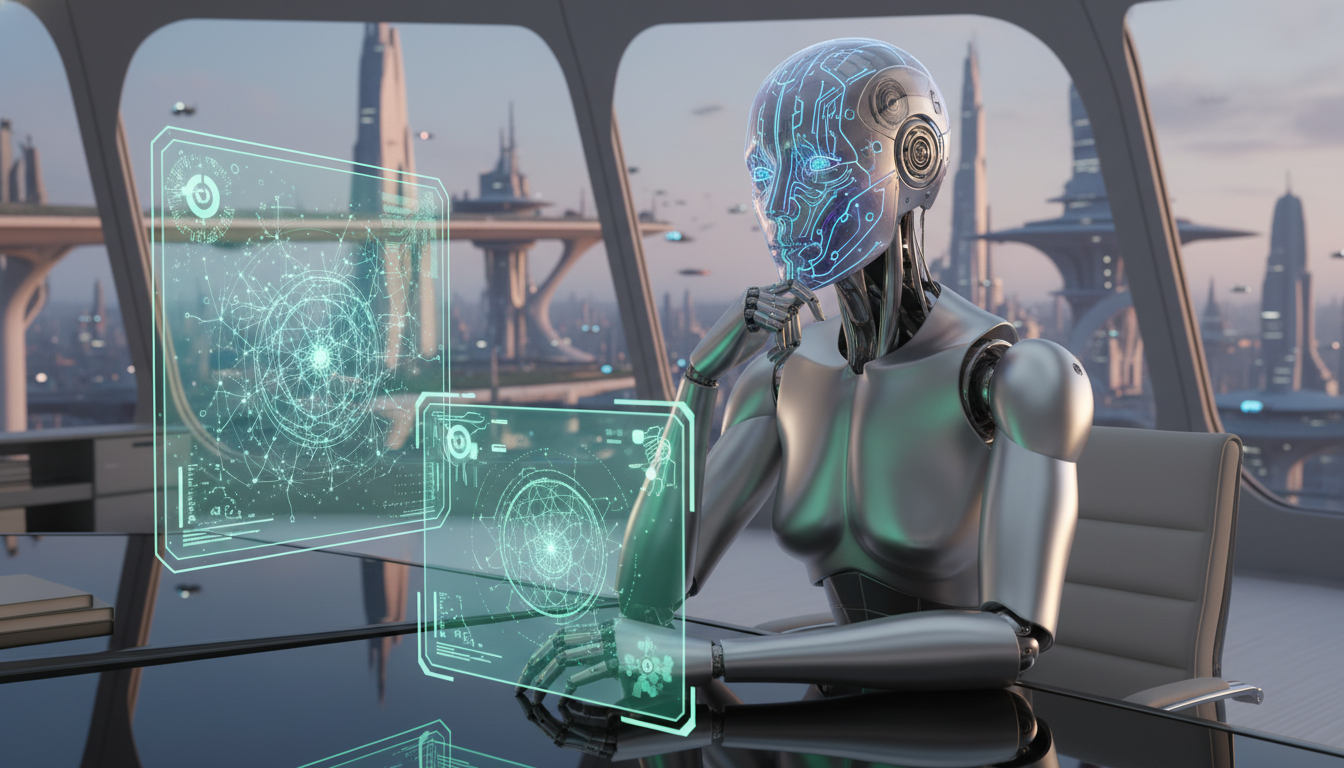
In 2024, Stanford’s AI Index Report revealed something stunning. Industries launched 51 notable AI models in just one year. Universities weren’t far behind with 15. This fast pace turns the question “Can AI think like humans?” from fiction to everyday concern.
Think about using Google Search, or when Netflix suggests a show. Or when Siri answers your questions. It might seem like AI is thinking like a human. But actually, AI doesn’t really “think” as we do. Instead, it predicts what’s next by looking at patterns in data.
This article tackles a big question simply: Is today’s AI truly thinking, or just a convincing act? We’ll talk about how AI compares to the human mind. We’re covering cognitive computing, neural networks, and machine learning. Plus, we’ll discuss Alan Turing’s imitation game, also known as the Turing Test.
For folks in the U.S., this is more than academic. AI changes how we learn, work, and get healthcare. It influences what we buy, watch, and believe online.
We’re going to explore what “thinking” really means. Then we’ll see how AI stacks up against human memory, emotions, and decision-making. We’ll also discuss big issues like ethics and responsibility. Lastly, we’ll imagine what a good partnership between humans and AI can look like.
Key Takeaways
-
Can AI think like humans? It depends on your definition of “think,” not just on how smart it sounds.
-
Many AI systems are great at making predictions. This ability makes everyday apps seem like they think like us.
-
Cognitive computing tries to mimic human thought. Yet, it still heavily depends on data and how it’s trained.
-
The Turing Test, created by Alan Turing, is still a major way to assess AI behavior today.
-
AI’s growth has moved it from experimental stages to widespread use across the U.S.
-
KUnderstanding AI’s limitations is crucial for making decisions about work, education, healthcare, and trusting digital tools.
Understanding Human Thought Processes
Let’s start by looking at how people think before comparing it to machines. Human thinking is messy and influenced by our physical and social worlds, as well as our needs. Even when trying for human-like thinking, we’re guided by our bodies, goals, and experiences.
When discussing cognitive computing or simulating human intelligence, it’s key to remember something. These technologies mimic behaviors, but real thought involves emotions, quick understanding, and instinctive morals that appear without words.
The Basics of Human Cognition
Our core mental tasks are closely linked: perception notices signals, attention picks the important ones, and language lets us define and share thoughts. Reasoning allows examining ideas, and executive control helps in planning, pausing, and changing tasks as needed.
People depend on mental models or simple ideas of the world’s workings because our attention is limited. To make quick decisions, we use heuristics or shortcuts. These are useful, but under stress or in complex situations, they can lead to mistakes.
| Cognitive building block | What it does in daily life | Typical constraint | Why it matters for comparisons with cognitive computing |
|---|---|---|---|
| Perception | Turns sights, sounds, and bodily cues into usable signals | Can be fooled by framing, lighting, and expectation | Machines may classify inputs well, but people blend senses with prior experience |
| Attention | Filters distractions to focus on one goal at a time | Limited capacity; multitasking reduces accuracy | Human-like thinking must handle focus shifts and interruptions, not just speed |
| Language | Names ideas and supports conversation, learning, and self-talk | Words can be vague; meaning depends on context | Human intelligence simulation often misses implied meaning and shared background |
| Reasoning | Connects evidence to claims and tests “what if” scenarios | Prone to bias when time is short | Systems can optimize logic, while people weigh story, trust, and purpose |
| Executive control | Plans, inhibits impulses, and updates goals midstream | Fatigue and stress reduce self-control | Comparisons need to include self-regulation, not only correct outputs |
How Emotions Influence Decision Making
Emotions aren’t a barrier to clear thinking; they’re a key part of our decision-making system. They influence what we prioritize, what feels right, and how we assess losses. This is evident in how we handle risks, our motivation, and how our judgments change with our mood.
We also pick up on others’ emotions and make adjustments to our choices. A stressful meeting, a supportive friend, or a stern voice can shift what we see as an okay choice. This social aspect makes replicating human thought with rules alone really challenging.
Memory’s Role in Thought
Working memory can hold a bit of info briefly, like a phone number or a recipe step. Long-term memory keeps our knowledge and life stories, including facts and personal experiences. But remembering isn’t just playback; it’s reconstructing. Stress, context, and expectations can all alter our memories and what feels true to us. Thus, discussions on cognitive computing or simulating human intelligence should consider this blend of memory, meaning, and personal perception.
The Rise of Artificial Intelligence
Artificial intelligence has evolved from laboratory experiments to everyday tools in a few decades. This progress looks quick but is the result of many years of hard work, innovative ideas, and breakthroughs. While today’s AI might seem human-like at first, its processes are quite different from how humans think.

A Brief History of AI Development
In the early days, AI was all about if-then statements and clear, simple rules. These methods powered the first expert systems but weren’t great with the complexities of real life. Because of this, there were periods, known as “AI winters,” when progress slowed and funding decreased.
Later, the focus shifted to machine learning and using statistics. Engineers no longer wrote out every rule. Instead, they trained models to recognize patterns in data. This change helped neural networks make a comeback, thanks to advancements in math, data, and computing power.
Milestones in AI Progression
In 1997, IBM’s Deep Blue beat Garry Kasparov in chess. This was a big deal because it showed computers could outsmart a human champion. Then, in 2011, IBM Watson’s Jeopardy! win demonstrated AI’s prowess in language and information retrieval under pressure.
With the ImageNet competition, neural networks became leaders in image recognition. AlphaGo’s 2016 victory over Lee Sedol was a game-changer. It showed how AI could combine machine learning with strategic thinking. Every breakthrough depended on specific goals and careful training.
| Timeframe | What improved | Why it mattered | Public signal |
|---|---|---|---|
| Rule-based era | Symbolic reasoning and expert systems | Worked well in controlled settings with clear rules | Industry tools for diagnostics and configuration |
| AI winters | Reduced funding and slower progress | Exposed limits in compute, data, and brittle logic | Big promises stopped matching real-world results |
| Statistical revival | Machine learning on larger datasets | Better performance on speech, search, and ranking | Stronger results in consumer products and research |
| Deep learning surge | Neural networks trained with GPUs/TPUs and cloud scale | Major gains in vision, translation, and generation | ImageNet breakthroughs and AlphaGo’s 2016 win |
Current Applications of AI Technology
In the U.S., artificial intelligence is part of everyday services. Hospitals use it for spotting patterns in medical images. Banks detect fraud with AI, and retailers adjust inventory and prices with it.
AI also powers the recommendation systems of Netflix and YouTube. Furthermore, it’s behind customer service chats, translation tools, and creative bots for text, images, and music. These technologies all learn from examples to deliver quick, large-scale results.
Even as AI gets better, it doesn’t mean it fully understands like a human does. AI succeeds in well-defined tasks with lots of data and clear feedback. The big question is how far AI can go in understanding complex, human experiences.
Defining “Thinking” in Context
People use “thinking” in many ways, so we need a clear definition. Here, thinking involves problem-solving, planning, explaining, learning, and abstracting. For some, it includes consciousness. Others disagree.
This leads to a big question: Can AI think like us? It’s better to first look at AI behavior, results, and limits. Then we can discuss its inner workings.
Differentiating Between Human and Machine Cognition
Human thinking is influenced by goals, experiences, and common sense. It’s personal, affecting our decisions, doubts, and insights. This helps us navigate complex situations.
Machine thinking learns patterns and aims for optimization. It’s great at language and searching but misses real-world nuances.
| Feature | Human cognition | Machine cognition |
|---|---|---|
| Goals | Often self-generated, tied to needs and values | Typically assigned by users, prompts, or reward functions |
| Learning source | Embodied experience, culture, and social feedback | Data sets, labels, logs, and repeated training cycles |
| Common sense | Built from everyday cause-and-effect and lived context | Uneven; strong on patterns, weaker on grounded context |
| Failure modes | Bias, fatigue, emotion-driven errors | Overconfident pattern completion, brittle edge cases |
Types of Thinking: Analytical vs. Creative
Analytical thinking is logical and step-by-step, like budgeting or code debugging. Here, AI is often effective.
Creative thinking is about blending ideas and perspectives. It requires innovation and emotional insight, which AI might find challenging.
Can Machines “Think” in a Human-Like Way?
In many tasks, machines can simulate thinking, aiding in customer support and more. They can mimic confidence and understanding.
Yet, true understanding is difficult. It involves setting goals, interaction with the world, and learning from it. This is where machines struggle to match human thinking.
Remember these terms: simulation versus understanding, agency, and general intelligence. They highlight the difference between seeming smart and being truly insightful.
AI Capabilities: Simulation vs. Real Thinking
Today, AI seems like it’s thinking, especially in chat and search. But it’s mostly guessing, not experiencing. It tries to predict the next word, label, or action from past data.
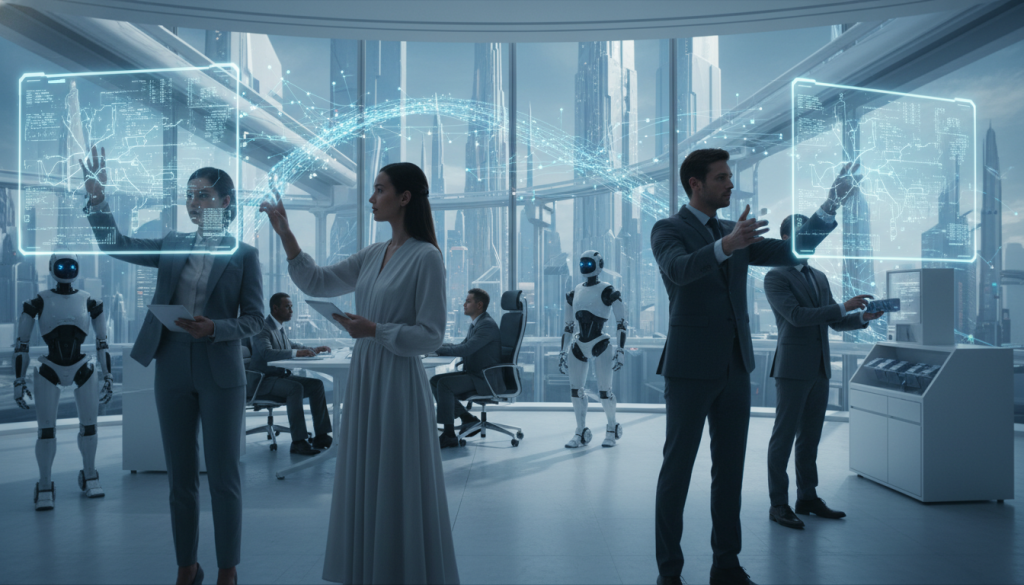
This makes AI seem smart and confident. But it’s just mimicking thought without real understanding or purpose. This becomes a problem when decisions really matter.
Mimicking Human Thought Processes
AI learns from lots of data and gets better at finding patterns. Deep learning adds layers to improve with language, images, and speech. This might seem logical, but it’s mainly quick pattern spotting.
Consider an AI that summarizes medical research quickly. It might miss important details that affect the outcome. Or it can write legal documents that sound right but misunderstand specific rules.
Limitations of AI in Understanding Context
AI can struggle with new or different situations. If a request strays from its training, its responses can be uncertain or too sure. Sometimes, it even makes up facts or dates.
AI is also bad at understanding cause and effect. It might say what usually happens, but not why. Understanding time, place, and real-life limits is tough for AI treating text as its whole world.
- Good at finding patterns and writing smoothly
- Unreliable for details tied to specific places, times, or real-life rules
- Often makes confident mistakes on unfamiliar topics
The Role of Data in AI Decision Making
The data used teaches the AI, including any mistakes. In machine learning, how we label data can introduce bias. With deep learning, more data can mask gaps in knowledge across different groups.
Bias gets worse when AI results shape future data collection. This explains why AI performs well in some places but poorly in others.
| Data factor | How it changes outputs | Real-world impact in the United States |
|---|---|---|
| Training coverage | Better results on groups and settings that appear often in the dataset | Performance can vary by region, dialect, or local workflows |
| Labeling quality | Cleaner labels reduce noise; messy labels teach the wrong cues | Higher error risk in triage, screening, and routing decisions |
| Bias and missing data | Skewed examples can shift predictions subtly | Uneven outcomes across demographics and neighborhoods |
| Ongoing feedback | Model output can shape future inputs, reinforcing patterns | Productivity gains, but higher stakes if guardrails are thin |
AI can help with quick and consistent decisions. But mistakes can spread just as fast. That’s why it’s important to have people check the work, keep records, and set rules for human intervention.
Examining Human-Like Traits in AI
Many AI tools seem to think like humans. This appearance mostly comes from quick pattern matching, not true consciousness. Understanding the strengths and limits of neural networks is crucial.
Emotional Intelligence in AI Systems
Some AI systems can identify emotions in text, voice, or video. They analyze feelings, notice changes in tone, or see facial expressions. Thanks to deep learning, these systems quickly categorize emotions in data.
However, recognizing emotions isn’t the same as feeling them. AI doesn’t experience feelings like stress or joy. It sorts data into categories, often missing the nuances of sarcasm, culture, or context.
AI’s Ability to Learn and Adapt
AI’s learning mainly occurs during its development phase. Large datasets are used to train models, which are then finalized and released. This early stage is where deep learning excels.
Some AI can adjust while being used, but only in specific ways. They can refine their operations or pull in new data from trusted sources. Even when AI improves a task, it operates within set rules and safety measures.
Understanding Natural Language
AI models can produce smooth language, making predictions on the next words. This skill creates an impression of human-like understanding, especially in conversations. AI can also follow commands and keep discussions relevant.
Yet, these models sometimes make confident mistakes. They might get dates wrong, make up facts, or ignore truths. That’s why human supervision is essential, especially in areas like hiring, finance, and healthcare.
| Trait people notice | What AI often does well | Common limits to watch | Practical guardrail |
|---|---|---|---|
| Emotion awareness | Detects sentiment and tone patterns from speech and text using neural networks | Does not feel emotion; may misread sarcasm or cultural cues | Use human review for sensitive messages and conflict cases |
| Learning and adaptation | Improves from offline training and careful deep learning updates | Run-time changes are limited; feedback loops can drift if unmanaged | Log changes, test updates, and lock critical settings |
| Language skill | Writes fluent replies, summarizes, and follows instructions in many formats | May hallucinate facts and lacks grounded world models | Require verification, citations from approved sources, and escalation paths |
Case Studies of AI in Action
Artificial intelligence shines under pressure—it’s quick, constant, and never tires. But trust is key. Teams must know where AI helps, and where humans are still needed. In many areas, AI acts as a supportive partner, not a replacement.

These cases highlight a major challenge: AI seems seamless on screen, but real-world issues like safety and accountability complicate things. They spotlight the balance between speed, cost, satisfaction, and proper control.
AI in Healthcare vs. Human Doctors
In American hospitals, AI helps manage tasks, leaving the tough decisions to doctors. It flags important cases in radiology and pathology. AI also helps predict risks quickly.
These tools are regulated by the FDA. This ensures they are safely tested and monitored. But doctors still consider each patient’s unique story, which AI can’t fully grasp.
AI also aids in paperwork. It drafts notes and summarizes records, easing doctors’ workloads. Yet, the medical staff carefully checks these summaries. They know missing subtle details could affect patient care.
AI in Customer Service: A Comparison
Chatbots answer simple questions quickly and are always ready to help. They’re perfect for common issues like billing or account resets. This way, wait times drop and service goes beyond office hours.
Humans take over when things get complex or emotional. They can read between the lines and make judgment calls. Capturing this human touch in AI is tough.
- Best practice: Make sure customers can quickly get to a human if the bot gets confused.
- Best practice: Keep bot messages short and to the point, especially for important tasks like refunds.
Creative AI: Art and Music Generation
AI tools now create art and music in moments, revolutionizing brainstorming and prototyping. Features in tools like Adobe Photoshop help with quick edits and variations.
Yet, these AI creations often remix existing styles rather than invent new ones. The real meaning behind a piece usually comes from the human guiding the AI.
| Use case | What AI does well | What humans add | Measures teams track |
|---|---|---|---|
| Radiology and pathology triage | Prioritizes studies, highlights anomalies, supports risk prediction | Context from history, ethical judgment, accountability for final calls | Time-to-read, sensitivity/false alerts, clinician trust |
| Clinical documentation | Drafts summaries, suggests structured notes, reduces repetitive typing | Corrects nuance, ensures accurate intent, protects patient privacy | Time saved, edit rate, error reports |
| Customer support chat/voice | 24/7 availability, consistent answers, fast handling of routine tasks | Empathy, exception-handling, negotiation in complex cases | First-contact resolution, escalation rate, CSAT |
| Art and music generation | Rapid variations, style exploration, quick drafts for campaigns | Original direction, taste, brand fit, responsibility for use | Cycle time, revision count, audience response |
AI excels at doing things quickly and on a large scale. But when trust and accountability are crucial, teams rely on human judgment. They guide AI, check its work, and decide its role in real time.
Philosophical Implications of AI Thinking
When people ask if AI can think like humans, they’re digging deep. They wonder about AI coping in chaotic conversations and making big choices. Quickly, this curiosity becomes very practical in the U.S., as AI starts to write, offer advice, or influence decisions.
The Turing Test: Can Machines Pass?
The Turing Test sees if a machine can chat like a human to an observer. It’s about seeming human in conversation, not the inner workings. A machine can mimic natural talk but still not have awareness, deep insight, or ethics.
This difference is crucial. AI’s skills might look like real understanding, but it’s just recognizing patterns. Smooth responses can lack substance or may not align with the user’s needs.
Ethics of AI Mimicking Human Thought
As AI becomes more human-like, ethical concerns grow. Bots that seem human can make people overshare, trust too easily, and not ask enough questions. This can lead to deceit, misplaced trust, and emotional dependency, even if it’s unintended.
Consumer tools should make it crystal clear when you’re talking to a machine, especially if it’s trying to persuade or sell to you. Everyone deserves to know they’re chatting with software, especially when its goal is to influence.
- Deception risk: Human-like signals might confuse what the system is capable of.
- Manipulation risk: Carefully chosen words can guide decisions without explicit permission.
- Over-trust risk: A confident tone might lead people to overestimate what the AI can actually do.
Future of AI Autonomy and Rights
When we talk about AI’s freedom, we often think in black and white: tool or agent. Today’s discussions usually see AI as a product people use, not something with rights. Yet, the more independent an AI system becomes, the more we wonder who’s responsible for its actions.
Distinguishing legal rights from moral rights is also useful. Companies might be legal entities, but that doesn’t answer if an AI system “deserves” anything. In the U.S., we’re focused on accountability. When AI touches on employment, finance, healthcare, or politics, we need clear rules for design, evaluation, and monitoring.
| Real-world setting | What human-like thinking can look like | Key risk to watch | Practical expectation in the U.S. |
|---|---|---|---|
| Customer service chats | Friendly tone, empathy cues, fast answers | Users assume a human is responsible in the moment | Clear disclosure that the agent is artificial intelligence |
| Health and wellness guidance | Confident suggestions that mirror clinician language | Over-trust and delayed care when advice is wrong | Safety testing, limits, and escalation paths to licensed care |
| Financial prompts | Personalized tips that feel like coaching | Subtle steering toward risky choices or conflicts of interest | Explainable factors, audit trails, and compliant recordkeeping |
| Political or civic messaging | Persuasive, tailored arguments that sound “neighborly” | Manipulation and reduced informed consent | Disclosure, provenance controls, and accountability for campaigns |
The Role of Machine Learning
When people say AI “thinks,” they’re talking about how it adapts to new situations. This skill often comes from machine learning, which identifies patterns and uses them in new ways. It’s essentially a complex math model that finds answers, adapting when inputs change.
This process might seem like making judgments: sorting images, spotting fraud, or creating text based on prompts. In many tools, this appears as a continuous cycle of guesses, feedback, and improvements. It seems natural, even though it’s based on statistics and programming.

How Machine Learning Enables AI Thinking
Machine learning is really about estimating functions. It guesses based on data, learns from mistakes, and gets better over time. This lets it adapt to new situations, like different emails or shopping patterns, without new specific instructions.
These systems often use neural networks to tackle complex data relationships. This is crucial for tasks like grouping, creating, or making decisions where fixed rules fail. The outcomes still rely heavily on the training data and thorough testing.
Deep Learning: A Step Closer to Human Thought?
Deep learning involves neural networks that determine their own significant features. With ample data, these models excel in understanding images and text. They recognize items, interpret instructions, and condense long articles impressively.
However, deep learning isn’t akin to a digital brain. It’s good at recognizing patterns and completing them but struggles with new scenarios. Teams work to combine efficiency with safety measures and set clear usage boundaries.
Supervised vs. Unsupervised Learning
Supervised learning uses data labeled as “spam” or “not spam,” aiming for high precision. But, preparing these labels is time-consuming and costly. Hidden biases in the data can also lead to misleading shortcuts.
Unsupervised and self-supervised learning figure out data structures on their own. This explains how big language models learn from vast amounts of text without specific labels. Yet, this method faces challenges like needing lots of data, interpreting models, and adjusting to changes in data.
| Approach | Typical training signal | Strengths in real products | Common risks to manage |
|---|---|---|---|
| Supervised learning | Human-labeled targets (categories, scores, outcomes) | Clear objectives, strong performance on well-defined tasks, easier QA against requirements | Label cost, bias in labels, overfitting to narrow cases, failure when data shifts |
| Unsupervised learning | Patterns discovered from inputs alone (clusters, embeddings) | Finds hidden structure, useful for search, grouping, and anomaly signals | Hard to validate, unclear meaning of clusters, unstable results across datasets |
| Self-supervised learning | Targets created from the data itself (predict next token, fill in missing parts) | Scales well with big datasets, strong language and vision representations, flexible reuse across tasks | Opaque reasoning, heavy compute needs, benchmark gains that don’t match field performance |
Neuroscience Insights on AI
Neuroscience helps us tell real from not real in artificial intelligence. It shows why AI seems smart in specific tasks but struggles with simple human-like thought.
The idea of linked units comes from the brain, but it’s not a direct copy. Even strong AI models use basic math, not the complex stuff of living brains.
Brain Function and AI Algorithms
The brain learns from lots of things at once, like feelings and the social world. AI learns differently, which is a big deal.
The brain uses little energy, like a small light. But AI needs way more power and tech to work.
| Lens | Human brain | AI algorithms |
|---|---|---|
| Learning signals | Mix of rewards, goals, emotions, and sensory feedback | Mostly loss functions and gradient updates during training |
| Energy use | Highly efficient, continuous operation | Often power-hungry during training and scaling |
| Structure | Many cell types, complex wiring, rich chemistry | Simplified units with uniform operations |
| Embodiment | Constant input from a body in a physical world | Usually trained on curated data streams and benchmarks |
Can AI Replicate Human Brain Functions?
In tasks like seeing or hearing, AI can almost match people. It does well in spotting patterns and understanding speech.
But AI struggles with easy stuff for us, like good judgment. A change in details can confuse it.
This shows thinking like a human is more than just getting answers right. AI tries to reason wider but faces big hurdles.
Neuroplasticity and Machine Adaptation
Our brains change with new experiences and learning. This ability is called neuroplasticity.
Machines can change too, but it’s not the same. They use techniques to learn without forgetting everything.
But there’s a problem called catastrophic forgetting, when learning new things wipes old ones. This issue makes creating brain-like AI hard but inspiring.
Future Prospects for AI Thinking
In the next few years, AI won’t just suddenly “wake up.” Progress will come from steady improvements in AI, and how we decide to use them. The idea of machines thinking like humans changes with our culture, goals, and surroundings.
Evolving systems and skills
Teams are working on models that deal with text, images, audio, and video together. This is key because real life involves more than just reading text. Deep learning is getting better at helping step by step, like making plans, checking work, and using reliable tools.
At the same time, we’re seeing more use of cognitive computing in tests and checks. The goal is to make systems act more predictably, with fewer surprises, and explain their decisions better. But even with advancements, getting AI to think like humans is full of challenges.
Collisions that spark new ideas
New breakthroughs might emerge from areas that haven’t mixed much before. Robotics brings in handling and sensing the world around. Neuroscience and psychology contribute understanding about focus, memory, and stress.
Studies in education and how humans interact with computers can help systems explain their actions. When AI can interact with the real world, it becomes more practical than just chat services. These changes could improve AI without solving everything about human-like thinking.
How this may look in daily U.S. life
In the U.S., AI might first improve areas where time matters and data is complex. Imagine AI tutors that adjust to how fast a student learns. Or tools that help patients prep for doctor visits and make sense of forms. At work, AI could help write reports, summarize meetings, and manage tasks.
Tools could also make things more accessible, like turning speech into text or simplifying complex information. But as these technologies develop, it’s important to keep privacy, security, and openness in mind. Trust is key as AI technologies get better.
| Near-term direction | What it could enable | Main tradeoff to watch | Practical safeguard |
|---|---|---|---|
| Multimodal models (text-image-audio-video) | Richer help for real-world tasks and clearer context for human-like thinking goals | Higher risk of sensitive data exposure through mixed inputs | On-device processing options and strict data retention limits |
| Reasoning scaffolds and self-check steps | More consistent answers for planning, math, and policy-heavy work | Extra steps can still hide wrong assumptions | Auditable logs and targeted evaluation suites |
| Tool use (calendars, databases, calculators) | Faster, more accurate outputs tied to sources and actions | Bad permissions can turn small errors into big ones | Least-privilege access and user approvals for key actions |
| Stronger safety and testing practices | Fewer harmful or misleading responses as AI capabilities grow | Safety layers may reduce flexibility in edge cases | Red-teaming, incident reporting, and clear user controls |
“The future will feel less like a robot takeover and more like a series of new habits—some helpful, some annoying, and all worth questioning.”
- Progress may be fast, but it will still be uneven across tasks and industries.
- Human-like thinking will remain a bundle of skills, not a single switch.
- Deep learning gains will matter most when paired with safe design and clear boundaries.
- Cognitive computing can support accountability when systems affect real decisions.
Public Perception of AI Thinking
People often wonder: Can AI think like us? It feels personal because AI tools can seem calm and witty. Their smooth voice might make them appear more human-like than they are.
When an AI system responds quickly with clear grammar, we tend to trust it more. We read intentions into polite phrases, a typical human behavior. At that moment, it looks like the AI understands us, like a human would.
How Society Views AI’s Cognitive Abilities
Users judge AI by how human the conversation seems. If AI remembers chat details, it appears thoughtful. This happens even though it’s just tracking text. And if it explains steps clearly, we might see it as wise, not just programmed.
This difference is important in everyday life, like in schools or customer service. A smooth answer can hide incorrect logic, missing context, or false details. Often, we realize this only after a mistake.
Media Representation of AI
Movies and TV show smart machines, from HAL 9000 to The Terminator. While exciting, these stories can confuse us about what AI really does. Most systems are specialized tools for predicting, classifying, or making text and images.
News can confuse “chatting” with “thinking.” A popular demo may seem like AI understands, when it’s just matching patterns. This hype can make us fear or trust AI too fast.
Addressing Common Misconceptions
Several wrong ideas are common: “AI is conscious,” and “AI is unbiased.” Others are “AI is always right,” and “AI will take all jobs.” Each idea misses critical limits, like missing data, fragile logic, and the need for humans to check AI’s work. Even smart AI can mess up quietly, like citing wrong information or overlooking safety.
| Common belief | What often drives it | What to check in real use |
|---|---|---|
| “AI is conscious.” | Human-like tone, empathy cues, and memory-like chat behavior. | Whether the tool shows awareness beyond text patterns, and how it handles novel situations. |
| “AI is unbiased.” | Neutral wording and polished explanations. | Data sources, demographic coverage, and whether bias testing results are shared. |
| “AI is always right.” | Confident language and fast responses. | Error modes: hallucinations, outdated facts, and failure under unusual inputs. |
| “AI will replace every job.” | Automation stories and big productivity claims. | Which tasks are automated, where humans must approve, and how workflows change. |
To be smarter about AI, start with simple questions before you trust a tool. Ask about its data, tests, and its weak points. Also, know about its privacy rules, how it keeps data, and if your inputs help train it in the future.
- Data: Where did the training data come from, and what was left out?
- Testing: Was it evaluated for accuracy, bias, and safety in realistic settings?
- Errors: What are the most common failure patterns, and how are they caught?
- Privacy: Who can access your inputs, and how long are they stored?
Human-AI Collaboration
Humans and AIs work well together when both use their strengths. Humans decide on goals and provide context. AIs bring speed, find patterns, and offer new ideas without tiring.

Teams often see AI as a creative buddy: quick, creative, but sometimes mistaken. The goal is to have reliable help that’s easy to check and fix, not to mimic humans perfectly.
Enhancing Human Creativity with AI
Co-creation starts with a clear task and specific instructions. A designer or writer chooses a direction and then asks for different takes, tone changes, or new structures. AI, powered by machine learning, can quickly create many options.
To maintain high quality, follow a simple process:
- Brainstorm a lot, then pick the best ideas.
- Iterate quickly, getting feedback after each version.
- Explore style deliberately, then settle on the voice and format.
AI as a Tool for Human Problem-Solving
AI is great at tasks that are repetitive and involve a lot of text. It’s used for summarizing documents, searching data, suggesting coding fixes, and helping with predictions. It can also spot risks by analyzing many pieces of information together.
But, experts must check the AI’s work, especially for important tasks. AI might sound human but ensuring its accuracy requires human review, testing, and understanding of real-world limits.
| Use case | Where it helps | Human check that matters | Common risk |
|---|---|---|---|
| Summarization of policies and reports | Makes reading faster, identifies main points and gaps | Ensure key details, dates, and exceptions are correct | Missing important details or simplifying too much |
| Search and research synthesis | Helps organize and categorize evidence and claims | Check facts and eliminate weak assumptions | Confusing speculation with fact |
| Coding assistance | Speeds up code writing, testing, and cleaning | Review for security issues and test thoroughly | Unsafe code or unforeseen dependencies |
| Forecasting support | Identifies trends, compares options, and finds unusual data | Check assumptions and set clear rules for decisions | Misplaced trust in unreliable data |
Potential Challenges in Human-AI Partnerships
Trust in AI can lead to problems if it’s too strong. This can make teams ignore their own knowledge for a neat AI solution. Without practice, people can lose their skills over time.
Privacy and security are crucial. Weak processes can risk exposing sensitive information. A lack of training or adaptation time can affect some workers more than others.
Setting up clear rules helps keep AI tools both useful and safe:
- Always involve humans in important decisions and approvals.
- Record what the AI did, using what data and assumptions.
- Create ways to report and learn from mistakes.
Legal and Ethical Considerations
As artificial intelligence becomes part of our daily tasks, we face more legal and ethical challenges. Teams seek efficiency but must also consider privacy, safety, and accountability, especially in sensitive areas like employment or healthcare.
AI systems often use neural networks to detect patterns. These systems can mimic human thought. But, laws usually focus on who created them, the data used, and who is responsible if something goes wrong.
Intellectual Property in AI Creativity
When it comes to AI, copyright issues are complex. The key question is: who owns AI-created content? In the U.S., the work of humans is more favored. Businesses need to track the origins of their AI work to protect it, which is also handy in disputes.
Another key issue is training data. AI relies on huge data sets. The terms for using this data can conflict with a product’s development schedule. It’s useful for companies to organize their data uses and agreements carefully.
Accountability in AI Decisions
Blame can be shared by many when AI decisions cause harm. This happens when AI seems sure of itself, but it’s really making a guess. Having clear roles helps avoid blame and fix problems faster.
- Documentation: model cards, data sheets, and change logs that explain scope and limits
- Controls: human review for high-stakes use and escalation paths for edge cases
- Monitoring: incident reporting, bias checks, and drift tests after updates
This approach helps make AI systems more transparent and understandable, even though fully interpreting neural networks can be tough.
Government Regulation of AI Thinking
In the United States, AI regulation varies by industry, such as healthcare and finance. State laws add rules on privacy and the use of biometrics. At the federal level, there are guidelines to manage risks and ensure safety.
For AI leaders, it’s wiser to create a governance plan that assesses risks rather than wait for perfect legislation. This should include reviews for privacy, fairness, and security that are appropriate for how the system will be used.
| Risk area | What can go wrong | Practical safeguard | Why it matters for AI capabilities |
|---|---|---|---|
| Copyright and ownership | Unclear rights in AI-generated text, images, or code | Provenance logs, contracts that define authorship, and counsel review | Human intelligence simulation can blur who contributed creative choices |
| Training data disputes | Claims that protected works were used without permission | Data inventories, licensing workflows, and removal processes | Neural networks learn from patterns, so data sourcing becomes a core risk |
| Bias and fairness | Unequal outcomes in lending, hiring, or housing decisions | Pre-deployment testing, ongoing audits, and threshold tuning | Artificial intelligence can scale small biases into large impacts |
| Privacy and security | Exposure of personal data or sensitive business content | Data minimization, access controls, and red-teaming | Model behavior can reveal patterns learned during training or use |
| Accountability and harm | No clear owner when a model causes damage | RACI-style role mapping, human review, and incident playbooks | AI capabilities feel automated, but responsibility still needs a human chain |
Conclusion: The AI and Human Thought Nexus
Is AI able to think like us? This question gets a cautious yes. Modern systems mimic patterns in words, pictures, and programming quickly. It feels similar to how humans think. But most AI doesn’t truly experience; it simulates.
Summary of Key Points
Deep learning lets machines find patterns in big data and outperform humans in specific tasks. This might seem like understanding. However, AI struggles with the “why” behind decisions. This is especially true when situations change or when things aren’t clear.
Looking Ahead: AI’s Future Mindscape
The future of AI could be more about having a set of tools rather than one “brain.” By improving accuracy and using various data types, mistakes can be reduced. Verifying results could also become easier. Yet, we still wonder if AI can achieve consciousness or understand common sense like humans.
Encouraging Dialogue on Human-AI Interaction
We should share the responsibility for AI’s future. It’s important to understand how AI models work. We should demand transparency and support policies that are appropriate for their risks. At work or school, think carefully about using AI. It’s crucial to ensure AI is reviewed thoroughly in sensitive areas like healthcare and hiring.