
Will your next email campaign make it to the inbox or end up in the junk folder? This worry keeps marketing pros up at night. They face tough filtering systems.
Email security has grown a lot. Gmail’s systems now use machine learning to check user behavior and how they interact with emails. They look at everything from who sent the email to how the recipient reacted.
The link between artificial intelligence email deliverability and filters is complex. Machine learning helps make better emails, but it also helps block unwanted ones. Big email providers use many methods to catch spam, like checking the email’s content and the sender’s reputation.
For businesses that use email marketing, it’s key to understand this. Success comes from making smart emails and following the right sending rules. Keeping a good reputation with your email service helps your messages reach the inbox.
Key Takeaways
- Modern filtering systems use machine learning to analyze user engagement patterns and sender behavior
- Email authentication protocols and sender reputation significantly impact delivery success rates
- Contextual semantic analysis helps security systems detect sophisticated phishing attempts
- Proper implementation of artificial intelligence can enhance email deliverability when combined with best practices
- Multi-layered filtering approaches require strategic content optimization beyond simple keyword management
Understanding Spam Filters and Their Functionality
Email systems today use smart filters to keep out unwanted messages. These filters get better at spotting threats while letting important emails through. Knowing how they work helps a lot when you manage lots of emails.
Email filtering has changed a lot from the old days. Now, it uses complex algorithms to check many things at once. This shows the ongoing battle between honest senders and spammers.
Digital Gatekeepers: Defining Modern Email Protection
Spam filters are automated systems designed to identify and segregate unwanted, malicious, or unsolicited emails from real messages. They keep out phishing, malware, and unwanted ads. These filters work all the time, deciding fast which emails are important.
These filters do more than just block emails. They sort messages, give them risk scores, and learn from how we act. They know the difference between spam and questionable ads.
Email providers use these filters to keep users happy and safe. Without them, we’d get lots of junk emails. Most people don’t realize how much work goes into deciding which emails we see.
The Multi-Layered Decision Process
When an email comes in, it goes through a detailed check before we see it. The first step is checking who sent it. The system looks at the sender’s domain and checks their history.
Gmail shows how advanced filtering can be. They use machine learning and user feedback to check many things at once. What we do with emails helps teach the system.
Gmail gets smarter as we mark emails as spam. It learns from our actions. This means it can spot patterns that we might miss.
Filters look at how emails are set up, like the number of images versus text. They also watch how we act. If we always delete emails from someone without opening them, future emails from that person get checked harder.
Trying to trick spam filters is hard now. They look at many things together to decide if an email is spam. This makes it hard to fool them.
Technical Methods Behind Filtering Decisions
Spam filters use smart methods to find unwanted emails. Knowing these methods shows why it’s hard to trick them. This is true for both good marketers and spammers.
Heuristic analysis gives points for things that might be spam. It looks at many things at once:
- Subject lines in all capital letters get points against them
- Too many exclamation points or special characters are a warning sign
- Some URL shorteners are known for spam
- Sender names that don’t match the domain are suspicious
- Attachments that could be malware are checked closely
Bayesian filtering uses probability to learn from us. It keeps track of words and phrases in spam versus real emails. It compares new messages to what it’s learned.
Bayesian filtering gets better as spam changes. It can adapt to new threats. This makes it very good at catching new spam.
Authentication protocol verification checks if senders set up their email right. It looks at SPF records, DKIM signatures, and DMARC policies. If these checks fail, the email is likely spam.
Sender reputation scoring looks at how senders do over time. Email providers keep records of how we react to emails from certain domains. Bad behavior lowers a sender’s score.
Blacklist checking compares sender IP addresses and domains to known bad ones. These lists grow as new threats are found. Emails from blacklisted sources are usually blocked right away.
Content analysis looks for spammy language and patterns. It checks for common spam phrases and how consistent the writing is. It also looks at how much of the email is promotional versus useful.
The key thing to remember is that modern filters use advanced machine learning that keeps getting better. This makes old tricks less effective. The best way to succeed is to follow best practices, not try to trick the system.
The Role of AI in Email Communication
Email today uses artificial intelligence in many ways. It helps businesses make better campaigns and keeps emails safe from bad actors. This tech is key for both good and bad emails.
AI email marketing has led to a big battle between good and bad emails. Bad guys use AI to make fake emails that look real. But, good guys use AI to spot these fake emails.
This battle has changed how emails work. Old ways of filtering emails can’t keep up with new threats. Now, emails need smart systems that learn and grow.

“AI models can understand email narratives and detect when tone is urgent, threatening, or manipulative, providing a level of contextual awareness that traditional filters cannot match.”
Types of AI Used in Email Systems
Email systems use different AI types to handle today’s emails. Each type helps the system work better.
Natural language processing models start by understanding email content. They figure out what the email means and how it feels. They spot important details that show if an email is real or not.
Machine learning helps guess how people will act. It finds the best times to send emails based on past actions. It also sorts people into groups for better email targeting.
Generative AI makes creating emails easier for marketers. It helps businesses send emails that feel personal but stay true to their brand. This is thanks to tools like GPT models.
Predictive analytics help plan email campaigns. They look at past data to suggest the best email ideas. This includes the best subject lines and what to ask people to do next.
AI also keeps emails safe from harm. Systems like StrongestLayer use smart analysis to find and block bad emails. They check who sent the email, what it says, and how it acts.
Benefits of AI in Email Management
AI in email work brings big wins for businesses. It helps them talk to people in a way that really connects.
Personalization is a big deal now. AI looks at what people like and what they’ve done before. It makes emails that really speak to each person, not just their name.
AI also saves a lot of time. It writes emails and tests them automatically. This means less work for people and better emails for everyone.
AI makes sure emails get to the right place. It figures out how to avoid spam filters. This means more people see the emails they want to see.
AI is also great at finding the right people to send emails to. It looks at who is most likely to respond. This means businesses can spend their time and money on the best people.
AI keeps emails safe too. It finds bad emails that people can’t see. It gets better at spotting these bad emails over time.
Using AI email marketing changes how we send emails. It makes emails smarter and more personal. But, it’s important to use it right to avoid spam filters and keep emails safe.
How AI Can Identify Spam
Email security has changed a lot with AI. Today, AI looks at emails in many ways, not just by keywords. It checks the structure and meaning of emails to find spam.
Big email providers like Gmail use AI to sort emails fast. They use two main ways: machine learning spam prevention and natural language processing for emails. These methods help decide which emails you see and which you don’t.
Machine Learning Algorithms
Machine learning is key in spam detection. It learns from huge datasets of emails. This way, it finds what makes a message spam.
It looks at many things like who sent the email and what it says. Decision trees, neural networks, and ensemble methods help decide if a message is spam. If it is, it doesn’t reach your inbox.
Gmail’s system gets better as you mark emails as spam. This feedback helps the AI learn and improve. It becomes smarter over time.
The best spam filters learn from every decision. They get better at keeping your inbox safe.
AI keeps getting better at stopping spam. Spammers try new tricks, but AI adapts fast. This battle between spammers and AI drives new security solutions.
| Machine Learning Technique | Primary Function | Key Advantage | Application in Spam Detection |
|---|---|---|---|
| Decision Trees | Classification through branching logic | Interpretable decision paths | Evaluating sender reputation and email structure |
| Neural Networks | Pattern recognition through layered processing | Handles complex, non-linear relationships | Detecting sophisticated phishing attempts |
| Ensemble Methods | Combines multiple model predictions | Higher accuracy through consensus | Final spam score calculation |
| Feedback Loops | Continuous model retraining | Adapts to emerging threats | Learning from user spam markings |
Natural Language Processing Techniques
Natural language processing (NLP) is another important tool. It looks at what emails mean, not just keywords. This helps catch emails that try to trick you.
Sentiment analysis is a key NLP technique. It spots emotional tricks in emails. It knows when an email is trying to scare or flatter you.
Intent recognition is even more advanced. It figures out what the email wants you to do. This is more effective than just looking for keywords.
Contextual understanding checks if emails make sense. If an email asks for something odd, it raises a red flag. NLP looks at how emails match up with usual conversations.
Anomaly detection spots emails that are way off from usual. If someone you know suddenly sends a formal email asking for money, it’s a warning sign. Modern AI understands language deeply, comparing emails to usual patterns.
AI can now catch emails that simple filters miss. It looks at the email’s intent, not just keywords. This way, it can spot scams that try to hide their true nature.
NLP keeps getting better as AI learns from more emails. Every new scam helps the AI get better at spotting it. This means your inbox stays safer from spam.
Limitations of AI in Avoiding Spam Filters
Artificial intelligence has made big strides in email communication. But, it can’t always get past spam filters. Even the best AI can’t guarantee your emails will reach the inbox if you don’t follow basic email rules. Spam filters have grown smarter, making it a constant battle.
Today’s spam filters use their own AI to catch AI-made emails. This means they can spot AI-generated content just as well as AI can make it. The fight between senders and filters is getting more complex.
Understanding these limitations is key for anyone using AI in email marketing. If you don’t know where AI falls short, you might waste time and money. The next parts will talk about the main challenges AI faces in this area.

Challenges in Email Personalization
AI makes email personalization better than ever. But, this can also be a problem. If personalization seems too good or unnatural, spam filters will flag it. This is like the uncanny valley effect in emails.
Spam filters check if personalization fits the sender’s relationship with the recipient. AI emails that use personal details without a real connection get flagged right away. This is a big issue when using bought lists or scraped data.
The main problems with AI personalization are:
- Personalization that feels shallow or not relevant
- Writing that sounds too robotic or formal
- Too much personal info that feels invasive
- Tone that doesn’t match human communication
- Personalization tokens that show the email is automated
Many AI tools have a unique writing style that spam filters can spot. This is because they learn from their training data. When lots of marketers use the same AI, filters quickly learn to recognize these patterns.
Getting permission to personalize emails is the best approach. AI can’t replace having a real connection with the recipient. Filters look at the sender’s reputation and how engaged the recipient is, not just the content.
Recognition of Spam Patterns
Spam filters use machine learning to find AI patterns. They look at words, context, and patterns to see if emails are automated. They check sentence structure, vocabulary, and how words relate to each other.
Filters look for human-like patterns that AI often misses. Human writing has small mistakes, varied sentence lengths, and personal sayings. AI emails often lack these, making them stand out.
Big email campaigns, even with AI, leave marks that filters can spot. When many emails with similar patterns go out at once, filters know it’s automated. This happens even if each email looks good on its own.
The table below shows where AI meets its limits in email delivery:
| AI Capability | Limitation Factor | Filter Response | Required Foundation |
|---|---|---|---|
| Advanced content personalization | Lack of opt-in permission | Immediate spam classification | Explicit recipient consent |
| Sophisticated writing quality | Missing authentication protocols | Sender verification failure | SPF, DKIM, DMARC setup |
| Optimized subject lines | Poor sender reputation | Domain/IP blacklisting | Consistent positive engagement |
| Contextual message adaptation | Low historical engagement | Promotional folder routing | Active, interested subscriber base |
| Pattern-based optimization | Detectable AI signatures | Automated content flagging | Authentic human communication elements |
AI can’t solve all technical and ethical problems. You always need proper authentication, no matter how good your content is. A bad reputation from years of poor practices can’t be fixed by AI alone.
Engagement metrics are what really matter to spam filters. If people ignore or mark your emails as spam, AI can’t help. Filters trust user behavior more than content analysis when they see clear patterns.
The battle between AI senders and AI filters is ongoing. Neither side can win for long. As AI email tools get better, spam filters keep up. This means you can’t just rely on AI without following basic email rules.
Best Practices for AI-Generated Emails
Even the most advanced AI tools can’t beat bad email habits that smart filters catch. These tools help make messages stand out, but success also depends on following key rules. It’s about using AI wisely and focusing on what matters most to the recipient.
Smart filters look at more than just keywords. They check the sender’s reputation, how the recipient interacts, and if the content is relevant. This means AI emails need to be top-notch in every way to get into the inbox.
Creating Relevant Content
Relevance is key for AI emails to succeed. Today’s filters check if the content is interesting to the recipient, not just for spam words. Marketers need to focus on adding real value, not tricks.
AI should use data on what the recipient likes before sending emails. This way, personalized messaging can match what the recipient wants. Subject lines should be honest and not try to trick people.
Good emails clearly tell the recipient what they’ll get. The tone should fit the brand and what the audience expects. Keeping the right balance of text and images helps avoid being seen as spam.
HTML code needs to be clean for emails to get through. Too many formatting tags can set off spam filters. Clean code shows that the sender is professional.
Personalization goes beyond just using the recipient’s name. It includes things like past purchases and what they’ve looked at online. This makes emails more relevant and personal.
Using urgent language too much can seem fake. Phrases like “act now” should be used carefully. AI should help make real connections, not fake ones.
Maintaining a Clean Email List
The quality of your email list is more important than anything else. Sending to people who actually want to hear from you helps your emails get through. But sending to people who don’t want to hear from you can hurt your reputation fast.
Building your list the right way means getting permission from people. Using double opt-in confirmation processes helps make sure people really want to hear from you. This also means fewer complaints about spam.
Don’t buy or scrape email lists, no matter how tempting it seems. This breaks trust and leads to poor results. Every person on your list should have chosen to be there.
Being clear about what people will get when they sign up helps keep them interested. Being easy to unsubscribe from also helps. This shows respect for the recipient’s time and choices.
Keeping your list clean is an ongoing task. Here are some steps to help:
- Remove hard bounces right away
- Segment people who haven’t opened emails in a while
- Send them a chance to re-engage with clear messages
- Watch how people interact with your emails
- Remove those who don’t respond after trying to win them back
Tracking how people interact with your emails is key. Look at open rates, clicks, complaints, and unsubscribes. If things are getting worse, you need to act fast.
Having a smaller list of people who actually care about your emails is better than a big list of people who don’t. This is because filters reward senders who get positive feedback from their recipients.
| List Quality Indicator | Healthy Benchmark | Warning Threshold | Action Required |
|---|---|---|---|
| Hard Bounce Rate | Less than 2% | Above 5% | Immediate list cleaning |
| Complaint Rate | Below 0.1% | Above 0.3% | Review content and targeting |
| Inactive Subscribers | Less than 30% | Above 50% | Re-engagement campaign |
| Engagement Rate | Above 20% | Below 10% | Content and frequency audit |
Re-engagement campaigns should ask if people want to keep hearing from you. Messages like “Do you want to hear from us?” give people a clear way out. This helps keep your list healthy and your reputation strong.
AI can’t make up for a bad list. These basic steps are key for any email program to succeed. Focus on engaging with your recipients and getting their permission to send emails.
The Impact of Email Authentication on Spam Filters
Email authentication is like a security check for your messages. It’s what lets your emails reach the inbox. Email authentication protocols prove you are who you say you are.
Big email providers like Gmail and Yahoo use these protocols to fight spam. They check if your email is real before looking at its content. If it fails, your email might not get through.
There are three main protocols for email authentication. Each one helps prove your identity and keeps spam away.
Sender Policy Framework (SPF)
SPF is like a list of who can send emails for your domain. It’s a DNS record that shows who can send emails for you. When an email comes in, the server checks this list to make sure it’s from you.
To use SPF, you need to add a TXT record to your DNS. This record lists who can send emails for your domain. It uses special codes to tell the server what to do if it can’t verify the email.
Some common mistakes with SPF include:
- Not adding third-party email services to your list
- Having too many DNS lookups, which can fail
- Using too loose settings that don’t protect well
- Not updating your records when your email setup changes
If SPF checks fail, your email might not get through. It could go straight to spam. This happens before the email is even checked for content.
“Authentication is not optional anymore. Without SPF, DKIM, and DMARC properly configured, you’re basically asking ISPs to trust an unsigned letter from an unknown sender.”
DomainKeys Identified Mail (DKIM)
DKIM adds a digital signature to your emails. This signature lets servers check if the email is from you and if it’s been changed. DKIM focuses on message integrity and who sent it.
To use DKIM, you need a public-private key pair. Your server uses the private key to sign each email. You then publish the public key in your DNS. This lets servers verify the signature.
DKIM helps protect against several threats:
- Email spoofing where attackers pretend to be you
- Message tampering during transit
- Phishing attacks that fake sender information
- Reputation damage from unauthorized use of your domain
DKIM uses strong cryptography to protect your emails. Even if spammers use your SPF records or IP addresses, they can’t fake the DKIM signature without your private key. This makes DKIM a key part of email security.
Most email services handle DKIM signing for you once you set up your DNS. But, you need to keep an eye on signature validity and update keys regularly. A broken or expired DKIM signature can lead to the same spam filter issues as no authentication at all.
DMARC (Domain-based Message Authentication, Reporting and Conformance) ties SPF and DKIM together. It tells servers what to do if authentication fails. You can choose to quarantine, reject, or monitor emails without action.
DMARC gives you reports on how your emails are doing. These reports show how many emails pass or fail, who is sending them, and if there are impersonation attempts. This helps you spot problems and catch unauthorized use of your domain.
The three protocols work together to build trust with email servers. Big providers like Google and Yahoo now require all three for commercial senders. Starting in 2024, they’ll need DMARC for bulk senders.
Without authentication, your AI emails won’t get through. Spam filters don’t check content if they can’t verify your identity. Authentication is the base for all deliverability strategies, including personalization and content quality.
How User Engagement Influences Spam Detection
User engagement is key in deciding if emails are spam or not. Email providers like Gmail now look at how people interact with emails. This is a big change from just looking at technical details.
This shift means senders are judged more on how recipients act. Instead of just checking if emails are real or not, it’s about how people respond to them.
Spam filters learn from user actions all the time. Every action, like opening or deleting an email, helps the system understand what’s valuable. This feedback loop makes engagement critical for successful email delivery.
Tracking Performance Through Core Metrics
Open rates and click-through rates are now very important. They show if emails are valued by recipients. Positive actions like these help keep emails out of spam folders.
Positive engagement signals include opening emails and clicking links. These actions show real interest in the content.
When emails are moved back to the inbox, it’s a strong signal. Replying to emails shows real communication. Adding senders to contact lists is the strongest sign of trust.
On the other hand, negative signals tell filters to mark emails as spam. Ignoring emails or deleting them without opening shows no interest. Marking emails as spam directly tells the system to filter similar content.
Consistent lack of engagement over time can hurt sender reputation. This can make it harder to get emails delivered in the future.
| Engagement Type | Impact on Deliverability | Signal Strength | Long-term Effect |
|---|---|---|---|
| Email Opens | Positive reputation boost | Moderate | Improved inbox placement |
| Link Clicks | Strong positive signal | High | Enhanced sender trust score |
| Spam Reports | Severe reputation damage | Very High | Potential blocklisting |
| Unopened Deletions | Negative engagement indicator | Moderate | Gradual reputation decline |
| Replies | Strongest positive signal | Very High | Maximum deliverability protection |
A sudden drop in open rates often indicates deliverability problems. Many messages may be landing in spam folders before recipients even see them. Monitoring these metrics provides early warning of reputation issues that need immediate attention.
Low reply rates can signal inbox placement challenges. If recipients aren’t responding at expected levels, investigate whether emails are reaching primary inboxes. This metric is valuable for B2B communications where replies indicate genuine engagement.
Understanding Deeper Behavioral Patterns
Sophisticated spam filters analyze behavioral patterns beyond basic metrics. Reply rates serve as indicators of genuine two-way communication. Filters recognize that real conversations involve responses from both parties.
Time spent reading emails provides quality signals that automated systems can detect. Recipients who quickly delete messages send different signals than those who spend minutes engaging with content. This reading behavior helps filters distinguish valuable content from unwanted promotions.
Patterns of consistent engagement versus sporadic interaction shape filtering decisions. A subscriber who opens every email from a sender demonstrates strong interest. Another subscriber who ignores most messages signals waning relevance.
Gmail and other providers increasingly use individual engagement history to personalize filtering. If a specific user consistently ignores emails from a sender, future messages may automatically filter to that user’s spam folder. This happens even if other recipients engage positively with the same sender.
This personalized filtering creates challenges for senders. An email campaign might deliver successfully to engaged subscribers while simultaneously landing in spam for inactive ones. The same message receives different treatment based on individual recipient history.
Research reveals why people mark emails as spam. Fifty-four percent of users report spam because they never signed up for the emails. This emphasizes the critical importance of permission-based marketing and verified opt-in processes.
Also, sixty-seven percent of users maintain secondary email accounts for promotional messages they rarely check. These “junk” accounts accumulate unopened emails that generate negative engagement signals. Senders reaching these secondary addresses face significant deliverability challenges.
These statistics highlight a fundamental truth about artificial intelligence email deliverability. Even the most sophisticated AI cannot generate engagement from recipients who never wanted to receive emails in the first place. Technology cannot overcome lack of permission or relevance.
Sustainable deliverability requires building genuine relationships with subscribers. Recipients must explicitly opt in to receive communications. They need to find consistent value in the messages they receive.
For AI-generated email content, this creates specific requirements. The content must resonate with recipient interests regardless of how it was created. Personalization needs to reflect genuine understanding of subscriber preferences. Relevance matters more than the technology used to create messages.
Engagement metrics provide the clearest feedback on content quality. Rising open rates and click-through rates indicate content is hitting the mark. Declining engagement signals the need for strategy adjustment before deliverability suffers permanent damage.
Email marketers should track engagement at both campaign and individual subscriber levels. Identifying which subscribers consistently engage helps segment lists effectively. Recognizing inactive subscribers enables re-engagement campaigns or list cleaning to protect sender reputation.
The connection between user engagement and spam filtering will only strengthen as machine learning systems become more sophisticated. Future filters will analyze even more granular behavioral signals to make filtering decisions. Senders who prioritize genuine engagement will maintain deliverability advantages over those focused solely on technical compliance.
Tools and Technologies to Enhance AI Email Strategies
Choosing the right platforms and tools is key to success in email marketing. Quality content alone is not enough. Your AI email marketing needs a complete system for authentication, reputation monitoring, and insights.
Effective email strategies use many specialized tools. Each tool has a specific role in the delivery process. Together, they protect your reputation and boost engagement.
Smart technology choices help good practices. But, even the best tools can’t fix basic problems like missing authentication. The best platforms are built on solid email marketing foundations.
Email Marketing Platforms
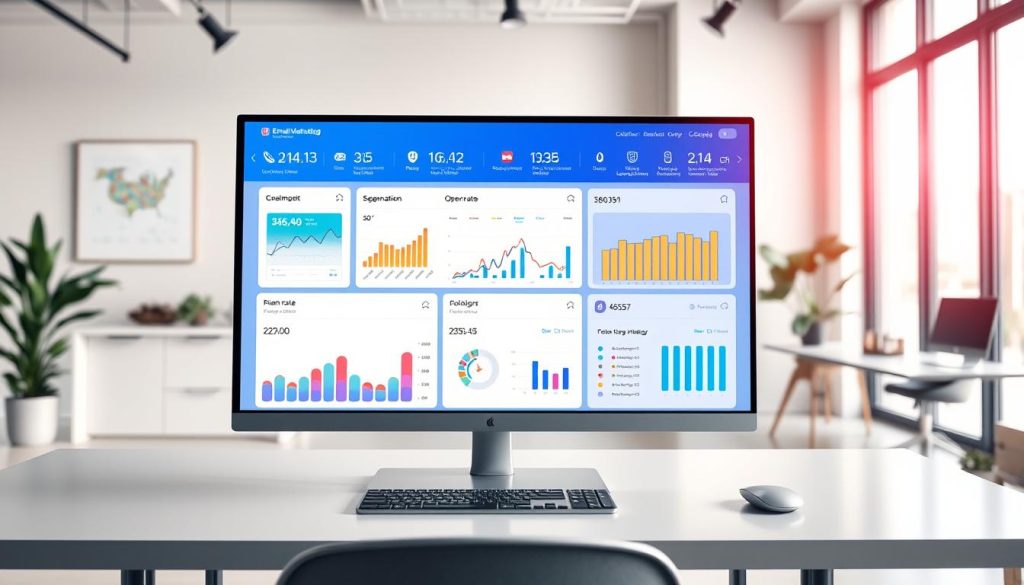
Email service providers are the backbone of successful campaigns. They offer solutions for list management, analytics, and more. The right choice depends on your needs and technical skills.
Full-service email providers like Mailchimp and SendGrid are great for small to medium businesses. They offer template builders, automation, and basic deliverability checks. These platforms make AI email marketing easy for teams without technical expertise.
Enterprise marketing automation platforms offer more. Solutions like HubSpot and Marketo combine email with CRM systems. They provide advanced segmentation and detailed tracking.
Transactional email services focus on high-volume messages. Platforms like SendGrid specialize in reliable delivery. They’re perfect for sending confirmations and automated notifications.
Key features support deliverability and engagement:
- Built-in authentication support for SPF, DKIM, and DMARC
- List validation tools remove invalid addresses before sending
- Engagement analytics track opens, clicks, and conversions
- A/B testing frameworks optimize subject lines and content
- Send time optimization finds the best delivery times
- Advanced segmentation targets audiences precisely
- Spam testing features preview filter reactions
- Deliverability monitoring through Google Postmaster Tools
Google Postmaster Tools gives essential reputation data. It shows domain reputation scores and spam complaint rates. Monitoring these metrics helps solve deliverability issues.
Choosing platforms should focus on deliverability infrastructure over features. The best template means nothing if it’s in spam. Look for providers with dedicated IPs, strong ISP relationships, and clear delivery reports.
AI-Based Content Optimization Tools
AI transforms email content creation and refinement. These tools use machine learning and natural language processing. AI email marketing platforms now offer capabilities that were impossible years ago.
AI writing assistants generate compelling content. They understand context and tone, creating content that matches your brand. These tools speed up content creation without sacrificing quality.
Natural language processing tools analyze sentiment and tone. They ensure your messaging resonates with your audience. Smart content filtering identifies spam trigger words before sending.
Predictive analytics platforms forecast campaign performance. They identify the best message variations. This insight helps optimize campaigns before launch.
Content intelligence systems recommend messaging for different segments. They analyze past behavior and demographic data. The result is hyper-personalized content that speaks to individual preferences.
Subject line optimizers predict open rates using machine learning. They test variations against historical data. These tools find the best phrases and emotional appeal for your audience.
Personalization engines insert relevant content dynamically. They go beyond simple name tokens to include product recommendations. True personalization requires smart content filtering that matches content to context.
Specialized solutions address specific deliverability challenges:
- Allegrow protects sender reputation by identifying risky contacts
- Litmus tests message rendering and predicts spam filter reactions
- Email on Acid provides testing for design, accessibility, and deliverability
- Spam checkers analyze draft messages against known filter criteria
Allegrow reduces complaint risk by flagging harmful contacts. It boosts engagement signals by identifying subscribers most likely to interact positively. This proactive approach prevents reputation damage.
Testing tools like Litmus and Email on Acid preview how major spam filters evaluate messages. They check content against known trigger patterns. These platforms also verify proper rendering across dozens of email clients and devices.
The most effective approach combines multiple tools in an integrated stack. Use AI for content generation and optimization. Rely on specialized platforms for technical monitoring and reputation management. This layered strategy maximizes the strengths of each component.
Remember that tools amplify fundamentals, not replace them. AI email marketing platforms can’t compensate for missing authentication or unengaged lists. They work best when supporting sound email practices like permission-based lists and regular cleaning.
Investing in the right technology stack improves inbox placement. Monitor performance data continuously. Adjust your tool selection as your needs evolve and new capabilities emerge in this rapidly advancing field.
Future Trends in AI and Spam Filtering
Artificial intelligence is changing how we send and filter emails. This creates a battle between AI senders and filters. It’s a race that will shape email for years to come.
Every step forward by one side prompts a countermove by the other. This makes the field of email communication dynamic and always changing. Marketers must keep up with these changes to stay ahead.
Machine learning spam prevention systems are getting smarter every day. They use many methods and update automatically. This makes them more accurate. Knowing where this technology is headed helps businesses stay ahead.
The future will bring big changes to how emails are sent and filtered. Marketers who understand these changes can stay ahead. Those who ignore them might find their emails blocked by new filters.
Advanced AI Technologies Reshaping Email Security
New technologies are changing how spam filters work and how AI helps with emails. These innovations are at the forefront of email security and efficiency. They will change how emails are delivered.
Advanced natural language processing for emails now understands emails better. It can spot subtle tricks that current systems miss. It looks at the whole message, not just words.
Multimodal AI systems analyze text, images, and more to catch spam. A message might pass text checks but fail with visual checks. This catches sophisticated spam.
Behavioral biometrics verify who is sending emails. They look at how you type and send emails. This makes it hard for spammers to fake being you.
Federated learning lets spam filters improve without sharing personal data. Many systems can learn together, keeping user info private. This helps fight new threats while keeping data safe.
Explainable AI systems tell you why emails were blocked. This helps marketers fix issues and improve their emails. Instead of mystery, there’s clear feedback.
AI can spot new spam tactics before they’re known. Traditional filters rely on known patterns. But these new systems catch new threats fast.
Voice and video emails will need new filtering. Spam filters will have to analyze audio and video. This is both a chance and a challenge for marketers.
How Spam Filters Will Evolve in Coming Years
Spam filters will get smarter and more personalized. They’ll learn what each user likes. This makes machine learning spam prevention more accurate but complex for marketers.
Real-time sharing of threat info will stop spam fast. When one system finds a new threat, others will know right away. This quick sharing reduces spam’s impact.
Intent verification will check if emails match the sender’s behavior. A customer service email will be checked against the sender’s history. If it doesn’t match, it will be blocked.
Reputation systems will score each sending pattern, not just domains. This means filters will get more precise. It rewards good practices better.
Blockchain or similar tech might create permanent sending histories. This makes it hard for spammers to hide or impersonate. Every message will have a clear history.
Filters will automatically follow laws like GDPR and CAN-SPAM. They’ll check for proper opt-out and sender info. This makes it easier for users to trust emails.
Future filters will tell the difference between good AI and bad. They’ll use natural language processing for emails to spot tricks. But, this game will keep going as both sides get smarter.
- Semantic analysis: Deeper understanding of message meaning and context beyond keyword matching
- Sender behavior tracking: Long-term pattern analysis that identifies inconsistent or suspicious activities
- Recipient preference learning: Individual-level customization based on user interactions and feedback
- Cross-platform intelligence: Shared threat data that protects users across multiple email providers
- Predictive filtering: Systems that anticipate spam tactics before they become widespread
The best strategy for email marketers is building real relationships with subscribers. This approach works no matter how technology changes. Filters always favor messages people want to see.
As AI for content and filtering gets better, understanding both sides is key. Marketers who work with spam filters’ goals will succeed. This approach leads to lasting success through technology changes.
The battle between AI senders and filters will keep evolving. Marketers who focus on quality and real connections will do well. The future is for those who see spam filters as allies, not obstacles.
Real-World Examples of AI Avoiding Spam Filters
When we look at how businesses use AI, we see a big difference between theory and practice. Talking about algorithms is just part of the story. Real examples show how AI and email marketing work together in the real world.
Success in using AI for email marketing is not just about the tech. We learn a lot from both successes and failures. This helps marketers create strategies that really work, not just dream about.
Successful Campaigns
E-commerce sites have seen big wins with AI. They use AI to understand what customers like and send them personalized emails. These emails get opened more because they’re really useful to the customer.
AI helps find the best time to send emails to each person. This, along with emails that really talk to the customer, boosts engagement. This makes the sender look good, helping more emails get through.

Small businesses using StrongestLayer see big gains in email safety. AI spots threats before they reach the inbox. This cuts down on scam emails fast.
B2B companies succeed by mixing AI with careful list management. They make sure people really want to get their emails. This leads to better delivery rates than others can match.
Companies that keep improving their email strategies with AI do very well. They get better at sending emails that people want to read. This makes their emails get through even better next time.
What makes these efforts successful includes:
- Having the right tech setup with SPF, DKIM, and DMARC
- Building lists the right way, with people’s permission
- Using AI to help, not replace, good judgment
- Always checking and tweaking based on results
- Focusing on what’s good for the recipient, not just the sender
Lessons Learned from Failures
Not every AI effort works out. Some companies spent a lot on AI but forgot about email security. Their emails got blocked because they didn’t follow the rules.
Others sent too many emails without checking if they were wanted. This made spam filters mad, hurting their reputation. Even good content couldn’t save them.
Some tried to trick spam filters with AI. But, modern filters are smart and catch these tricks. This hurts the sender’s reputation a lot.
Common mistakes include:
- Thinking AI can replace good email marketing
- Putting sender needs over what’s good for the recipient
- Getting too big too fast without checking list quality
- Ignoring the basics like proper authentication
- Not watching how emails are doing until it’s too late
Successful AI email programs are different from the failures. They use AI to make good emails even better. They focus on building real connections with their subscribers, not just sending lots of emails.
Good AI programs start with strong basics. They have the right tech setup and only send emails to people who want them. They also make sure the content is valuable, not just about selling stuff.
AI can make good email programs even better. It helps personalize and time emails perfectly. But, it can also make bad programs worse by letting them scale quickly.
This means starting with the right basics is key. You need the right tech, a good list, and valuable content. When you have these, AI can help a lot. But without them, AI just makes bad emails worse.
Conclusion: The Future of AI and Email Deliverability
The link between artificial intelligence and email deliverability is changing how marketers reach their audience. Success comes from finding a balance between technology and what people like.
Essential Takeaways for Email Marketers
Today’s spam filters use advanced AI to check if emails are real and if they’re wanted. AI can make your emails more personal and interesting. But, it can’t fix big issues like not having the right tech setup or bad email lists.
The best plan is to use AI with proven email marketing methods. This means setting up your tech right, getting permission for your email list, making valuable content, and always checking how well your emails are doing.
Moving Forward with Confidence
Can AI really avoid spam filters? It’s not that simple. AI can make your emails more relevant and engaging. But, it shouldn’t trick filters that protect users.
Your success depends on understanding spam filters’ role. Both marketers and email providers want to send messages people want to see. Use AI to make your emails so good that people look forward to them.
Companies that follow these steps can use AI to improve their email campaigns. This way, they get better results and keep their subscribers happy.