
Imagine sending thousands of emails that feel personal, without losing quality or harming your reputation. This is a big worry for sales leaders. They want to send lots of emails but keep them real and meaningful.
Cold email is a top choice for 80% of B2B buyers. But, the success rate is low, with only 1-5% of emails getting a reply. Sadly, 95% of messages are ignored.
But there’s hope. Emails that are tailored and targeted get 2-3 times more attention than generic ones. The best teams see their response rates soar by 6 times. They do this by really understanding their audience.
The problem is clear. Doing emails by hand can’t keep up with today’s demand. But, using too much automation can hurt your reputation and how well your emails get delivered. This is where intelligent automation comes in.
This guide shows how to use machine learning wisely. It helps keep your emails safe, effective, and personal. You’ll learn how to send lots of emails without losing quality.
Key Takeaways
- Cold email remains the top choice for 80% of B2B buyers despite increasing inbox competition
- Generic mass campaigns fail 95% of the time, with average response rates under 5%
- Personalized targeting strategies deliver 2-3X higher engagement than standard approaches
- Top-performing teams achieve 6x better results through research-driven methodology
- Intelligent automation can bridge the gap between manual quality and necessary volume
- Compliance and deliverability protection are critical when implementing automation tools
Understanding Cold Outreach and Its Significance
Cold outreach is key to growing your business. It’s not just about sending emails. It’s about starting meaningful conversations with people who don’t know you yet. This approach is vital for finding new opportunities.
Most decision-makers aren’t looking for your solution right now. Cold outreach helps you reach them. It’s a way to connect with people who might be interested in what you offer.
What Cold Outreach Really Means
Cold email outreach means sending messages to people you’ve never talked to before. The goal is to start a conversation and build relationships. Unlike spam, good cold emails are relevant, personalized, and respectful.
Spam sends the same message to many people without caring if it’s relevant. Cold outreach, on the other hand, targets specific people who might be interested in your product or service.
This approach has several goals:
- Start conversations with decision-makers
- Find qualified leads
- Build professional networks
- Create revenue opportunities
- Test new markets
The key to cold email automation ethics is delivering real value in every message. Your outreach should solve problems or offer useful insights. This way, you get better results while staying ethical.
How Cold Outreach Drives Business Growth
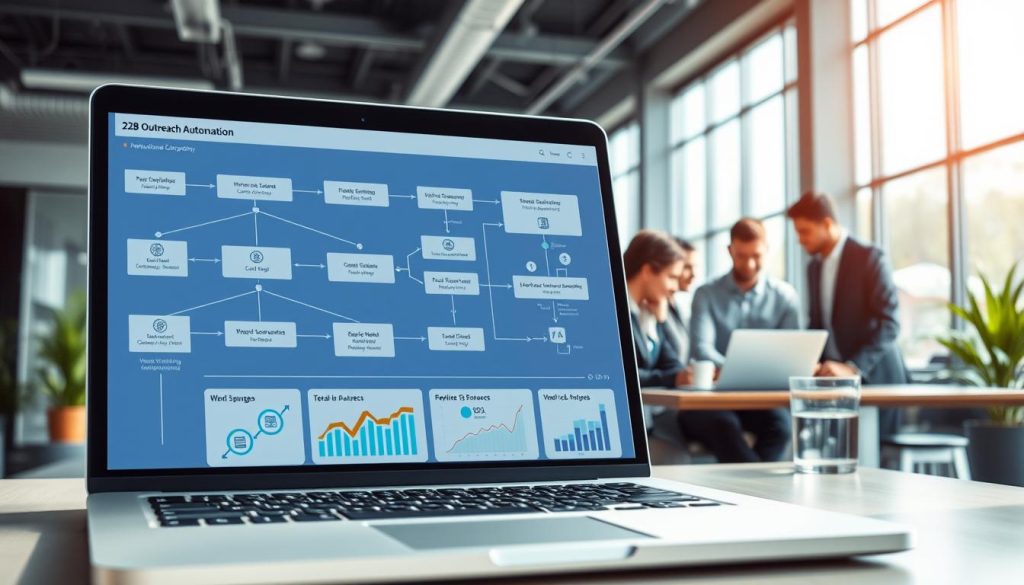
Cold outreach is important for businesses of all sizes. Startups use it to get their first customers without spending a lot. Big companies use it to target specific accounts that ads can’t reach.
This approach is cost-effective. Traditional ads cost a lot and may not work. Cold outreach lets you directly contact decision-makers at a lower cost. You only pay for the effort you put into researching and crafting your messages.
Most B2B buyers prefer email as their first contact method. This shows that cold outreach is a good way to reach out. Email is less intrusive than calls but more personal than social media.
Automation makes B2B outreach even more valuable. One salesperson can send 500 personalized emails with the help of automation tools. This makes lead generation faster and more efficient.
Cold outreach also lets you reach people you can’t contact by phone. Executives might not answer calls but might reply to well-researched emails. Email lets busy people respond when they can, making it more likely to get a meaningful conversation.
Measuring What Matters in Cold Outreach
Tracking the right metrics is key to success in cold outreach. It helps you see what works and what doesn’t. Cold email automation ethics requires being honest about how people respond to your messages.
The most important metrics include:
| Metric | Target Benchmark | What It Reveals | Improvement Strategies |
|---|---|---|---|
| Open Rate | 25-35% | Subject line effectiveness and sender reputation | Test subject lines, improve sender authentication, optimize send timing |
| Response Rate | 4-8% | Message relevance and value proposition strength | Enhance personalization, refine targeting, improve call-to-action clarity |
| Click-Through Rate | 2-5% | Content engagement and link relevance | Create compelling content offers, ensure links add genuine value |
| Meeting Booking Rate | 1-3% | Conversion from interest to action | Simplify scheduling process, qualify prospects better before outreach |
| Pipeline Conversion | 15-25% | Quality of leads generated and sales process effectiveness | Improve lead qualification, align sales and marketing messaging |
Open rates show if your subject lines grab attention and if your sender reputation is strong. A drop in open rates might mean issues with delivery or subject line fatigue. Keeping rates between 25-35% means your initial message is resonating with people.
Response rates are the ultimate success metric for cold outreach. A positive response rate of 4-8% means your message is valuable and relevant. This directly affects lead generation and revenue.
Meeting booking rates show how well you convert interest into scheduled conversations. This metric shows if your value proposition is strong enough to get people’s time. Tracking pipeline conversion rates ties your outreach efforts to actual business outcomes and revenue.
The Evolution of AI in Marketing Strategies
Artificial intelligence has changed marketing a lot in the last 20 years. It started with simple automation and now we have systems that can think and learn. This change has made it easier for businesses to find the right people and send messages that really connect.
This change is key for scaling outreach with artificial intelligence well. The tech has grown from basic to smart systems that can make decisions like humans. Today, most outreach tasks are done by AI, keeping messages personal for everyone.
From Basic Automation to Intelligent Systems
In the 2000s, email automation was basic. It sent emails in batches and used simple personal touches. But, people could tell these messages were automated.
In the mid-2010s, marketers could segment their audiences better. They could divide people based on who they were and what they did. This led to more targeted messages, like emails based on website visits.
By 2015, predictive analytics arrived. These tools looked at past data to guess who might respond. But, they didn’t really get the context or what people meant.

Marketers moved away from sending lots of emails without thinking. Data quality became more important than just having lots of data. This change helped AI become better at sending messages that really mattered.
Cutting-Edge Technologies Reshaping Outreach Today
Today’s AI is much more advanced than before. It can do things that seemed impossible just a few years ago. This has made outreach systems almost as good as humans.
AI can now write emails that really fit the situation. It looks at successful emails from millions of campaigns. It knows how to use tone and structure to get a response.
AI also knows the best time to send emails. It looks at how people behave online. This makes emails more likely to be opened.
Modern platforms have amazing features:
- Intent data tracking monitors 3,000+ buying signals across the web
- Prospect identification scans databases of 220M+ contacts with 10M+ intent signals
- Agentic AI systems trained on billions of data points from top performers
- Automated personalization references specific trigger events and pain points
- Multi-touch orchestration schedules follow-ups at optimal intervals
Platforms like Martal Group’s AI SDR Platform show how far we’ve come. Their AI learns from over 100 top sales reps. It handles 80% of outreach, letting humans focus on important talks.
Intent data tracking is a big leap forward. It finds people who are really looking for solutions. It watches when companies check prices or read about implementation.
Today’s AI personalizes messages in a big way. It knows about technology, company news, and industry challenges. It makes messages feel like they were written just for you.
Tools like Instantly.ai and Reply.io show these abilities in action. Instantly.ai improves email delivery and engagement with AI. Reply.io uses AI to send messages at the right time, based on how people behave.
The difference between old automation and today’s AI is huge:
| Feature | Early Automation (2000s-2010s) | Modern AI (2020s) |
|---|---|---|
| Personalization | Basic merge fields (name, company) | Context-aware messaging with trigger events |
| Targeting | Manual list uploads and basic filters | AI-powered prospect identification with intent signals |
| Timing | Fixed schedules set by marketers | Machine learning predicts optimal send times |
| Content Creation | Human-written templates only | NLP-generated copy trained on millions of messages |
These advances let companies reach many people with messages that really matter. Sales teams can now focus on building relationships, not just finding prospects.
Today’s AI keeps getting better with every interaction. It learns what works best for messages and when to send them. This makes campaigns better over time.
Using different AI technologies together makes things even better. Natural language processing and intent data create messages that are both timely and relevant. Machine learning and tracking behavior make every touchpoint count. This way, outreach feels human but is done on a big scale.
The Benefits of Using AI for Cold Outreach
Businesses using AI for sales outreach see big improvements. They get better response rates, work more efficiently, and make smarter decisions. AI tackles old challenges that made cold outreach hard.
Sales teams can now do things they couldn’t before. This is more than just automating tasks. AI lets teams personalize messages for thousands of people at once.
Smarter Targeting Through Advanced Personalization
AI brings a big win for sales teams: better personalization. Personalized cold emails get 6x more responses than generic ones. This is because AI uses lots of data to make messages that really speak to prospects.
AI connects to huge databases with millions of contacts. It finds the right people to talk to at the right time. This can double the chances of getting a response.
AI does research that would take hours for humans. It checks for recent news about companies and what technology they use. This makes messages really relevant.
AI can tailor messages for different roles. For example, it knows what to say to a CFO about saving money. Before, this was only possible for top accounts.
AI also looks at company goals and announcements. If a company is expanding, AI can adjust messages to talk about scaling up. This makes conversations more natural.
Operational Efficiency at Unprecedented Scale
Sales reps used to spend a lot of time on emails. AI takes this time back for more important tasks. This means teams can do more without needing more people.
AI does research fast, so reps can talk to more people. Before, they could only reach 20-30 prospects a day. Now, they can talk to hundreds.
AI handles emails, when to send them, and follow-ups. Campaigns with 4-7 emails get 27% replies, compared to 9% with just 1-3. AI makes sure no one is forgotten.
| Approach | Daily Outreach Capacity | Average Response Rate | Hours Spent on Email Tasks |
|---|---|---|---|
| Manual Outreach | 20-30 prospects | 8-9% | 3-4 hours |
| Basic Automation | 100-150 prospects | 5-7% | 2-3 hours |
| AI-Powered Outreach | 200-500 prospects | 15-18% | 0.5-1 hour |
| Advanced AI with Targeting | Under 200 (highly targeted) | 18-20% | 0.5-1 hour |
Smaller, targeted campaigns work better with AI. Outreach to under 200 prospects gets about 18% responses, while 1,000+ get only 8%. This shows AI can improve quality at scale.
AI helps teams work better without losing relevance. It personalizes messages for thousands while keeping them relevant. This is a big win for sales teams.
Intelligence-Driven Decision Making
AI gives real-time analytics that humans can’t do manually. Sales leaders see what works best for different industries and roles. This helps them make better decisions fast.
AI tracks important metrics like open rates and meeting bookings. It also looks at how different messages perform. This helps teams tailor their approach for better results.
AI finds patterns that humans miss. It shows what content types lead to more conversions. This helps teams refine their messages for better results.
Testing becomes systematic with AI. Teams can test different messages and see what works best. This helps them make informed decisions.
This approach turns cold outreach into a science. Teams make decisions based on data, not guesses. This leads to better results over time.
Ensuring Compliance with Laws and Regulations
Compliance in automated prospecting is key to protecting your brand. It’s not just about following the law. It’s about staying ahead of the competition. Modern AI sales platforms must navigate a complex web of rules to protect consumer privacy and prevent spam.
Non-compliance can be costly. CAN-SPAM violations can lead to fines up to $43,280 per email. GDPR fines can reach €20 million or 4% of global annual revenue, whichever is higher.
About 17% of cold emails never reach the inbox due to deliverability issues. Many of these failures come from compliance violations or poor sender reputation. AI platforms that focus on compliance help businesses avoid these problems.

Understanding GDPR and Its Impact on Outreach
The General Data Protection Regulation (GDPR) changed how businesses handle personal data in the European Union and beyond. It sets strict rules for data collection, storage, and usage, affecting cold outreach strategies.
GDPR has core principles for legitimate business-to-business prospecting. These include lawful basis for processing, data minimization, purpose limitation, and respect for individual rights. It doesn’t ban B2B cold outreach entirely.
The regulation allows outreach based on legitimate business interest. This means companies can prospect to business contacts without explicit consent, as long as they meet certain conditions.
Key GDPR requirements for outreach include:
- Transparent communication about data sources and usage purposes
- Easy-to-use opt-out mechanisms in every communication
- Data minimization—collecting only essential information
- Respect for the right to be forgotten and data deletion requests
- Maintaining detailed records of all data processing activities
Modern AI platforms help with compliance through automated consent management. They track data sources, maintain detailed records, and enable quick responses to deletion requests. Built-in compliance features help businesses show accountability if regulators ask for documentation.
The regulation also requires companies to implement appropriate technical and organizational measures to protect personal data. AI-powered outreach platforms usually include encryption, access controls, and security monitoring that meet these requirements.
Compliance with CAN-SPAM Regulations
The CAN-SPAM Act governs commercial email in the United States. It has seven key requirements that every cold email must follow, whether sent manually or automated.
Understanding these requirements helps businesses set up their platforms correctly. The rules apply to both manually sent emails and automated campaigns.
| Requirement | Description | AI Platform Support |
|---|---|---|
| Accurate Header Information | From, to, and routing information must accurately identify the sender | Automated sender authentication and verification |
| Non-Deceptive Subject Lines | Subject must accurately reflect email content | Template compliance checks before sending |
| Physical Address Inclusion | Valid postal address must appear in every email | Automatic footer insertion with company address |
| Clear Opt-Out Mechanism | Conspicuous unsubscribe link that’s easy to use | One-click unsubscribe functionality built-in |
| Prompt Opt-Out Processing | Honor unsubscribe requests within 10 business days | Real-time suppression list updates across campaigns |
Top AI platforms build CAN-SPAM compliance into their systems. They handle email authentication protocols like SPF, DKIM, and DMARC. These standards verify sender identity and improve deliverability rates.
Suppression list management is another key feature. When someone opts out, AI systems add them to a global suppression list. This prevents accidental re-engagement across all future campaigns and sequences.
The regulation also holds companies responsible for third-party actions. If you hire an agency or use a service to send emails, you remain liable for any violations. Choosing compliant AI platforms is essential for managing risks.
Strategies for Ethical Data Usage
Legal compliance is the minimum standard. Ethical data practices are key to sustainable outreach success. Compliance in automated prospecting goes beyond avoiding penalties to building trust with prospects.
Data sourcing needs careful attention. Reputable providers verify contact accuracy and collect information through legitimate channels. Avoid purchased lists from questionable sources that may contain outdated information or contacts who never consented to outreach.
Data hygiene requires ongoing maintenance. Business contact information decays at approximately 2.1% monthly. Regular re-verification maintains accuracy and prevents wasted outreach efforts.
Implementing these ethical data practices strengthens compliance:
- Verify data sources and document how contact information was obtained
- Honor unsubscribe requests across all campaigns, not just individual sequences
- Be transparent about data collection methods when prospects ask
- Regularly clean and update contact databases to maintain accuracy
- Implement data retention policies that delete outdated information
Sender reputation connects directly to compliance practices. Email service providers monitor complaint rates, bounce rates, and engagement metrics. Poor compliance leads to blacklisting, which damages deliverability across all future campaigns.
AI platforms with built-in compliance features protect sender reputation automatically. They monitor deliverability metrics, pause campaigns that generate high complaint rates, and provide alerts when issues arise. This proactive approach prevents small problems from becoming major setbacks.
Transparency builds trust with prospects and regulators alike. When someone asks how you obtained their contact information, having a clear, honest answer demonstrates ethical practices. This transparency often converts skeptical prospects into engaged conversations.
The investment in compliance infrastructure pays dividends through improved deliverability and response rates. Prospects respond more positively when outreach respects their preferences and follows established guidelines. Ethical automation creates sustainable competitive advantages that purely technical approaches cannot match.
Risks Associated with AI in Cold Outreach
AI is changing cold outreach, but it brings big risks. Companies need to think about these risks before using AI for emails. They must create cold email automation ethics to protect their reputation and keep good relationships with prospects.
AI can make things more efficient, but it can also cause problems. About 17% of cold emails never reach the inbox because of spam filters. This section looks at the main dangers of using AI for outreach.
Potential for Miscommunication and Misrepresentation
AI messages often miss important details that humans get. If AI uses old information, like an executive who left, it looks careless. These mistakes can hurt your credibility fast.
AI might use the wrong tone, too. It could be too casual for a senior executive or too formal for a startup founder. These small details are what make communication effective or feel robotic.
Imagine AI congratulating someone on a bad event. Being technically correct doesn’t mean you’re right in the situation. It’s important to have humans check these messages, for important people or sensitive topics.
Generic AI messages that are obvious get deleted fast, hurting your reputation.
AI is great at recognizing patterns but struggles with understanding subtleties. If AI sends out messages that are too obvious, people won’t respond. The best approach is to use hybrid methods where AI starts and humans refine it.
Over-reliance on Automation
Thinking AI can do everything on its own is a big mistake. Too much automation leads to predictable failures. It’s important to know when humans are needed.
Automation can send emails to people who have already agreed to meet or who have said no before. It also doesn’t adjust messages when big news happens. These problems come from not having enough human oversight.
Most automated emails don’t really help, as only 24% of decision-makers find them valuable weekly. This shows a big problem with AI in cold emails—focusing on sending too many instead of being meaningful. This approach hurts your strategy.
To use AI well, you need to divide tasks:
- AI handles tasks like research and follow-ups
- Humans decide on strategy and how to connect with people
- Quality checks make sure AI messages fit your brand and what prospects expect
- Context checks let teams stop campaigns when things change
Building relationships needs flexibility and understanding that AI can’t provide. If you let AI run without checking, you miss out on chances. The goal is to help humans, not replace them.
Privacy Concerns and Data Security
AI systems are targets for hackers. If they get into your data, it can hurt your reputation and lead to legal trouble. You must check the security of any AI system you use.
There are many ways data can be at risk, like unauthorized access or weak encryption. When AI deals with lots of data, any weakness is a big problem. You need to protect your data well.
Not protecting data can break laws and hurt your reputation. Data security is key when choosing AI tools.
When picking AI tools, look at their security:
| Security Requirement | Implementation Standard | Risk Mitigation |
|---|---|---|
| Compliance Certification | SOC II Type 2 audit completion | Validates controls against industry benchmarks |
| Data Encryption | AES-256 at rest and TLS 1.3 in transit | Protects information from interception and unauthorized access |
| Access Controls | Multi-factor authentication and role-based permissions | Limits exposure to internal and external threats |
| Data Retention | Transparent policies with automated deletion schedules | Reduces liability by minimizing stored information |
Regular security checks are important. They make sure your AI system is safe. Penetration tests find problems before hackers do. Clear agreements about data handling are also important.
AI and data protection go hand in hand. You can’t just leave it to the software. You need to have rules in place to keep data safe and respect people’s privacy.
Telling people how you handle their data builds trust. Showing you care about their privacy can make you stand out. Security is not just about following rules; it’s a way to be better than others.
Crafting Effective AI-Driven Outreach Campaigns
To get double-digit response rates, you need more than just automation. You need strategic AI use. The key is in how you structure your data, write your messages, and keep improving based on real results. Many businesses start using AI tools expecting quick results but end up with the same poor results as manual outreach.
What makes a campaign succeed or fail is three main things. First, you need AI to find the right people based on real buying signals, not just basic info. Second, you must make your automated messages personal, not just add a name to a template. Third, you need to test and learn what really works with your audience.
Great campaigns start with five key CRM fields for personalization. These fields turn generic messages into real conversations that people want to have. When you use these fields in your templates, you get much better results than sending out random emails.
Building Precise Target Profiles with AI Intelligence
AI makes finding the right people a science, not a guess. It looks at signals like website visits and keyword searches. This shows who’s really interested in what you offer.
To make the most of AI, you need four types of data. Firmographic criteria include things like industry and company size. Technographic data shows what technology they use. Behavioral signals track how they interact with your content. Trigger events catch the right moment to reach out.
AI looks at huge amounts of data to find the right people for you. This saves your team a lot of time. Instead of searching manually, AI finds people who are actually interested in what you offer.
Quality is more important than quantity in outreach. Focusing on a smaller, more targeted group can get you 18% response rates. But if you send out too many emails, you’ll only get 8% responses.
Implementing Advanced Personalization Strategies
Personalizing your automated messages is key. But generic messages don’t work. You need to use specific data to make your messages relevant.
Successful campaigns use five essential CRM fields. These fields help you tailor your messages to each person. This makes your messages more relevant and engaging.
The table below shows how these fields can transform your messages:
| CRM Field | Purpose | Example Data | Message Impact |
|---|---|---|---|
| Trigger_Event | Time outreach around real changes | “Hired new VP Sales” | Creates relevance and urgency |
| Tech_Stack | Anchor subject lines and openings | “HubSpot” | Demonstrates research and understanding |
| Persona_Pain_Point | Connect to job-relevant struggles | “Low SDR productivity” | Shows empathy and positions solution |
| Competitor_Mentioned | Frame positioning without direct naming | “Considering Salesforce alternatives” | Addresses comparison questions proactively |
| Company_Goal | Tie your offer to their goals | “International expansion” | Aligns your value with their priorities |
Building your messages with these fields helps keep them short and focused. Start with a personalized opening line and a brief message that addresses their pain point. End with a clear call-to-action that matches their goals.
Strong personalization sounds like this: “I noticed you recently hired a new VP of Sales and are scaling on HubSpot—fast-growing teams often struggle with lead qualification at this stage.” This opener shows you’ve done your research and understands their situation.
Keep your emails short and focused on the prospect’s world. They only spend about 11 seconds looking at your email before deciding what to do. Every word should add value or relevance.
Subject lines are very important. They decide if your email gets opened. Aim for 5-7 words and include specific details that matter to your audience. “HubSpot + new sales VP challenges” is better than “Quick question” because it’s more specific.
Include only one call-to-action. “Would a 15-minute call next Tuesday work to discuss your SDR productivity goals?” is better than “Let me know if you’d like to chat, see a demo, or get more information.” A clear, specific request gets more responses than a vague one.
Optimizing Through Systematic Testing
Improvement is key to success. Use A/B testing to see what works best. Test one thing at a time and measure what really matters.
Start with these key tests:
- Subject lines: Test different lengths, personalization elements, and specificity levels to identify what drives opens in your target market
- Opening lines: Compare trigger-based openings versus pain point leads versus value proposition starts
- Pain points mentioned: Test which business challenges resonate most strongly with different personas
- Calls-to-action: Experiment with meeting requests versus content offers versus question-based engagement
- Send times: Identify when your specific audience is most receptive to outreach
Make sure you have enough data before making conclusions. At least 100 sends per variant are needed for reliable results. Less than that can lead to poor decisions.
Focus on the right metrics to improve your campaigns. Open rates are less important than positive reply rates. Aim for 25-35% open rates but focus on getting 4-8% positive responses.
How you structure your sequences matters a lot. Sequences with 4-7 emails get 27% replies, while shorter sequences get only 9%. But don’t send too many emails. Keep it to 3-5 touches in two weeks.
Here’s a proven sequence structure:
- Email 1: Trigger-based personalization introducing one specific pain point (Day 0)
- Email 2: Share relevant case study or data point addressing that pain point (Day 3)
- Email 3: Offer specific, actionable insight or resource (Day 7)
- Email 4: Direct meeting request with proposed time options (Day 10)
- Email 5: Break-up email asking permission to stay in touch (Day 14)
AI tools provide insights that would be hard to get manually. They show what industries respond best, when to send emails, and what pain points to address. This lets you improve your campaigns fast based on real data.
Keep track of important metrics like open rates, response rates, and click-through rates. This shows how well your messages are working. A clear dashboard helps your team see what’s working and what’s not.
The best teams always look for ways to improve their AI outreach. They test and refine their approach regularly. This dedication turns good campaigns into great ones that bring in qualified leads.
Integration of AI Tools in Outreach Processes
Using AI tools in your outreach workflow changes cold outreach. It turns it into a powerful growth tool. The right tools cut down on repetitive tasks while keeping your outreach personal and strategic.
Scaling outreach with artificial intelligence means knowing what tools you need. It’s about finding the right fit for your business.
The tech world has grown a lot, with options for every budget and need. Some tools focus on specific channels, while others handle everything. Knowing the difference helps you build a tech stack that supports your growth goals.
Leading Platforms and Their Capabilities
The market for B2B outreach automation has grown a lot. Each tool has its own strengths. Martal Group’s AI SDR Platform is a top choice for its all-in-one approach.
It combines email, LinkedIn, and phone calls in one sequence. It uses AI trained on data from top sales reps and billions of interactions.
Martal’s system boosts conversions by 4-7 times compared to old methods. It handles 80% of outreach tasks automatically. It also has a huge contact database and tools for email warm-up.
Instantly.ai is great for high-volume email automation. It has unlimited account capabilities. Its SuperSearch feature builds detailed prospect lists with AI help.
Reply.io is good for multi-channel outreach. It uses AI to write emails and personalize messages based on prospect behavior. This makes it great for complex sales processes.
Lemlist stands out for creative personalization. It uses dynamic images and videos for each recipient. It also has tools for better deliverability and LinkedIn integration.
Other tools focus on specific needs. Woodpecker focuses on deliverability, QuickMail helps with high volumes, and Snov.io combines lead generation with CRM. Smartlead is for agencies, and Saleshandy offers email-only solutions.
Most platforms have basic features like email verification and CRM integration. What sets them apart is their focus on specific areas like omnichannel, AI, or pricing.
Selecting Tools That Match Your Requirements
Start by figuring out what you need. If you need to reach people through different channels, Martal Group or Reply.io might be best. For email-focused teams, Instantly or QuickMail could be better.
Think about your budget too. Snov.io and Saleshandy are good for startups because they’re affordable. Tools with flat-fee pricing help teams grow without extra costs.
Check how well the platform integrates with your CRM. Does it work with HubSpot, Salesforce, or Pipedrive? Does it have native data sources or do you need separate tools? How easy it is to integrate affects how well you’ll use it.
Look at the AI personalization offered. Basic tools use simple merge fields. Advanced tools create content based on prospect data and trends. This makes a big difference in how well you connect with people.
Support is important, too. Some platforms offer help for beginners. Others have premium packages with more support. This helps teams get the most out of the tools.
Startups might prefer all-in-one platforms. They combine lead sourcing, sequencing, and CRM. Big companies might choose best-of-breed tools that fit into their existing systems.
Implementation Guidelines for Seamless Integration
Start by setting up CRM integration. Connect your AI platform to your CRM to keep data flowing smoothly. This avoids data silos and keeps everything in one place.
Set up smart triggers to add prospects to sequences automatically. This could be based on lifecycle changes or intent signals. This makes sure you reach out to people at the right time.
Start slow to protect your sender reputation. Warm up new domains for a few weeks before sending a lot of emails. Start with 50 emails per day and increase based on how well it’s doing.
Pay attention to authentication when setting up. Use SPF, DKIM, and DMARC to verify your domain. Make it easy for people to unsubscribe and send emails when it’s most likely to be seen.
Test your emails before sending them to real people. See if they go to the inbox or spam. Fix any issues before sending more emails to keep your reputation good.
Even with AI, keep a human eye on things. Check the content and how people are responding. Using AI to scale outreach means using it as a tool, not a replacement for human judgment.
Review your performance every week. See what’s working and what’s not. Test different things to keep improving. Keep control over the big picture and what you’re trying to say.
The best approach is to use AI for the boring stuff and keep humans for the creative and strategic work. AI can handle a lot, but humans bring a personal touch that technology can’t match.
Measuring the Success of AI-Facilitated Outreach
Measuring the impact of automated outreach campaigns turns raw data into useful insights. Without clear metrics, even the most advanced AI systems work blindly. Companies that set up clear metrics and monitoring can see how to improve.
Knowing what to measure and how to interpret it is key. Successful companies track specific indicators. This shows what happened, why, and how to do better. This approach helps separate campaigns that bring real results from those that don’t.
Key Performance Indicators to Track
Knowing which metrics are important is vital for success. Different indicators show different aspects of campaign health. Tracking the right ones gives a full picture of how well you’re doing.
Open rates are the first key indicator. They show how many people open your email. Aim for 25-35% open rates for cold outreach. Rates below this might mean bad subject lines or email issues.
This metric shows how good your subject lines are and your sender reputation. Opens don’t mean people will engage, but they’re a first step.
Response rates are the ultimate success metric. They show how many people reply with interest. Aim for 4-8% response rates for cold outreach. This is way better than the 1-5% from generic campaigns.
It’s important to know the type of responses you get. Positive responses show interest, ask questions, or agree to meet. Negative responses say no or ask to be removed. Neutral responses are out-of-office messages or referrals.
Click-through rates show how engaged people are. They indicate if your message is compelling enough to get people to click. Higher click-through rates mean your message is addressing real needs and offers solutions.
Meeting booking rates show how well you turn interested people into actual meetings. This is a key step from marketing to sales. Low meeting rates might mean scheduling issues or unclear next steps.
Pipeline conversion rates show which prospects and messages lead to business opportunities. This connects outreach to revenue. Analyzing these rates by industry and prospect type shows where to focus.
Operational health metrics ensure your messages get to the right people. Deliverability metrics include where emails land, bounce rates, and spam complaints. Keep bounce rates below 1% and spam complaints under 0.3% to avoid blacklisting.
Even great messages don’t matter if they don’t reach people. Monitoring these metrics warns of problems early on.
| Performance Indicator | Target Benchmark | What It Reveals | Action If Below Target |
|---|---|---|---|
| Open Rate | 25-35% | Subject line effectiveness and deliverability | Test new subject lines; check spam placement |
| Response Rate | 4-8% | Message relevance and value proposition strength | Refine targeting; personalize messaging |
| Click-Through Rate | 2-5% | Content engagement and offer appeal | Strengthen call-to-action; clarify value |
| Bounce Rate | ≤1% | List quality and data accuracy | Verify contacts; clean database |
| Spam Complaint Rate | ≤0.3% | Targeting precision and message appropriateness | Review audience fit; soften approach |
Breaking down metrics by relevant dimensions shows patterns. This helps identify what works for whom and when. This detailed analysis guides optimization.
Tools for Monitoring and Analyzing Outreach Effectiveness
Modern AI platforms offer advanced analytics. They help track metrics across campaigns and provide insights. Tools like Martal Group, Instantly, and Reply.io give real-time dashboards for quick performance checks.
These platforms offer features like A/B test results and cohort analysis. They show which approaches work best and track prospect engagement over time. This helps predict future conversions.
Attribution tracking shows how outreach touches lead to pipeline and revenue. Predictive analytics forecast campaign success based on early signs. This lets you make adjustments before campaigns start.
AI finds patterns humans might miss. For example, healthcare prospects prefer ROI-focused messaging, while tech prospects like innovation. Or, Tuesday mornings are best for sending emails in certain industries.
Connecting outreach data with CRM systems gives a full view of the sales funnel. Feeding data to business intelligence platforms helps executives make informed decisions. Combining outreach metrics with account engagement scores helps prioritize follow-up.
Regular reviews are key for continuous improvement. Daily monitoring catches deliverability issues early. Weekly reviews find quick ways to improve. Monthly strategic reviews check if outreach meets revenue goals.
Advanced AI platforms offer insights and recommendations. They suggest improving messaging or timing based on data. This transforms passive reporting into active optimization.
Using data to refine targeting, messaging, timing, and sequencing improves results. Companies that focus on measurement-driven approaches get the most from their AI investments. They maintain safe AI cold outreach strategies that respect recipients and follow regulations.
The Future of AI in Cold Outreach
As technology gets better, the question “Can AI scale cold outreach safely?” is more important. Companies that use AI wisely and follow ethical rules will have an edge. They can reach more people effectively.
Emerging Trends and Innovations
Natural language processing makes messages seem real and right for the situation. It watches more than just website visits. It looks at job ads, tech use, and what people read.
Predictive analytics find the best times to reach out, even to the hour. Conversational AI starts emails and answers simple questions. Then, humans step in for more complex issues.
Preparing for Future Developments
Having strong data systems today helps for tomorrow’s advanced personalization. Sales teams need to learn about AI’s strengths and limits. This knowledge helps them use AI well.
Rules for AI sales tools will keep changing. Companies should keep up with privacy laws in places like California and the European Union. Being flexible is key, not sticking to one platform.
The Balance Between Human Touch and AI Automation
AI is great at handling data, finding patterns, and doing tasks. But, humans are better at thinking strategically, understanding emotions, and building relationships. These are things AI can’t do.
Using both AI and humans is the best approach. AI finds leads, does research, and analyzes data. Humans handle the big picture, check quality, and have deep conversations.
Seeing AI as a strong partner, not the only solution, is key. Companies that mix AI’s efficiency with real human connection will do better than those relying only on AI or humans.