Imagine sending messages that perfectly match each subscriber’s interests. Despite the rise of social media, email is the top choice for customers to talk to brands. Studies show that email engagement has grown by 15%, beating other digital channels.
Now, machine learning powers AI-powered email personalization. It changes how businesses reach out to people. These systems study how subscribers act to send emails at the best times. They also segment audiences and personalize content, leading to better open rates and sales.
Modern campaigns use two key technologies. Predictive analytics looks at past data to guess what subscribers might like. Generative systems then create new content that fits each user’s needs. Both keep the human touch, building strong customer bonds.
This guide dives into how these technologies change marketing. You’ll learn about personalization, automation, and optimization. The aim is to help marketers work smarter and create experiences that deepen customer connections.
Key Takeaways
- Email remains customers’ preferred communication channel with 15% growth in outbound messages
- Machine learning algorithms personalize content, optimize timing, and segment audiences automatically
- Predictive analytics forecasts subscriber behavior using historical data patterns
- Generative technology creates customized content tailored to individual user preferences
- AI empowers marketers to automate repetitive tasks while focusing on strategy
- Combined technologies deliver personalized experiences at scale that improve engagement
Introduction to AI in Email Marketing
Email marketing has changed a lot with AI. It’s now about smart, data-driven campaigns that really speak to people. Marketers use AI to make emails better and more personal. This change is big, as it changes how brands talk to their customers.
Today, email strategies use AI-powered insights to get to know what subscribers like. These systems look at lots of customer data to send messages that feel just for them. This leads to better engagement, more sales, and stronger customer bonds.
Understanding AI Technologies and Marketing Applications
AI makes computers think like humans, learning from experience. In marketing, AI uses several key technologies to make campaigns better.
Machine learning is at the heart of AI marketing. These algorithms get better over time, finding patterns in data without being told. For email, machine learning helps predict what customers will do next.
Natural language processing lets computers understand and create human language. This tech helps with better subject lines, content, and even email chats. NLP finds out what phrases work best for different groups and suggests improvements.
Predictive analytics looks at past data to guess future results. It helps figure out who’s most likely to buy, when to send emails, and what content will work. This makes email marketing more proactive.
These technologies bring real value to businesses. AI systems analyze how people react to emails and websites, giving lead scores that show who’s most likely to buy. This helps marketing teams focus on the right people and send the right messages.
AI also predicts how much value each customer will bring over time. This insight helps decide where to put resources and how to personalize messages.
Email tools with AI can also find new customers like your best ones. They look for people who are similar to your top customers. This helps reach more people while keeping messages relevant.
The Evolution of Email Marketing Technology
Email marketing has come a long way, thanks to AI. It’s moved from simple messages to smart, data-driven campaigns. This change is huge, changing how brands connect with their audience.
In the 1990s, email marketing was just sending the same message to everyone. Success was just about getting the email delivered. There was no thought about whether it was interesting or relevant.
In the early 2000s, marketers started using segmentation to send different messages to different groups. This was a big step toward making emails more personal. But it was just the beginning.
The late 2000s brought marketing automation tools. These tools let marketers create emails based on what customers did. They could send follow-up emails and even personalize messages a bit.
| Era | Time Period | Key Capabilities | Primary Limitations |
|---|---|---|---|
| Mass Email | 1990s – Early 2000s | Basic list management, simple HTML templates, batch sending | No personalization, high spam rates, generic content for all recipients |
| Segmentation | Early – Mid 2000s | List segmentation, permission-based marketing, basic demographics | Manual segment creation, limited behavioral data, static content |
| Marketing Automation | Late 2000s – Mid 2010s | Triggered workflows, personalization tokens, A/B testing, analytics dashboards | Required manual workflow design, rule-based logic only, limited predictive capability |
| AI-Powered Systems | Mid 2010s – Present | Predictive analytics, dynamic content, send-time optimization, automated testing, behavioral predictions | Requires substantial data, complexity in implementation, ongoing training needs |
Today’s AI in email marketing is a big step forward. These systems use machine learning to make every part of a campaign better. They learn from how well campaigns do, making changes on their own.
AI has changed email marketing from a simple send-and-forget channel to a smart way to engage with customers. Before, marketers had to set up every rule and condition themselves. Now, AI finds patterns and opportunities on its own.
Hyper-personalization lets emails change based on what customers do and what they might like. This means emails can feel like they’re made just for each person. This level of personalization was impossible just a few years ago.
The AI revolution in email marketing is getting faster and faster. New features and better data collection are making things even better. What used to take teams weeks to do now happens in seconds. This lets marketers focus on being creative and strategic, not just on making emails work.
Personalization of Email Campaigns
Email campaigns do better when they talk directly to each person’s likes and actions. Old ways of sending the same message to many don’t cut it anymore. AI-powered email personalization changes the game by making each email unique without needing to write thousands by hand.
Today’s personalization is more than just using someone’s name. AI looks at lots of data to understand what each person might like. This lets marketers send emails that really speak to each person.
Businesses can now customize emails based on what each person does, not just who they are. For example, a clothing store can send different emails to different groups. Each one shows products and messages that fit that group’s style.

Dynamic Content Generation
Dynamic content is a big deal in email marketing thanks to AI. It uses master templates with parts that AI fills in for each person. These parts can be text, images, deals, or calls to action.
AI starts by looking at lots of data for each person. It checks their website visits, what they’ve bought, how they’ve interacted with emails, and more. Then, it picks the best content for each person.
Let’s say a clothing store uses this for athletic wear. If someone often looks at running shoes, the AI will send them emails about those. But someone who looks at business clothes gets emails about suits instead.
This tech is really smart. It can change the tone of emails based on how tech-savvy someone is. It can also offer deals based on how sensitive someone is to price. And it can even change how an email looks based on what device someone is using.
Marketers can make lots of different emails from just one design. They can tell the AI to make ten versions for different groups. This saves a lot of time and makes emails more relevant.
This approach really boosts how well emails do. People are more likely to click on emails that are about things they’re interested in. This makes emails more effective.
Tailored Product Recommendations
AI is also great at suggesting products in emails. It’s not just about showing what someone has looked at before. It uses complex algorithms to guess what someone might want next. It looks at what they’ve bought and what others like them have bought.
There are a few ways AI makes these smart suggestions:
- Collaborative filtering looks at what lots of people have bought to find similarities
- Content-based filtering suggests items based on what they have in common with what someone has bought before
- Purchase history analysis finds items that go well together
- Frequently-bought-together analysis finds items that people often buy together
These smart product feeds in emails show items that match what someone has looked at or bought. This makes emails more relevant and boosts sales.
AI is also good at suggesting bundles of products. It can group items together, like a phone case and accessories, based on what someone has bought. This can lead to bigger sales and more cross-selling.
Using tailored product recommendations in emails really pays off. People like getting suggestions for things they actually want to buy. This makes emails more effective and boosts sales.
AI’s role in email marketing is huge. It makes it possible to personalize emails for thousands or even millions of people. This would be impossible to do by hand.
Segmentation and Targeting
Email segmentation today is more advanced than ever before. Gone are the days of just using age, location, and gender to group people. Now, AI analyzes many data points at once to create detailed customer segments that change as they do.
This new way of segmenting lets marketers use automated email campaign segmentation that reacts fast to how customers act. It’s all about making sure the right message reaches the right person at the right time.
With precision targeting, emails are sent when people are most likely to open them. AI finds out what customers really want and when they’re ready to buy. It’s no longer a guess game.
AI-Driven Customer Segmentation
AI looks at how customers interact with a brand in many ways. It checks how they move around a website, what emails they open, and what they like to read. Then, it groups similar customers together.
RFM analysis is a key tool. It looks at Recency, Frequency, and Monetary value. This helps find out who’s most valuable, who might be leaving, and who needs to be brought back.
RFM metrics help identify top customers, those at risk, and those who need to be re-engaged. AI keeps these groups up to date as new data comes in.
Value-based segmentation focuses on who brings in the most value. This lets marketers send different messages to different groups. For example, loyal customers might get special deals, while new ones get helpful tips.
The coolest thing about AI is real-time segment updates. If a customer does something new, like buying something, AI moves them to the right group right away. This makes sure emails are always relevant.
Natural language processing takes it even further. AI reads what customers say in surveys and reviews to understand their feelings. This helps create groups based on satisfaction and preferences, not just actions.
Behavioral Targeting Strategies
Behavioral targeting turns theoretical groups into real campaigns that make money. Cart abandonment emails are a great example. If someone leaves items in their cart, AI sends them reminders with more suggestions.
Browse abandonment emails work the same way. If someone keeps looking at the same products, AI sends them special offers. This can turn browsers into buyers.
AI is great at spotting when someone is ready to buy. It looks for signs like visiting pricing pages and reading reviews. Then, it sends them messages that are more likely to lead to a sale.
Declining engagement detection catches problems early. AI notices when people start to lose interest and sends them special offers to bring them back.
Content preference targeting makes sure people get emails about things they’re interested in. If someone loves getting emails about a certain product, they get more of those. This uses predictive email analytics to guess what will get the best response.
Purchase anniversary emails are another smart use of AI. It remembers when customers bought something and sends them reminders to buy again. For durable goods, it suggests new products or upgrades.
These strategies work together to make a better email system. Each interaction helps improve future emails. This creates a system that gets better over time, sending the right message at the right time.
Automation of Email Campaigns
Email marketing automation sends the right message at the right time. It does this without marketers working all day. Modern tools handle the details and optimize timing for the best results.
AI-driven automation works in the background, watching customer behavior. It responds with the right messages. This system uses big data to tailor messages for each subscriber.
Marketing teams can now focus on strategy and creativity. The technology takes care of the details. This way, both efficiency and effectiveness improve.
Event-Driven Email Workflows
Trigger-based emails are a big change from old ways. They start instantly when customers take certain actions. The system watches behavior and responds without needing humans, making messages timely.
Welcome series automation is a great example. When someone subscribes, AI starts a series of emails. It waits the right amount of time between each email, making it personal.
Abandoned cart recovery triggers send reminders at the right time. AI decides when to send them, based on each customer’s pattern. Some like quick reminders, others need more time.
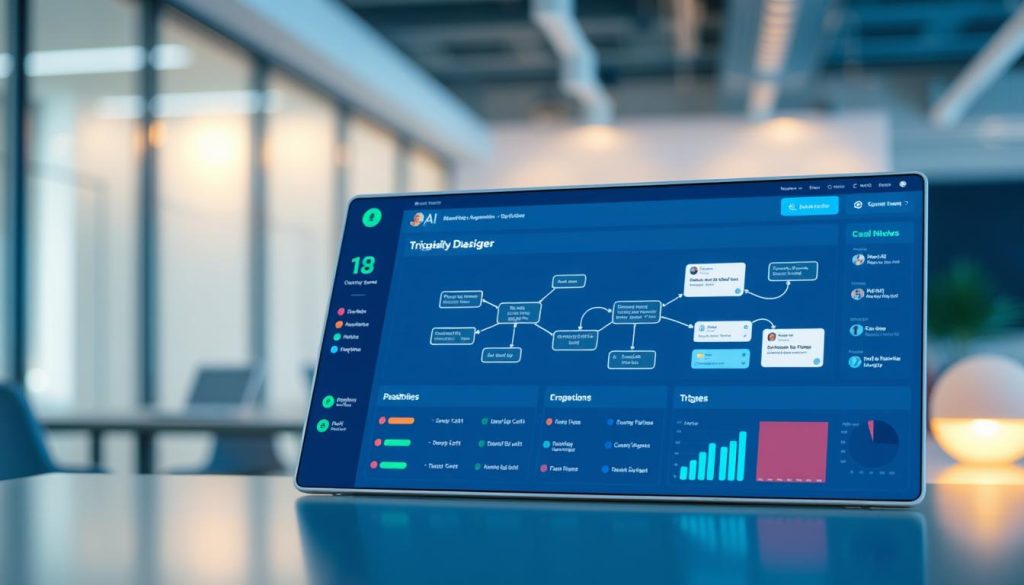
Behavioral triggers respond to actions that show interest. If customers keep looking at certain products, the system sends more info. This helps guide them through their decision-making.
Milestone triggers celebrate important moments. Anniversaries, birthdays, and loyalty achievements get special attention. These automated celebrations strengthen the bond without manual effort.
Re-engagement triggers catch customers who are losing interest. The system finds those who haven’t opened emails and sends win-back campaigns. This keeps relationships alive.
AI decides not just when to send emails but what to say. It considers the customer’s profile and history. This makes each message feel right for the customer.
| Trigger Type | Activation Event | Typical Timing | Primary Goal |
|---|---|---|---|
| Welcome Series | New subscription | Immediate to 7 days | Onboard and educate new subscribers |
| Abandoned Cart | Cart items left unpurchased | 1 to 48 hours | Recover lost revenue |
| Behavioral | Specific page views or downloads | Within 24 hours | Nurture interest |
| Milestone | Anniversary or achievement | On specific date | Strengthen relationship |
| Re-engagement | Declining interaction metrics | 30 to 90 days of inactivity | Win back dormant subscribers |
Optimizing Send Times and Frequency
Figuring out when and how often to send emails is tough. Smart email scheduling solves this by looking at past behavior. AI makes sure emails arrive when recipients check their inbox.
Send-time optimization looks at each subscriber’s past behavior. It finds out when they usually open emails. This helps send messages at the best time for each person.
The technology schedules emails for when subscribers are most likely to see them. For example, one customer might get an email on Tuesday morning, while another gets it on Thursday evening. Both get the same message, but at their best time.
Frequency optimization finds the right balance between staying in touch and overwhelming. AI watches for signs of email fatigue. It then adjusts how often to send emails to avoid losing subscribers.
Some people like daily emails, while others get tired of them. Smart email scheduling respects these differences. This keeps more people engaged and reduces the number who unsubscribe.
AI also notices seasonal trends and adjusts email timing. It knows when people are more likely to buy things, like before holidays. This makes emails more effective.
Predictive AI looks at past behavior to find the best times to send emails. This approach keeps emails relevant and boosts loyalty by avoiding too much contact.
Real-world results show the power of these optimizations. Marketers see better open rates, clicks, and sales. Unsubscribe rates also go down as the system learns what each person prefers.
Together, trigger-based automation and scheduling make email marketing powerful. These tools work all the time, adapting to what customers want. Marketing teams can now keep in touch with many people without doing it all by hand.
Predictive Analytics in Email Marketing
Email marketers now use predictive analytics to guess what customers will do next. This change makes email marketing more proactive. It helps predict who to target, when to contact them, and what messages will work best.
AI learns from every interaction with customers. It gets better with each email opened, link clicked, or purchase made. This way, AI can understand customer preferences and trends better than humans.
Machine learning finds hidden connections between customer behaviors. For example, it might find that certain actions lead to purchases. This lets marketers act before customers do.
Forecasting Customer Behavior
Predictive analytics uses AI to forecast customer actions. This changes how marketers plan campaigns and manage customer relationships. They can now predict what customers will do tomorrow, not just yesterday.
Churn prediction spots customers likely to leave before they do. AI looks at how often they engage and how often they buy. This lets marketers send special offers to keep these customers.
Purchase propensity modeling shows who’s likely to buy. It looks at browsing, email engagement, and demographic data. This helps marketers focus on the most likely buyers.
Next-best-action prediction suggests the best offer for each customer. AI compares customer behaviors to those who have bought before. This makes recommendations feel personal and relevant.
Lifecycle stage prediction knows when customers are ready to buy. It looks for signs like increased engagement or interest in products. This helps marketers send the right messages at the right time.
Engagement forecasting predicts who will respond to campaigns. This lets marketers send emails to those most likely to engage. It helps avoid wasting time on unlikely responses.
These predictions come from analyzing lots of data. This includes email history, website visits, purchases, and more. AI finds patterns that humans miss.
Enhancing Conversion Rates
Predictive analytics boosts campaign success. It helps target the right people at the right time with the right messages. This increases conversions and saves resources.
Lead scoring systems rank subscribers by conversion likelihood. AI looks at engagement, preferences, and purchase intent. This helps focus on the most promising leads.
These scores help segment audiences. High-scoring leads get personalized offers. Medium-scoring ones get nurture campaigns. Low-scoring ones get fewer emails or re-engagement efforts.
Customer lifetime value (CLV) predictions estimate future revenue. AI looks at purchase frequency and retention rates. This helps decide how much to invest in each customer.
For example, if AI predicts a high CLV, marketers can invest more in that segment. Lower CLV segments get more automated communications.
Predictive models find the best time to send offers. They look for signs like increased email opens or product page visits. This ensures offers are sent when customers are most likely to buy.
An online education platform uses predictive analytics to boost conversions. It identifies high-intent prospects and sends them personalized offers. This increases conversions by 40% and saves marketing costs.
This approach has many benefits:
- Higher conversion rates from targeting the right prospects
- Improved ROI from efficient resource allocation
- Better customer experiences from relevant communications
- Increased revenue from focusing on high-value segments
- Reduced churn through proactive customer engagement
Predictive analytics turns email marketing into a science. It makes marketers more confident in their strategies. This data-driven approach outperforms traditional methods, making predictive analytics essential for email marketing success.
A/B Testing and Optimization
Artificial intelligence has changed how we test emails. Before, marketers would test different versions of emails and see which one worked best. This method was slow and only tested a few things at a time.
Now, AI makes testing faster and more detailed. It can test many things at once and give results right away. This means marketers can make better choices based on real data.
AI tools can handle complex tests automatically. They find the best combinations quickly and explain why they work. This lets marketers focus on being creative while AI takes care of the details.

Smart Analysis Through Automated Testing
AI has changed email testing by letting it test many things at once. Email subject line optimization is much better with AI. It can try different lengths, emotions, and more in the same email.
AI doesn’t just test subject lines. It also tries different content, images, and calls-to-action. This helps find what works best for each email.
One marketer saw a huge improvement in testing with AI. This is because AI tests more than just what you see. It looks at how people act too.
AI quickly looks at how well emails are doing. It finds the best versions fast, so marketers can make changes while campaigns are running.
AI doesn’t just tell you what works. It explains why. For example, it might find that personalized subject lines work better for some customers but not others.
This helps marketers make better choices for each group of customers. This leads to more people engaging with emails.
| Testing Aspect | Traditional A/B Testing | AI-Powered Testing | Performance Impact |
|---|---|---|---|
| Variables Tested | 1-2 elements per campaign | 10+ elements simultaneously | 10x testing efficiency gain |
| Analysis Speed | 2-4 weeks for results | Real-time performance insights | 50-70% faster optimization |
| Insight Depth | Winner identification only | Segment-specific behavioral analysis | 35% higher engagement rates |
| Optimization Scope | Subject lines and send times | Content, visuals, timing, personalization | 25-40% conversion improvement |
AI looks at how well emails do for different groups. It finds patterns that humans might miss. For example, it might find that young people like images more, while professionals prefer text.
AI picks the best images and colors for each group. This makes sure every visual choice is strategic. Marketers get clear advice instead of vague suggestions.
Ongoing Enhancement With Smart Algorithms
Machine learning makes email marketing always get better. AI doesn’t just stop after the first test. It keeps improving emails even after they’re sent.
AI learns from every interaction with an email. It gets better with time, making future emails even more effective. Every email is a chance to learn and improve.
AI uses smart testing to always improve emails. It sends more of the best versions to more people. This means more people see the best emails.
AI finds patterns in many emails over time. AI recognizes that certain approaches consistently outperform others under specific conditions. For example, urgency works for sales but not for new products.
AI uses these patterns to make future emails better. It doesn’t need humans to tell it what to do. This means emails keep getting better without extra work.
Over time, emails get better and better. AI uses lessons from past emails to make new ones even stronger. This leads to better results over time.
Consider an email program that uses AI for six months. AI finds the best combinations for certain groups. Future emails to that segment automatically apply these winning elements.
AI does the hard work, so marketers can focus on creativity. This makes teams more efficient and creative. They can dream up new ideas knowing AI will make them work.
AI tests when to send emails too. It finds the best times for different groups. Some like morning emails, others afternoon. AI email content creation platforms send emails when they’ll be most effective.
AI makes email marketing always get better. It doesn’t need more people to work harder. It scales up with more subscribers and emails.
Teams have more time for new ideas because AI does the optimization. They can explore new ways to connect with customers. The mix of human creativity and AI leads to better results.
Enhancing Customer Experience
Email marketing has changed, focusing on emotional intelligence and personal touches. AI connects brands with customers in meaningful ways. Today’s consumers want emails that understand them, respect their choices, and feel relevant. AI-powered email personalization makes this possible, turning email into a tool for building relationships.
AI makes emails hit the mark by studying what customers do and say. It helps marketers go beyond simple groups to tailor experiences for each person. This leads to better engagement, loyalty, and a positive view of the brand.
Building trust is key as AI becomes more common in email marketing. Marketers are now collecting data in a way that respects privacy. This approach strengthens the bond between brands and customers, laying the groundwork for lasting connections.
Natural Dialogue Through Conversational AI
Conversational AI turns email into a two-way conversation. It uses natural language to respond to customers in a way that feels personal. This technology understands what customers mean, answers their questions, and provides helpful info without needing a human.
It keeps track of conversations, remembering what happened before. This makes emails feel like part of a real conversation, not just a one-off message. For example, if a customer asks about product availability, the AI might suggest other items or offer help with sizing.
AI adjusts its tone to match the customer’s mood and style. It knows when to be empathetic or enthusiastic. This makes automated emails feel surprisingly human, boosting customer happiness.
Conversational AI has many uses in email marketing:
- Interactive product finders where customers describe what they’re looking for and AI recommends options
- Progressive lead qualification where AI has back-and-forth conversations to personalize offers
- Automated customer support that handles simple questions and passes on complex ones to humans
- Conversational onboarding sequences that adapt based on customer responses
Being open about AI usage is important. Customers value knowing when they’re talking to a machine. Top brands keep trust by being clear about AI use while ensuring quality through human checks.
Emotional Intelligence Through Sentiment Analysis
Sentiment analysis uses AI to understand the emotions behind customer messages. It looks at emails, surveys, and social media to grasp how customers feel. This insight helps marketers craft better emails.
Machine learning for customer engagement lets marketers fine-tune their messages. It adjusts the tone and value to match what different customers prefer. For example, customers who often express frustration get more empathetic emails, while enthusiastic ones get upbeat messages.
This approach creates emails that truly understand and care about customers. It builds stronger relationships by showing brands listen and value their feelings. AI moves email marketing towards more human-like practices that focus on emotional connections.
Practical uses of sentiment analysis include:
- Service recovery automation that sends apologetic emails after issues
- Referral timing optimization that asks for reviews when customers are happy
- Educational content targeting that offers more info when customers seem unsure
- Emotional tone matching that adjusts messages to fit the audience’s mood
AI ensures inclusive experiences by recognizing diverse preferences. It helps marketers respect and represent different groups. Sentiment analysis is key to making sure communications are well-received, avoiding negative reactions.
Trust in email marketing is more important than ever as AI grows. Marketers must balance personalization with ethics to keep customer trust. Using AI wisely helps understand and meet customer needs, building lasting connections.
Sentiment analysis also drives more empathetic content strategies. It uses real-time feedback to improve communication quality. This ensures experiences that consistently meet and exceed customer expectations.
Email Performance Metrics and Reporting
Today’s email marketing tools turn data into useful insights. It’s key to measure success to improve your strategy. AI changes how we track and analyze campaign results.
Old reporting just gave you numbers. AI analytics shows what those numbers mean and what to do next. This change from descriptive to prescriptive analytics is a big shift in email marketing.
Every campaign creates a lot of data. AI connects these dots to show how well your email marketing is doing. This leads to a deeper understanding and faster improvements.
AI in Data Analysis and Reporting
AI analytics goes beyond simple dashboards. It gives deep insights that explain why your numbers are what they are. This turns data into useful information.
These systems look at all your data, including email and customer behavior. They show how email fits into the whole customer journey. No longer is email just a single part of your marketing.
AI finds patterns in big data that humans can’t see. For example, it might find that people who read educational emails are more likely to buy in six months. Or, it might show that emails about cart abandonment lead to more in-store sales.
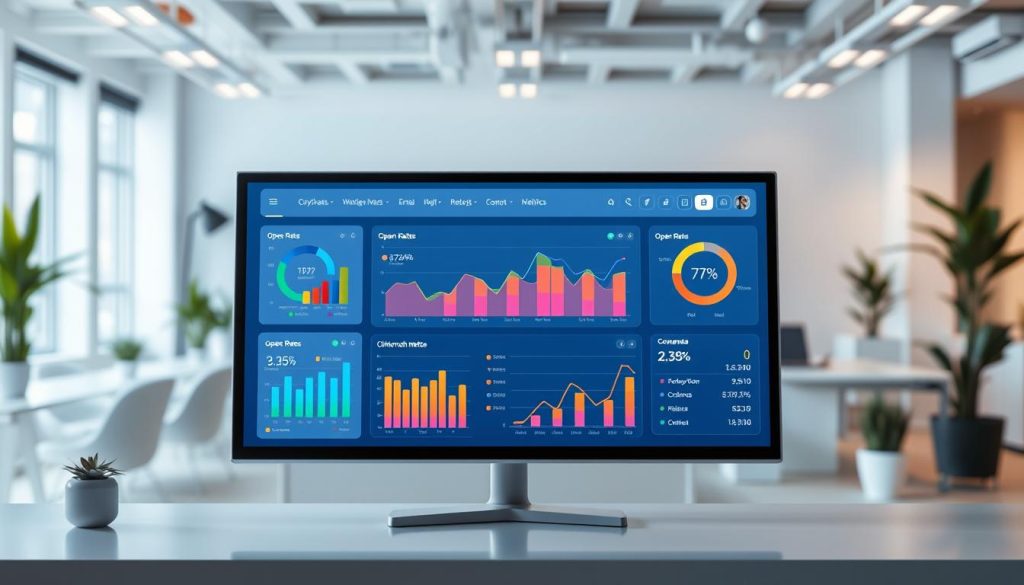
AI reporting systems give you insights and advice, not just data. They alert you to big changes or opportunities. For example, they might say, “Your welcome email series is losing engagement in week 3—add more value.”
Real-time reporting lets AI watch how campaigns do as they happen. You see how well your emails are doing right away. No more waiting for reports.
AI makes complex data easy to understand. It uses natural language and visual tools to show how well your campaigns are doing. This makes data insights available to everyone, not just experts.
With AI, everyone in marketing can make data-driven decisions. Every team member can understand performance insights, leading to quicker, smarter choices.
Key Metrics AI Can Enhance
AI helps improve specific email marketing metrics. Each metric becomes a source of useful advice for making things better.
Open rates show how good your subject lines and brand are. AI looks at subject line details, sender names, and more. It finds out what works best.
AI analyzes when to send emails for the best results. It finds the best times to send to different groups. It also predicts who will engage more in the future.
Click-through rates show how interesting your emails are. AI looks at what makes people click. It finds the best links and offers.
Different people like different types of emails. AI finds out what each group likes. This helps target the right people for future emails.
Conversion rates show how well people follow through on actions. AI looks at all touchpoints, not just emails. It finds out what really works.
AI predicts who will buy more in the future. This helps focus on the best opportunities. You can spot future big spenders early.
Bounce rates show data quality issues. AI tells the difference between permanent and temporary failures. It finds problems before they get worse.
Predictive models warn of delivery issues early. This lets marketers fix problems before they affect campaigns.
Unsubscribe rates show how happy subscribers are. AI finds out when people get tired of emails. It suggests when to send less to keep people interested.
AI helps find the right balance between sending too much and too little. The goal is to keep people engaged without overwhelming them.
| Metric Category | Traditional Analysis | AI-Enhanced Analysis | Business Impact |
|---|---|---|---|
| Open Rates | Basic percentage tracking | Subject line element analysis, sender name optimization, predictive engagement scoring | 15-25% improvement in initial engagement |
| Click-Through Rates | Overall CTR percentage | Content element correlation, layout optimization, segment-specific predictions | 20-35% increase in email-driven traffic |
| Conversion Rates | Direct conversion attribution | Multi-touch attribution, incremental lift calculation, probability forecasting | 30-50% better ROI understanding |
| Bounce Rates | Hard vs. soft bounce identification | Pattern detection, predictive deliverability alerts, proactive list hygiene | 5-10% improvement in deliverability |
| Unsubscribe Rates | Simple unsubscribe tracking | Fatigue detection, frequency optimization, segment-specific triggers | 25-40% reduction in list attrition |
AI also makes advanced metrics easier to understand. Engagement scoring combines many interactions into one score. This score shows how well subscribers are engaging with your emails.
Predicted lifetime value forecasts future revenue based on email behavior. This helps focus on the most valuable customers. You can spot future big spenders early.
Sentiment metrics analyze how people feel about your emails. AI looks at replies and behavior. This shows not just what people do, but how they feel about your emails.
These AI-enhanced metrics give you more than just numbers. They provide actionable advice for improving your email marketing. This creates a cycle of continuous improvement, making every campaign better than the last.
Customer data platforms with email tools bring together all customer data. AI analyzes this data to understand what people like. This ensures your email strategies match the broader customer experience and business goals.
Ensuring Compliance and Security
Email marketing today needs a balance between personalization and privacy. Marketers use AI to understand customer behavior and preferences. But, they must also protect customer data and follow the law.
Marketers must handle customer information carefully to avoid legal trouble. They also need to keep customer trust to grow their business. Ethical data use is key to building strong customer relationships.
Protecting Customer Data Through AI
AI for email personalization needs a lot of customer data. This raises privacy concerns that marketers must address. They must ensure AI systems handle data responsibly.
Many laws, like GDPR in Europe and CAN-SPAM in the U.S., guide email marketing. These laws require clear consent and give customers rights to their data. They also mandate accurate sender info and unsubscribe links.
CCPA in California gives privacy rights similar to GDPR. Laws in healthcare and finance add extra data protection rules for marketers.
AI can help with privacy by tracking consent and respecting customer wishes. It quickly finds and deletes customer data when asked. AI also checks for privacy violations and keeps records for audits.
AI helps avoid spam by analyzing emails before sending. It spots issues like bad links and poor coding. This helps emails reach the inbox instead of the spam folder.
AI makes sure emails are sent in a way that doesn’t look spammy. It keeps sending volumes steady and cleans up email lists. This helps avoid getting flagged by ISPs.
AI helps verify who is sending emails to prevent fake messages. SPF, DKIM, and DMARC protocols prove emails are real. AI keeps these protocols up to date, improving email delivery.
AI improves email list quality by finding and removing bad addresses. It flags addresses that keep bouncing back and identifies unengaged recipients. This helps keep email lists clean and relevant.
AI prevents spam by detecting when emails might be annoying. It adjusts sending times and personalizes content to keep recipients interested. This makes emails more relevant and valuable.
AI helps send emails at the best times to increase engagement. This approach reduces spam complaints and makes recipients happier.
Good spam management benefits everyone. Marketers get better results, recipients get emails they want, and ISPs are happier. This creates a win-win situation for all.
Staying compliant and secure is more than just avoiding fines. It builds trust, which is essential for successful email marketing. AI is a powerful tool for ethical marketing that customers appreciate.
Combining AI with strict privacy practices gives marketers a big advantage. Customers value brands that respect their data and preferences. Being transparent sets ethical marketers apart from those who take shortcuts.
Future Trends of AI in Email Marketing
The next five years will see big changes in email marketing thanks to AI. Marketers will focus more on strategy and less on doing the work. AI will take care of most tasks in campaigns.
Smart email scheduling will get even smarter. It won’t just send emails at the best time. It will change emails on the fly based on what the subscriber is doing.
Emerging Technologies in Email Marketing
True personalization is coming. AI will soon make emails that are unique for each person. No more generic emails for groups.
Natural language processing will make emails feel like real conversations. AI will understand what you need and respond in a helpful way. Email subject lines will also get a boost from AI, with hundreds of options tested instantly.
AI will even design emails that match your style. It will change content based on your location, weather, or what you’ve been looking at online.
The Role of Ethical AI Practices
As AI gets better, we need to be more careful. Being open about how we use data is key. Customers should know how AI affects their experience.
Marketers must tackle issues like bias and privacy. The best programs will be both innovative and honest. Doing things right builds trust and gives a lasting edge.
Using AI wisely is all about putting customers first. It’s about respecting their privacy and dignity. Brands that do this right will have stronger, more meaningful relationships.