
Imagine your business emails could change to fit each person’s needs and habits automatically. This isn’t just a dream—artificial intelligence in email marketing has changed how companies talk to people.
Email marketing is a big deal for growing businesses. Last year, emails sent out went up 15%. This was because people were really engaging with them. But, generic emails just don’t get noticed anymore.
Today’s AI can look at how people act, what they like, and what they’ve done before. It uses this info to send messages that really hit the mark. And it works: companies using these tools are seven times more likely to meet their sales goals.
Let’s look at some numbers. Emails that are personalized do way better. They get opened 29% more and clicked on 41% more than regular emails. Companies that really get into personalizing their emails see 40% more sales and up to 8x return on investment.
This guide will show you how AI can change your email campaigns. You’ll learn how to start, compare tools, track results, and see what’s coming next in email marketing.
Key Takeaways
- Machine learning algorithms enable sophisticated email personalization by analyzing recipient behavior, preferences, and engagement patterns
- Companies using advanced personalization technologies are 7x more likely to achieve sales targets and generate up to 8x ROI
- Personalized campaigns deliver 29% higher open rates and 41% higher click-through rates compared to generic messages
- 73% of business buyers now expect consumer-grade personalized experiences in professional communications
- Predictive technology analyzes historical data while generative systems create tailored content at scale
- Implementing intelligent personalization strategies can drive 40% revenue growth for organizations
Understanding the Role of AI in B2B Email Marketing
Modern B2B marketers are finding big benefits by using artificial intelligence in their emails. This tech goes beyond simple automation. It creates systems that understand customer behavior and send personalized B2B communication on a large scale. AI turns raw data into insights that boost engagement and conversion rates.
This change is more than just a tech upgrade. It changes how companies connect with prospects. AI spots patterns that humans might miss, leading to deeper relationships and better business results.
Machine Learning Technology in Email Campaigns
AI in email marketing uses machine learning algorithms to make smart decisions. These systems look at lots of customer data, like CRM info and website visits. They build detailed profiles for precise targeting and messaging.
Two types of AI work together to improve email campaigns. Predictive AI looks at past data to guess future behavior. It finds the best times to send emails and predicts who will convert.
Generative AI creates unique content for each recipient. It makes personalized subject lines and email copy fast and at scale. It creates thousands of unique versions that humans can’t make by hand.
Together, these AI types offer advanced AI email customization. They respond to each prospect’s unique needs. Machine learning systems get better over time by analyzing results and adjusting strategies.
| AI Type | Primary Function | Key Applications | Business Impact |
|---|---|---|---|
| Predictive AI | Analyzes historical patterns | Lead scoring, send time optimization, conversion forecasting | Identifies high-value prospects and optimal engagement timing |
| Generative AI | Creates original content | Subject lines, email copy, personalized messaging | Scales personalization across thousands of recipients |
| Combined Systems | Integrates prediction and creation | End-to-end campaign automation, customer journey mapping | Delivers complete personalized experiences at scale |
AI in marketing systems can optimize every part of email delivery. It analyzes how customers react to different campaigns and website interactions. This helps refine future messaging. It also shows how much revenue each customer could bring over their lifetime, helping focus outreach efforts.
Advantages of AI-Powered Email Strategies
Companies using AI in their emails see big improvements. The tech delivers real business results that make the investment worth it.
AI helps marketing teams work 10-15% more efficiently. It automates tasks, saving time and letting teams focus on strategy and creativity. This boosts productivity and reduces the need for repetitive work.
AI also leads to a 50% increase in Sales Qualified Leads. This is due to better targeting, more relevant messages, and the right timing. It boosts engagement and response rates.
Key benefits of AI-driven email campaigns include:
- Personalization at scale: Create thousands of unique email variations tailored to individual recipient preferences and behavior patterns
- Enhanced segmentation: Divide audiences into precise groups based on complex data analysis that reveals hidden patterns and opportunities
- Intelligent lead scoring: Automatically assign scores indicating conversion likelihood, helping sales teams prioritize their outreach efforts
- Lifetime value prediction: Calculate the total revenue a customer could bring to inform resource allocation decisions
- Lookalike audience generation: Identify new prospects who share characteristics with your best existing customers
AI removes guesswork from email marketing by using data to guide decisions. It learns from campaign results, adjusting strategies to improve performance. This makes marketing efforts more effective over time.
The tech is great at creating personalized B2B communication that meets each recipient’s needs. It sends relevant content that addresses specific pain points and challenges. This relevance boosts engagement and builds stronger customer relationships.
Advanced AI systems also offer insights into customer behavior and preferences. Marketers learn which messages work best for different groups, what content drives conversions, and how prospects move through the buying journey. These insights help shape not just email strategy but broader marketing and sales efforts.
The Importance of Personalization in B2B Emails
Business leaders now want the same personal touch in their work emails as they do in their personal ones. This change has turned B2B email marketing into a tool for building relationships. Companies that don’t adapt risk losing valuable leads before they even start talking.
There’s a big gap between emails that are personalized and those that aren’t. Personalized emails have 6x higher transaction rates than generic ones. This shows how business pros now look at vendors and partners in the digital world.
Today’s B2B email tech lets marketers send relevant messages to many people at once. No more hand-crafting each email. Now, automated business emails offer a personal touch while reaching thousands efficiently.
The Business Case for Personalized Communication
Buyer expectations have changed because of their consumer experiences. When they get tailored product suggestions, they expect the same from business vendors. 73% of B2B buyers want personalized, consumer-like experiences in their work emails.
Generic emails harm your reputation. Email platforms watch how people interact with your messages. Low open rates can send future emails to spam folders. This creates a cycle where bad personalization leads to less visibility, making campaigns less effective.
Real B2B email personalization is more than just adding names to templates. It’s about understanding what prospects need and what’s happening in their industry. Companies that do this well see 40% more revenue than those using generic emails.
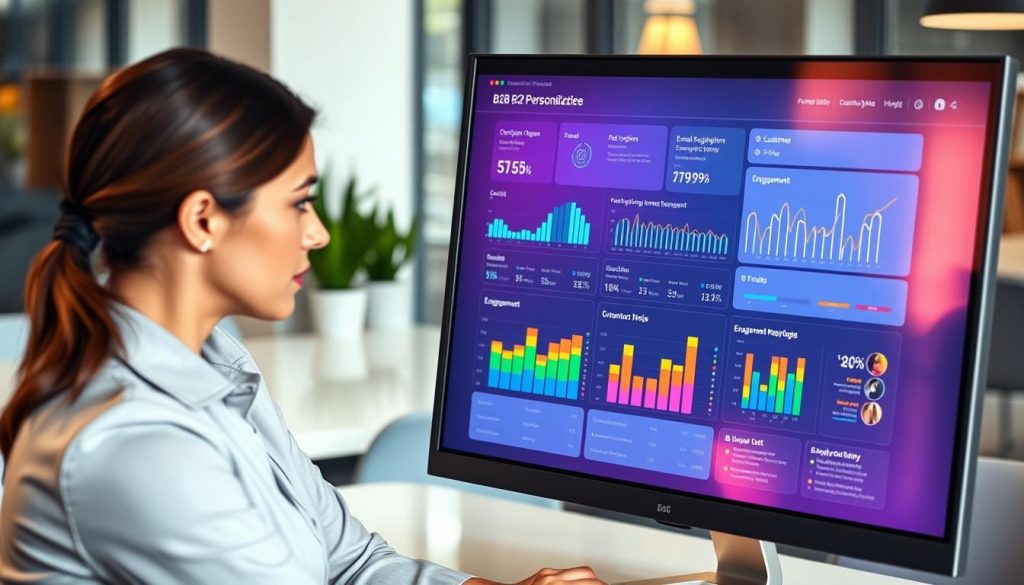
Personalization affects how decision-makers respond to emails. They prefer messages that show they understand their situation. 80% of business decision-makers like tailored emails that meet their specific needs, not just generic pitches.
Think about how personalization helps in building partnerships. When 63% of decision-makers are more likely to work with personalized companies, it’s clear who has the advantage. Personalization shows you’ve taken the time to understand their business, building trust before you even talk.
Performance Data That Demands Attention
The numbers show how powerful personalization is. Personalized emails get 29% higher open rates and 41% higher click-through rates than generic ones. These numbers mean more conversations, better leads, and more deals.
| Email Type | Open Rate | Click-Through Rate | Response Rate |
|---|---|---|---|
| Personalized Content | 18.8% | 10x baseline | 7-8% |
| Generic Bulk Email | 13.1% | 0.6% | 2.4% |
| Industry Average | 27.7% | Variable | 5.1% |
Personalizing subject lines makes a big difference. Research shows personalized subject lines boost reply rates by 30.5%. Customized email bodies see a 32.7% increase in responses. These improvements add up, making a big impact on sales.
There’s a big difference between personalized and generic emails. Generic emails only get 2.4% open rates, while personalized ones are 10 times more likely to be opened. This huge difference means thousands of missed opportunities for companies stuck in old ways.
Market trends show a worrying trend for those not adapting. The average B2B cold email response rate has dropped from 7% to 5.1%. Open rates have also fallen from 36% to 27.7%. These declines show how tired people are of irrelevant emails and how much they expect personal communication.
Avoiding Personalization Pitfalls
Many companies struggle with personalization, despite knowing its value. Knowing common mistakes helps you use successful personalization strategies that work, not just frustrate.
One common mistake is superficial personalization. Just adding a name to a generic email doesn’t show you understand the person. People can tell when you’re just trying to seem personalized, which can actually make them trust you less than a genuinely generic email.
- Over-reliance on outdated data: Using old information leads to messages that don’t make sense, showing you don’t get what the prospect needs.
- Inadequate audience segmentation: Treating all prospects the same ignores important differences in their challenges and priorities.
- Failure to test approaches: Thinking one personalization strategy works for everyone prevents finding what really works.
- Ignoring privacy concerns: With 86% of Americans worried about privacy and data security, being too familiar can make people suspicious.
Bad data quality can ruin even the best personalization efforts. If your contact info is wrong or outdated, your automated emails will miss the mark. Keeping your data clean prevents these mistakes.
The decline in B2B email response rates is partly due to these mistakes. As more companies try personalization without doing it right, people start to doubt all marketing emails. To stand out, you need to show real value through genuine, well-researched personalization.
Privacy is another big challenge. Personalization needs data, but people are watching how companies use it. Being open about your data practices and respecting privacy builds trust for long-term engagement.
How AI Analyzes Customer Data for Personalization
AI is key to making emails personal. It looks at lots of data to understand customers well. This helps marketers send emails that really speak to what customers need.
AI checks how customers have interacted with emails before. It learns when to send emails for the best results. This keeps getting better with each email sent.
AI Techniques for Data Collection
AI uses many sources to get to know customers. It looks at CRM systems, LinkedIn, and more. This gives a full picture of customers that’s hard to get by hand.
Salespeople used to spend a lot of time researching. Now, AI does this for them. It also makes sure the data is good.
AI can understand what customers say in emails and on social media. It knows the tone and what they really mean. This gives deeper insights than just looking at who opened an email.
AI can also find the best customers to reach out to. It looks at who has bought things before. This way, it focuses on the most likely to buy.
- Firmographics: Company size, industry, revenue, and structure
- Demographics: Job titles, seniority, and who makes decisions
- Technographics: Technology used, software likes, and digital setup
- Behavioral data: How they interact with content, website visits, and email actions
AI tracks how customers interact with content. It looks at time on web pages, downloads, and video views. This helps figure out if they’re ready to buy.
AI looks at all interactions, like email, website, and purchases. It analyzes preferences and trends for better targeting.
AI keeps data up to date for personalization. It adds new info as customers interact with your brand. This keeps messages fresh and avoids annoying customers.
Enhancing Data Quality for Better Results
Good data is essential for AI to work well. Without it, even the best AI won’t do well. AI checks data for errors and makes sure it’s right.
AI fixes problems like duplicate records and outdated info. It works all the time to keep data clean without needing people to check it.
Good data quality really shows in results. For example, Cognism’s data was 98% accurate, compared to 72% for others. This means more chances to talk to customers and more sales.
Keeping data clean with AI is better than doing it by hand. AI watches data quality all the time. It alerts teams if it’s not good enough. This stops small problems from getting big.
AI needs data to be the same everywhere. It makes sure data from different places is the same. This helps make better choices for personalizing emails.
Checking data quality often helps find where it’s not good. AI knows which data is most reliable. This helps teams focus on getting the best data for their emails.
Types of Personalization AI Can Achieve
Modern AI technology offers three main personalization methods that change how B2B marketers reach their audience. These methods go beyond just using someone’s name in the subject line. AI allows marketers to create customized experiences that match individual behaviors and preferences.
Each type of personalization has its own role in making emails more relevant. Together, they form a complete framework for AI-powered lead nurturing that brings measurable results. Knowing these methods helps marketers pick the best strategy for their campaigns.
Creating Individualized Content at Scale
Dynamic content generation is a key AI feature in email marketing. It creates customized email content in real-time based on each recipient’s unique traits and actions. A single email template can become thousands of unique versions, each tailored to a specific recipient.
AI looks at various data points to decide which content to include in each email. It considers industry, company size, past interactions, and browsing habits. This helps choose the right product recommendations, case studies, and calls-to-action for each recipient.
This method allows for personalized emails at a large scale. Even when sent to thousands, each email feels like it was made just for that person. The AI picks the right images, adjusts the tone, and highlights features that match each recipient’s needs.
Dynamic content generation works well across entire campaigns. AI can start with one email that shows product recommendations based on purchase history and browsing. Then, it quickly creates ten new versions for different customer groups, each tailored for maximum engagement.
Leveraging Actions to Drive Engagement
Behavioral targeting uses AI to personalize messages based on actions and interests. It tracks engagement like email opens, link clicks, and website visits. AI builds detailed profiles that show where prospects are in their buying journey.
The technology uses these insights to send the right messages automatically. It adjusts content complexity and timing based on individual activity. This approach reduces email fatigue and boosts engagement and loyalty.

AI can spot subtle signs of buying intent. It watches for technology adoption, hiring trends, funding rounds, and content engagement. Companies using AI to focus on prospects showing real buying intent see great results.
The data shows how effective behavioral targeting is. Companies using this approach see 50% more Sales Qualified Leads. Intent-based selling boosts conversion rates by three to five times over cold calling, making it key for B2B email strategies.
Advanced Audience Segmentation
Segment-based personalization is another AI-enabled approach. It creates detailed audience segments beyond basic demographics. Machine learning algorithms find patterns in customer data to create micro-segments.
AI looks at firmographic data, behavior, and psychographics together. It finds connections between customers that humans might miss. This helps marketers group audiences in ways that improve message relevance and response rates.
Natural language-based segmentation is an advanced part of this category. AI identifies how different audiences prefer to receive information. Some like technical details, while others prefer business outcome stories.
These segments evolve as AI learns from campaign responses and new data. The system refines segment definitions based on engagement. This ensures AI-powered lead nurturing stays effective as customer preferences change.
Segment-based personalization offers more nuanced messaging. Marketers can create campaigns that address specific concerns and aspirations of each micro-segment. This precision targeting maximizes email relevance and optimizes resource use across campaigns.
Popular AI Tools for B2B Email Personalization
81% of sales teams now use AI tools. It’s key to pick the right ones for success. The market offers many AI tools for email marketing, from big systems to specialized ones.
Using AI for email personalization brings real results. Teams see 95% more qualified leads, 30% higher conversion rates, and up to $400,000 in new opportunities in just 30 days. This shows why more companies are using AI in their email marketing.
Leading AI Platforms Transforming B2B Communication
Big platforms lead the AI world with their wide range of features. Salesforce Einstein GPT and Agentforce use CRM data to make emails personal. They analyze lots of data to create emails that really speak to each person.
HubSpot’s AI tools like ChatSpot and automated email generation make personalization easy. Even small businesses can use it. It’s easy to use and keeps your brand consistent everywhere.
Microsoft Copilot AI focuses on analyzing sales pipelines. It gives insights to help sales teams focus on the best prospects. It learns from successful emails to make future ones better.
Specialized tools tackle specific challenges. Apollo is great at finding leads and understanding who to target. It uses lots of data to make detailed profiles for better emails.
Klenty helps with email, LinkedIn, and phone. It has shown 93% revenue growth and 100-233% more meetings booked. It makes sure your message is consistent, no matter how people contact you.
Saleshandy finds leads with AI. It watches how people act online and alerts you when they’re ready to buy.
HeyGen creates personalized videos. It’s a new way to connect with people. Early users see much higher engagement than with just text emails.
Clay enriches data and automates research. It gives the detailed info needed for great AI personalization. It gathers data from many places to help other tools work better.
Real results show these tools’ impact. Guild Mortgage got leads faster with AI. Teams see 42% more replies and 200% more meetings booked.
Essential Features for Maximum Impact
Choosing AI tools means looking for real value, not just marketing talk. Good tools have key features that make a big difference.
Comprehensive data integration is key. Top tools use lots of data sources to create full customer profiles. Without this, personalization is shallow.
Automatic message generation should do more than just fill in the blanks. Look for AI that makes emails truly personal, adapting to each person’s needs.
Important features include:
- Real-time analytics and optimization that keep improving without manual effort
- Predictive insights to focus on the best prospects and send emails at the right time
- Multichannel campaign support to personalize across different channels
- Real-time campaign tracking to see how well campaigns are doing and make quick changes
- A/B testing automation to find and use the best versions of emails
Practical things matter for long-term success. Ease of use lets your team start and grow personalization fast. Tools that are hard to use slow things down.
How easy it is to start using a tool affects how soon you see results. The best tools integrate well with other tools, saving time. Prices should grow with your business, not be too high too soon.
Good customer support is key for solving problems and getting the most out of features. Look for vendors with dedicated support. The tool should grow with your business, not need expensive updates.
Security and following rules are important to protect customer data and meet regulations. Look for strong encryption, access controls, and audit trails that meet your security needs.
Building a Personalized Email Campaign with AI
The shift from old email marketing to new AI-driven methods starts with clear goals and a step-by-step plan. Instead of changing everything at once, companies grow their skills slowly. This way, they avoid big risks and learn as they go.
Before using AI, companies must set up a strong, ethical base. They need to handle customer data carefully and build trust. Following rules like GDPR and CAN-SPAM is key to keeping email marketing alive.
Creating a culture that values ethical AI use is key to lasting success. Your team should know how, when, and why to use AI tools. This helps make better decisions and more genuine B2B communication.

Steps to Implement AI in Your Email Strategy
Start your AI journey by setting clear, measurable goals. Do you want to boost open rates, increase conversions, or improve customer engagement? These goals will help you choose the right technology and focus your efforts.
Begin with simple AI features in your marketing tools. For example, send-time optimization sends emails at the best time for each person. This small step can make a big difference right away.
AI can also pick the best content for each email. It looks at what each person likes and sends them something that really speaks to them. This turns static emails into dynamic, engaging ones.
AI can also test subject lines to find the best ones for different groups. It uses past data and natural language to guess which subject lines will get the most attention. This is smarter than just A/B testing.
As you get more comfortable, move to more complex email campaigns. These campaigns test different things at once but keep the message clear. Each person gets an email that fits their needs and interests.
Real-time personalization is the next step. It changes emails based on what people do right now. This could be what they’ve bought or what they’ve looked at online. It makes emails more relevant and interesting.
Data quality is the base for all AI personalization. Your AI can only be as good as the data it uses. Check your data to find any problems or old information. This keeps your emails accurate and effective.
Keep your data up to date with automated tools. This could include tracking what people do online or adding new info from CRM systems. Good data means better personalization and targeting.
Make sure to keep your data clean and up to date. This means removing old or wrong info. It keeps your emails relevant and effective as your customers change.
Always balance AI with human judgment. AI is great at finding patterns, but humans know about brand voice and values. Check AI emails regularly to make sure they’re right for your brand.
| Implementation Phase | AI Capabilities | Expected Timeframe | Key Success Metrics |
|---|---|---|---|
| Foundation | Send-time optimization, basic segmentation, subject line testing | 1-2 months | 10-15% improvement in open rates |
| Intermediate | Dynamic content selection, multi-variant campaigns, behavior tracking | 3-6 months | 20-30% increase in click-through rates |
| Advanced | Real-time personalization, predictive analytics, cross-channel coordination | 6-12 months | 40-50% improvement in conversion rates |
| Optimization | Custom AI models, automated testing, continuous learning systems | 12+ months | Sustained performance gains and reduced campaign costs |
Testing and Optimization Techniques
AI changes A/B testing by letting you test many things at once. You can try different subject lines, email content, and more across different groups. This shows how different things work together.
One marketer said A/B testing got ten times better with AI. It lets them test more than just subject lines. This revealed new ways to improve campaign results.
AI analytics platforms do a lot of testing work for you. They watch how well campaigns are doing and change them as needed. This makes improving your emails faster and easier.
Use control groups to see how much AI helps. These groups get regular emails without AI. This lets you see how much AI really improves things. It also shows where you can do better.
Test one thing at a time when you’re not sure about it. AI lets you test many things at once, but sometimes it’s good to focus on one thing. This helps you understand what really works.
Make sure your tests are long enough to be sure of the results. AI usually figures this out for you, but knowing why helps you understand what you’re seeing. Don’t make decisions too fast or you might make mistakes.
Have a plan for testing that guides your efforts. Know what you’re testing, what you want to happen, and what you’ll do with the results. This makes your email campaigns better over time.
Use AI to pick images and colors that fit your audience. Visuals are important, but many marketers guess instead of using data. AI finds the best visuals for different groups and situations.
Keep changing your emails based on what AI tells you. AI finds new ways to improve your emails as you go. This makes your email strategy flexible and responsive to what your customers want.
Crafting Effective Subject Lines with AI
Your subject line is key in B2B email marketing. It can make or break whether people open your email. 47% of email recipients open messages based solely on subject lines. On the other hand, 69% mark emails as spam because of bad subject lines.
AI makes creating subject lines more precise. It uses big data to find what works best. This is a big deal because it’s the first thing people see.
AI-Powered Subject Line Optimization Techniques
AI uses advanced techniques to make subject lines better. It looks at successful subject lines to find patterns. This way, it creates messages that really speak to people.
AI looks at company info, news, and job titles to make subject lines. Personalized subject lines boost reply rates by 30.5%. This is because they show they know the person they’re talking to.
Good subject lines are specific. For example, “Thoughts on [Company Name]’s recent Series B expansion?” shows you’ve done your homework. This makes a big difference.
One marketing professional used AI to test subject lines and user behavior. This helped send emails at the best time and choose images and colors that appeal to people.
AI can predict which subject lines will work best. This means you can avoid wasting time and money. It helps you get the most out of your emails from the start.
AI checks if the tone of your email matches what people want. B2B audiences like different things, like urgency or value. AI finds out what works best for each group.
AI also checks your email against spam filters. It finds words or phrases that might get your email blocked. This helps keep your emails from being marked as spam.
| Subject Line Approach | Key Characteristics | Typical Performance | AI Enhancement |
|---|---|---|---|
| Generic Mass Email | Vague, no personalization, overused phrases | Low open rates, high spam flags | Pattern detection identifies ineffective elements |
| Basic Personalization | Name insertion, simple company reference | Moderate improvement, limited engagement | Deep data analysis adds contextual relevance |
| AI-Optimized | Contextual, timely, segment-specific | 30.5% higher reply rates, 50% better opens | Continuous learning improves over time |
| AI with A/B Testing | Multiple variations, behavioral routing | Maximum engagement, refined messaging | Multivariate analysis optimizes all elements |
Strategic Testing for Maximum Impact
A/B testing is key for better subject lines, and AI makes it better. It lets you test many variations at once. This means you can find the best subject line for each person.
AI can test many things at once, like length and tone. It finds the best mix for each group. This makes your emails more effective.
Testing needs careful planning. You need enough people to get accurate results. Testing one thing at a time helps you understand what works best.
Tests should last long enough to capture different times of day. People respond differently on Mondays versus Fridays. AI takes this into account to send emails at the best time.
Keeping track of your results is important. It helps you learn what works for different people. Over time, you can make your emails even better.
AI does more than just A/B testing. It looks at who you’re sending to and what they’ve done before. This means you can send the right email to the right person.
AI can also change your email in real time. If one subject line is doing better, it will send more of those. This makes your email campaign even stronger.
Good subject lines can increase opens by up to 50%. This means more chances to talk to people who might be interested in what you’re selling. Making your subject lines better is a big win for using AI in your emails.
Measuring the Success of AI-Personalized Emails
Tracking the right metrics makes B2B email personalization a proven way to boost revenue. Companies that measure well see how their AI investments grow their business. Without tracking, even the best personalization efforts are just guesses.
Data shows that AI in B2B sales boosts success by seven times. Also, 83% of AI teams see revenue growth, compared to 66% without AI. These numbers show why measuring is key to validating your tech investments.
Essential Metrics That Reveal Campaign Impact
Knowing which metrics matter helps focus your analysis. The best strategies combine engagement data with business results. This gives a full picture of campaign success.
Open rate shows if your emails grab attention. It measures how many people open your emails, showing if your subject lines and sender reputation work. Having baseline metrics before using AI helps measure improvement.
The click-through rate shows if your emails are relevant and effective. It measures how many people click links in your emails. Higher rates mean your AI emails are valuable to recipients.
Conversion rate is the ultimate test of email success. It tracks how many people take desired actions, like downloading content. Real conversion data links your email efforts to revenue.
Business impact metrics show the real value of your emails. Sales Qualified Leads (SQLs) show how well your campaigns create sales opportunities. AI users see 50% increases in SQLs, showing AI’s power.
Deal cycle length shows if AI speeds up sales. Shorter cycles mean faster revenue and more efficient sales. Revenue per sales representative shows if AI boosts team productivity.
Return on investment (ROI) compares revenue from AI emails to costs. This metric shows if your investment in B2B email personalization is worth it.
Efficiency metrics show how AI saves time. AI saves an average of 2 hours and 15 minutes daily per salesperson. This time is used for more important tasks.
Leading indicators predict future performance. Monitoring these indicators helps make early adjustments to prevent declines.
Platforms That Turn Data Into Insights
Modern analytics tools turn data into useful insights. The best platforms offer real-time dashboards that show campaign performance. This helps quickly see what works and what needs improvement.
AI analytics combine data from emails, websites, and purchases. This analysis reveals customer preferences and trends. Advanced platforms use these insights to predict the best personalization strategies.
Real-time tracking lets you optimize campaigns as they run. Performance metrics update constantly. This allows for quick adjustments based on actual responses.
Specific analytics features offer deeper insights:
- Cohort analysis compares different audience segments to find the best personalization approaches
- Customer journey mapping tracks email interactions within broader customer experiences
- Attribution modeling shows how email contributes to conversions in multi-channel scenarios
- Predictive analytics forecast future campaign performance based on trends and patterns
Real-world results show what analytics can achieve. PetrolPrices saw 50-60% open rates for newsletters and 32% for Hotmail users with AI targeting. Their campaigns had 0.67% click-through rates, far above industry standards.
Connecting email analytics to broader business systems gives a full view of marketing’s role. Integration with CRM platforms and sales tools shows how email campaigns impact business goals. This holistic view helps accurately assess marketing’s role in revenue.
Advanced analytics tools also offer competitive benchmarking. This lets you compare your performance to industry standards. Knowing where you stand helps set realistic goals and identify areas for improvement.
Challenges and Limitations of AI in Email Personalization
Every technology has its limits, and AI in email personalization is no different. It offers great ways to customize B2B messages, but there are real obstacles to overcome. Knowing these challenges helps businesses set realistic goals and plan carefully.
For AI to work well, we must understand its limits and protect customer trust. Companies that focus on these issues can grow sustainably, avoiding short-term mistakes that harm their reputation or lead to legal trouble.
Data Privacy Concerns
Privacy is a big challenge for AI in email personalization today. A lot of people, 86% of Americans, worry about how companies use their personal info. This worry affects AI’s ability to personalize messages, which relies on this data.
There are also big fines for breaking privacy rules. GDPR fines can be up to €20 million or 4% of global revenue, whichever is more. CCPA fines range from $2,500 to $7,500 for serious breaches. This makes it risky for companies without good privacy measures.
Worryingly, only 17% of sales teams have AI ethics policies. This leaves most companies open to fines and damage to their reputation as customers demand more transparency.
- Be clear about what data you collect and how you use it
- Get clear consent from customers instead of assuming they agree
- Make it easy for customers to see, change, or delete their info
- Collect only the data you really need
- Use strong security like encryption and strict access controls
Companies that focus on privacy can actually get ahead. Customers prefer to work with companies they trust. Regular privacy checks, training staff, and having a person in charge of following rules show you care about privacy.
By focusing on privacy, companies can turn rules into advantages. They attract customers who value their data and want to work with companies that follow the rules.
Understanding AI Limitations
It’s important to know what AI can and can’t do. AI is only as good as the data it’s trained on. Bad data can lead to AI making mistakes or missing important groups of customers.
AI is complex and needs special skills to use well. Many companies don’t have the right team to make AI work. Training staff to use AI takes time and money.
AI needs to be watched because it can get outdated. It’s important to keep it updated so it keeps working well. Without this, AI can start to make mistakes that hurt your campaigns.
| AI Limitation | Impact on Email Campaigns | Mitigation Strategy |
|---|---|---|
| Data quality issues | Inaccurate personalization that feels generic or irrelevant | Implement rigorous data validation and regular cleaning processes |
| Lack of emotional intelligence | Messages missing nuance, humor, or appropriate empathy | Maintain human oversight for final review and brand voice alignment |
| Technical skill gaps | Underutilized platforms and suboptimal configurations | Invest in training programs or partner with AI implementation specialists |
| Deliverability challenges | Messages blocked by increasingly sophisticated spam filters | Focus on sender reputation, authentication protocols, and engagement metrics |
AI content can lack the creativity and emotional touch of human writers. This is why we need humans to check and improve AI’s work. AI helps humans do their job better, not replace them.
Getting emails to the right people is hard. 20.3% of commercial emails worldwide never make it past spam filters, even with AI’s help. AI can improve targeting and guessing who will engage, but it can’t fix all problems.
High-volume, impersonal emails are less effective, even with AI. Cold email response rates have dropped from 7% to 5.1%. This shows that people are ignoring generic messages. AI can help, but it’s not a magic solution.
AI works best when it helps humans, not replaces them. The best results come from combining AI’s efficiency with human creativity and strategy. Machines can’t replace the personal touch and relationship-building skills of humans.
AI can also be hard to integrate with old systems. This might need expensive fixes or big changes to your setup. These costs can add up quickly, slowing down your plans or forcing you to settle for less.
Knowing AI’s limits helps companies plan better and set realistic goals. Instead of expecting AI to change everything at once, successful companies see it as part of a bigger plan. This plan includes good content, clear targeting, and really listening to customers.
Future Trends in AI and B2B Email Marketing
AI and email marketing are coming together in exciting ways. This change is moving from just optimizing campaigns to really understanding and connecting with customers. By 2025, 30% of marketing messages in big companies will be made by AI.
This change is more than just small updates. It’s a big shift in how B2B companies talk to customers through email.

Predictive Analytics and Forecasting
AI is getting better at predicting what customers will do next. This means marketers can start planning before customers even ask for something. Predictive analytics changes how we plan and send emails.
AI can spot chances to sell more 30-60 days early and find customers who might leave. This changes how companies use their time and resources. Instead of waiting for customers to act, they can act first.
Several AI tools are changing how we nurture leads:
- Churn Prediction: AI finds customers who might leave by looking at how they interact with the company. This lets companies keep those customers before they go.
- Propensity Modeling: AI scores how likely someone is to buy, helping sales teams focus on the best chances.
- Lifetime Value Forecasting: AI guesses how much a customer will be worth over time. This helps decide how much to spend on getting and keeping customers.
- Next-Best-Action Recommendations: AI suggests the best next steps for each customer based on their history and current situation.
These tools get better as AI learns from more data. Soon, AI will predict in real-time, adjusting as new information comes in. This means emails will be sent when customers are most likely to open them.
AI also helps plan strategies based on future trends, not just past data. Marketers can try out different plans and see which one will work best before spending resources.
The Evolving Role of AI in Customer Engagement
AI is doing more than just automating tasks. It’s helping create personalized emails for each customer, not just groups. This means every email is truly tailored to the individual.
This change is a big deal for personalization. Before, companies divided customers into groups. Now, AI makes each interaction unique, making every email feel personal.
This change affects marketing in many ways:
- Data Collection and Management: Marketers are focusing on data from customers directly. AI helps make the most of this data.
- Content Creation: AI does the initial work, freeing up humans to focus on strategy and building relationships.
- Campaign Orchestration: AI manages complex campaigns across different channels, adjusting as needed.
- Performance Optimization: AI keeps improving results on its own, finding patterns and opportunities faster than humans can.
Experts say that soon, most marketing will be done by people who know AI well. This means AI literacy will be key. The companies that do best will use AI with human creativity and strategy.
AI is also making emails more empathetic and personal. It can understand emotions and suggest messages that connect with customers on a deeper level. This helps build stronger relationships by showing customers that they’re understood.
But as AI becomes more common, trust is key. Customers want to know how AI is used and what data is collected. Companies that are open about their AI practices will build stronger relationships with their customers.
The future will reward companies that see AI as a tool, not a replacement. AI makes marketing teams work faster and more strategically. This is what the next level of B2B email marketing will look like.
Conclusion: Maximizing the AI in B2B Email Personalization
Yes, AI can definitely personalize B2B emails. It turns generic messages into ones that really speak to each person’s needs and interests.
Essential Insights for Success
Companies using AI are 7 times more likely to meet their sales goals. Personalization can boost revenue by 40% and bring up to 8x ROI. These stats show AI personalization is now a must for B2B sales.
Cold emailing is very effective. It’s 40 times better than social media for getting new customers. 78% of decision-makers prefer email. AI helps make sure your emails get read.
Think of AI as a helpful friend and personal assistant. It handles data and repetitive tasks. This lets your team focus on strategy and building relationships.
Taking Action Today
Start with small, measurable goals. Try AI for subject line optimization in one campaign. Or send-time optimization for a specific product. Small tests show value before you fully commit.
Finding the right mix of automation and human touch is key. Use AI insights to guide your messages. But keep the human element that builds trust and success.
Build your AI strategy on ethics and strategy. Focus on clear data practices and privacy. Create a culture of ethical AI use. Early adopters will gain big advantages as their systems get smarter.