
Imagine cutting hours of boring prospecting work and boosting your response rates. That’s what AI offers to sales and marketing teams. They’re looking to make outreach more efficient.
Prospecting has always been hard. Making lists and writing emails one by one takes a lot of time. Many emails don’t even get seen.
But, there’s a silver lining. 23% of sales pros say cold emailing is their top way to reach out. Another 21% find it the most effective for getting leads.
Now, there’s the AI cold email generator. It helps write emails with smart prompts and fields you can customize. It’s changing how teams do prospecting.
This guide looks into if AI can replace human writers for outreach. You’ll learn what these tools do well, their limits, and how to mix tech with human touch for the best results.
Knowing when and how to use these tools is key. The future is about working together, not just using one or the other.
Key Takeaways
- Cold emailing is a top lead generation method for 21% of sales professionals in 2024
- Artificial intelligence tools can greatly cut down time on manual prospecting and email writing
- AI-generated emails do best when reviewed and personalized by humans
- It’s important to know what these tools can’t do before using automated email solutions
- Successful campaigns need more than just good copy
- The best approach combines tech’s strengths with human creativity and insight
Understanding Cold Emails and Their Purpose
Before diving into how AI changes cold emails, it’s key to know the basics. These messages are vital for starting many business relationships. Understanding them helps businesses use both old and new methods well.
Research shows cold emailing is a top way to find new leads, beating other methods by 21%. This shows how effective good outreach can be, even in a crowded online world. Cold emails stay relevant and work well, even with new ways to communicate.
What Makes an Email “Cold”
Cold emails are messages sent to people who don’t know the sender. They’re different from warm emails, which come after an introduction. Cold emails arrive without warning, with no prior connection.
This makes cold emails harder to get noticed. They’re like knocking on a door without an invite. They need to quickly win trust and grab attention.
The term “cold” means there’s a big gap between the sender and the recipient. But the goal is to quickly make that gap smaller. Good cold emails turn strangers into people who are interested in what you have to say.
Why Cold Emails Matter in Modern Business
Cold emails are a less invasive way to reach out than cold calls. People can read and reply at their own pace. This makes cold emails more considerate of others’ time.
Cold emails are “more valuable than ever—precisely because they’re harder to do well” in an age of LinkedIn automation and AI-generated outreach.
This quote points out a key fact. As tech gets better, personal cold emails stand out more. The quality needed has gone up, but so has the reward for doing it well.
Cold emails have helped people get jobs, clients, and even friends. These stories show that good outreach can lead to real connections. It’s not just about making a sale.
The main idea is that cold emailing is about making connections online. Each email should start a conversation, not just sell something. This idea is true whether the email is written by AI or a person.
Essential Components of Successful Cold Emails
Good cold emails have a few key things that make them work. Knowing these helps businesses check if emails are well-written, by humans or AI. Here are the main parts of successful outreach:
- Relevant opening line: The first sentence should show you’ve done your homework on the recipient
- Clear value proposition: The recipient should quickly see what’s in it for them
- Authentic personalization: It’s not just about using the recipient’s name; it’s about knowing their specific situation
- Specific ask: The call to action should be clear and respectful of the recipient’s time
- Appropriate length: It should be short but detailed enough to be worth reading
- Professional yet personable tone: It should feel formal but also friendly
These elements are key, no matter who writes the email. Whether it’s a salesperson or AI, these basics can’t be skipped. The best cold emails treat people as individuals, not just targets.
Personalization is more than just putting a name in a template. It’s about showing you know something about the recipient’s world. This level of effort shows respect and boosts the chance of a response.
Considering the length of an email is very important today. With so many emails coming in, messages need to grab attention fast. Being brief but meaningful is the best approach.
The Role of AI in Content Creation
AI writing tools are changing marketing. They help companies make and send emails faster and better. These tools use smart algorithms and lots of data to create professional emails quickly.
Now, companies use AI to write emails. This lets marketing teams focus on strategy and building relationships. AI has changed how businesses talk to their audience.

AI Technologies Powering Email Generation
Several technologies make AI email writing possible. Natural language processing is key. It lets machines understand and write like humans.
Machine learning algorithms study successful emails. They learn what works in different situations. This helps them get better over time.
Tools like GPT-3.5 and Claude are at the forefront. They’ve been trained on lots of text. This lets them understand nuances and adapt to different audiences.
These technologies work together to create emails. They use information about your audience and goals. This makes content that fits your brand perfectly.
Key Advantages of AI-Powered Writing
AI saves a lot of time in email creation. What took hours now takes minutes. Teams can make many emails without losing quality.
AI also keeps messages consistent. This builds trust and shows your brand’s professionalism.
Here are the main benefits of AI email writing:
- Scalability: Make many personalized emails without extra help
- A/B Testing: Try different emails quickly to see what works best
- Writer’s Block Solution: Get past creative blocks with AI ideas
- Data-Driven Optimization: Use past campaign data to improve future emails
- Cost Efficiency: Save money by not needing as many writers
AI makes sales outreach easier. Teams can personalize emails on a large scale. AI handles the routine tasks, letting humans focus on strategy.
AI also gets better over time. Each campaign adds data that improves future emails. This creates a cycle of getting better and better.
Leading Platforms for Email Generation
There are many cold email automation tools available. HubSpot AI works well with its CRM. It’s easy for sales teams to use.
This integration makes emails more personal. It uses contact history and data to create relevant messages.
Clay uses APIs for deep personalization. It looks at company info and social media. This makes emails feel personal and engaging.
Anyword helps with audience profiling. It uses brand assets and customer personas. This makes content that speaks directly to your audience.
Copy.ai uses ChatGPT 3.5 and Claude 3. It’s flexible in tone and style. This makes it great for creating lots of content quickly.
| AI Tool | Core Technology | Primary Strength | Best Use Case |
|---|---|---|---|
| HubSpot AI | ChatSpot Integration | CRM synchronization and contextual awareness | Sales teams needing seamless workflow integration |
| Clay | Multiple API Connections | Deep research and hyper-personalization | Account-based marketing campaigns requiring detailed customization |
| Anyword | Predictive Performance AI | Brand consistency and audience targeting | Marketing teams focused on brand alignment and conversion optimization |
| Copy.ai | GPT-3.5 and Claude 3 | High-volume content generation with style flexibility | Agencies and businesses running large-scale outreach campaigns |
Each platform meets different needs. Automated sales outreach works best with the right tool. Some teams use several platforms for their strengths.
Choosing the right tool depends on your needs. Look at your technology, campaign size, and personalization goals. Find the best fit for your team.
How AI Analyzes Target Audiences
Machine learning for email outreach starts with a deep look at the audience. This lets businesses connect with prospects in a meaningful way. AI turns scattered data into clear profiles, guiding email content and strategies.
The success of AI email campaigns relies on understanding the audience well. Modern tools use many data sources to create detailed profiles. These insights help make outreach smarter and boost response rates.
Data Collection Techniques
AI tools use different ways to gather data on prospects and their companies. These methods are key to understanding the audience. The best systems gather data from many places at once.
Web scraping is a main way to get prospect information. Tools like Clay can find company details, such as size and recent news. This saves a lot of time and ensures thorough research.
API integrations are another strong way to get data. They let AI systems access databases like ZoomInfo and LinkedIn. This gives real-time info on job titles and company structures.
Several important data sources help with prospect research:
- Social media platforms show what people are interested in and how they engage.
- Company websites and blogs reveal what companies focus on and their leadership.
- Industry news sources track business news and market changes.
- Event databases show which conferences and gatherings prospects attend.
- Public financial records show company growth and investment capacity.
Advanced systems also watch which events prospects go to, giving great conversation starters. But, experts say automated data collection has limits. Some research needs human insight and understanding that AI can’t match yet.
Personalization Capabilities
Once data is gathered, AI makes personalized email content. It adds company-specific details that make messages seem tailored. This goes beyond just using the recipient’s name.
Clay uses GPT and Claude to write unique emails based on the data it has. It can mention recent company achievements and industry challenges. This makes messages seem like they were carefully crafted for each person.
Anyword shows another way to personalize by suggesting the right audience for your message. It analyzes your message and recommends who is most likely to respond. This helps marketers target their campaigns better.
AI personalization works on several levels:
- Surface-level customization: Names, company names, and job titles are added to the message.
- Context-based references: Recent company news and milestones are mentioned.
- Role-specific messaging: Content is adjusted for the recipient’s role and responsibilities.
- Industry alignment: Messages are framed within the sector’s context.
Despite its abilities, experts say AI emails lack a human touch. Deep research needs understanding of what people read and follow. These insights are hard for AI to get.
One marketing expert stresses the need to go beyond basic demographics. Understanding key responsibilities and accountability metrics requires human judgment that AI can’t replace. The best approach combines AI’s efficiency with human insight.
Segmentation and Targeting
AI is great at grouping prospects into meaningful segments for focused campaigns. It analyzes many variables to find patterns and groupings. This leads to messaging that resonates with specific audience subsets.
Machine learning algorithms find common traits among prospects. It looks at industry, behavior, and purchase intent. This goes beyond basic segmentation.
Company size is another key factor. AI adjusts messaging and pricing based on company size. This ensures the right message is sent to the right audience.
Effective segmentation considers several factors:
- Firmographic data: Industry, company size, revenue, and location.
- Technographic information: Current technology and digital tool usage.
- Behavioral indicators: Website visits, content downloads, and email engagement.
- Temporal factors: Fiscal year timing, renewal cycles, and seasonal patterns.
Role-based segmentation lets AI craft messages for specific professional concerns. A CFO gets different content than a marketing director, even in the same company. This makes outreach more relevant and increases response rates.
Engagement history is also key for ongoing campaigns. Prospects who opened previous emails but didn’t respond get different follow-up messages. This approach optimizes resource use and improves campaign results.
The mix of advanced data collection, intelligent personalization, and precise segmentation is powerful for email outreach. AI handles the analysis and categorization, while human oversight ensures messages stay authentic and strategic.
Writing Style and Tone: Can AI Match Human Writing?
Writing style and tone are hard for AI to get right, mainly when it comes to cold emails. These emails need to feel personal to connect with people. Businesses are using AI email templates more, but it’s key to know what AI can and can’t do.
AI has gotten better at writing, but it’s not perfect. Knowing what AI is good at and what it’s not helps you use it better. This way, you can make your cold emails more effective.
Natural Language Processing Advancements
AI has made big strides in understanding language. It can now write in a way that feels right for different brands. This is thanks to large language models that learn from lots of text.
These models study billions of texts to learn how we talk. They get how tone changes based on who we’re talking to and why. They can keep a consistent style and adjust how formal or casual they sound.

AI tools can also sense the right emotional tone. They know how to sound professional, casual, or enthusiastic. This helps AI emails match your company’s voice better.
Key technological improvements include:
- Context-aware generation that maintains coherence across longer emails
- Dynamic tone adjustment based on recipient characteristics
- Grammar and syntax refinement that eliminates obvious errors
- Style consistency across multiple message variations
- Adaptive vocabulary selection matching target audience sophistication
Even with these advances, AI needs human help. It’s great at following patterns but sometimes misses the human touch that makes a message feel real.
Examples of AI-Generated Emails
Testing different AI tools shows how varied their quality can be. Real-world tests give insights into what businesses can expect from AI.
HubSpot’s AI email generator was described as a bit sarcastic but not bad. It did well on structure but didn’t quite capture the brand voice without tweaking.
Anyword, on the other hand, impressed with its natural-sounding emails. It was seen as a high point for AI in email writing.
Copy.ai, though, showed the challenges AI faces. Its emails were too robotic and might scare off readers.
These tests reveal important patterns:
- Quality varies a lot between platforms and needs careful checking
- Out-of-the-box solutions rarely match specific brand voices perfectly
- Some AI tools produce good content, while others don’t
- Generic templates often feel impersonal, no matter how advanced
- Human editing can greatly improve AI emails
Businesses need to try different AI tools to find what works best for them. What suits one company might not work for another.
Limits of AI in Capturing Emotion
AI struggles to capture emotions in emails. It can spot emotional keywords but can’t truly show genuine feelings. This is a big problem for AI in email writing.
“AI has a huge way to go” before it can truly replicate human emotional intelligence in communication. The fundamental question is whether leveraging it at mass level will “decrease the level of humanness of an email.”
People respond to emails not just for the info but for the human connection they feel. When emails lack this, they don’t get as much attention.
Experts say successful cold emails should be simple and conversational. They should feel like a voicemail. AI finds it hard to achieve this natural, effortless quality.
Specific emotional challenges for AI include:
- Detecting and responding to subtle contextual cues about recipient mood or situation
- Conveying appropriate enthusiasm without sounding forced or exaggerated
- Demonstrating genuine curiosity about the recipient’s specific challenges
- Adjusting tone based on relationship history or previous interactions
- Incorporating personality markers that make messages memorable and distinctive
When reaching out to important people, like C-level executives, human touch is key. They get lots of automated emails and can spot AI-generated ones easily.
The best approach is to use AI for drafts and follow-ups, then edit with a human touch. This way, you get the best of both worlds.
Crafting Subject Lines: AI’s Impact
Subject lines are very powerful in cold email messages. They can make or break your outreach effort. People decide quickly whether to open, delete, or ignore your email.
Modern cold email writing software has changed how businesses handle subject lines. AI tools analyze millions of successful campaigns. They find patterns that increase opens.
The Make-or-Break Moment
Your subject line is your only chance to grab attention before it’s too late. In a crowded inbox, standing out is key. You can’t start a conversation with someone who never opens your email.
Good subject lines can get open rates of 40% or more. Bad ones might only get 10%. This big difference affects everything from response rates to conversions.
Success in subject lines comes from being relevant, authentic, and valuable. People want to know right away if your message is worth their time. Generic messages get ignored fast.
How AI Creates Winning Subject Lines
Cold email writing software uses advanced methods to create great subject lines. It looks at huge datasets to find what works with different audiences. It’s more than just simple templates or random guesses.
Pattern recognition is key in AI subject line creation. Machine learning algorithms look at many successful campaigns. They find the best lengths, words, personal touches, and structures that get people to open.
Experts say 1-3 word subject lines are best. This lets about 18 words of the email body show in preview text. Showing more context upfront boosts open rates.
Good subject lines are specific, genuine, and actionable. They give clear value or purpose.
- Specific: They mention concrete details, not vague ideas
- Genuine: They show real interest without tricks
- Actionable: They suggest clear benefits or actions
Examples of great subject lines include “Loved your piece on AI hallucinations—thoughts on a follow-up?” and “Quick question about your talk at Config 2024.” These show personal touches based on what the recipient has done or achieved.
AI tools are great at adding dynamic personalization elements at scale. They use data from LinkedIn, recent articles, company news, and social media. This makes the subject lines feel custom-made, not mass-produced.
Advanced cold email writing software also does A/B testing automatically. It tries out many subject line versions at once. The AI learns from these tests and gets better over time.
Sentiment analysis helps AI avoid common mistakes. It spots phrases that might get flagged as spam or make a bad impression. It avoids overused words, too much punctuation, and manipulative language.
Real-World Performance Comparisons
Comparing AI-generated subject lines with human-written ones shows interesting patterns. Neither is always better—what works depends on the situation. Knowing when to use each approach is key.
In big campaigns needing consistency, AI is a clear winner. It keeps quality high across thousands of messages without getting tired. Humans can’t match this consistency at such a large scale.
| Scenario | AI Performance | Human Performance | Best Approach |
|---|---|---|---|
| High-volume B2B outreach | Consistent 32-38% open rate | Variable 28-42% open rate | AI for consistency |
| Executive-level targeting | 24-29% open rate | 35-45% open rate | Human for creativity |
| Industry-specific campaigns | 30-35% open rate | 31-36% open rate | Hybrid approach |
| Follow-up sequences | 26-31% open rate | 23-28% open rate | AI for optimization |
For special, high-value prospects, human creativity often wins. Unique approaches that show deep understanding work better. Senior executives and decision-makers like personalized messages.
One marketing agency tested AI versus human subject lines in 50,000 emails. AI got 34% average open rates with little variation. Human-written lines had 31% average opens but with big differences—some got 48%, others 22%.
Subject lines to avoid include those with false urgency, generic phrases, or vague approaches. Examples like “URGENT,” “Note from an admirer,” or “Quick question!” fail often. They make people skeptical and delete your email.
The best strategy mixes AI efficiency with human review. AI generates initial options based on data and patterns. Then, marketing pros review, refine, and approve the final choices. This hybrid approach balances scale with authenticity.
Some companies use AI for 80% of their outreach and human touch for the top 20%. This tiered strategy uses resources wisely while keeping quality high. It recognizes that different situations need different solutions.
Performance Metrics for Cold Emails
Cold email success isn’t just about sending messages. It’s about analyzing data to understand what truly resonates with your audience. Without proper measurement, you’re flying blind. The right metrics provide actionable insights that transform random outreach into a refined, predictable system.
Performance tracking separates successful campaigns from failed ones. Every email you send generates data points that reveal recipient behavior and preferences. When you combine this information with an AI cold email generator, you can create a feedback loop that continuously improves your results.
Modern email marketing demands a data-driven approach. The days of sending bulk messages and hoping for the best are long gone. Today’s professionals rely on specific metrics to guide their decisions and optimize their outreach strategies.
Tracking Engagement and Response Rates
Reply rate stands as the most meaningful indicator of genuine interest in your cold email campaigns. Industry experts recommend aiming for a reply rate of 10% or higher, though this benchmark varies across industries and target audiences. This metric reveals whether your message actually sparked conversation.
Conversion rates tell the complete story of your campaign effectiveness. This metric tracks how many leads progress from initial contact to meaningful business outcomes. If you have high open rates but low reply rates, your content may not be compelling enough to prompt action.
Click-through rates matter when your emails contain links to resources, booking pages, or product information. This percentage shows how many recipients found your offer interesting enough to learn more. An AI cold email generator can test different link placements and calls-to-action to maximize clicks.
Bounce rate indicates the health of your contact list. High bounce rates suggest you need to improve your list quality through better verification processes. Emails that can’t be delivered waste resources and damage your sender reputation.
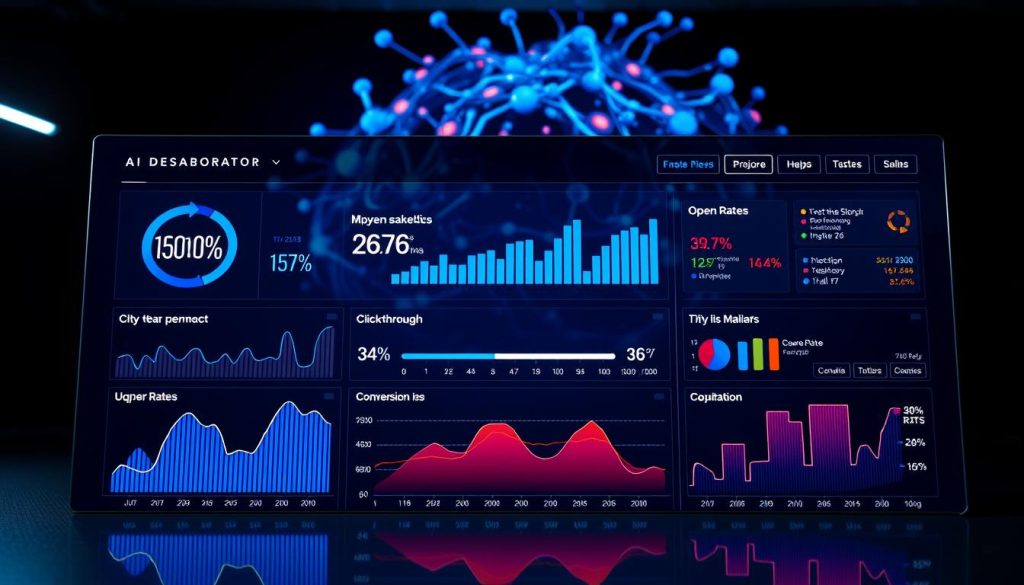
Open rates have become less reliable due to privacy features in modern email clients. They provide directional insights about subject line effectiveness. Just remember that this metric alone doesn’t guarantee campaign success.
| Metric | Industry Benchmark | What It Reveals | Action If Low |
|---|---|---|---|
| Reply Rate | 10%+ target | Message relevance and appeal | Revise value proposition and personalization |
| Conversion Rate | 2-5% typical | Overall campaign effectiveness | Strengthen call-to-action and follow-up |
| Click-Through Rate | 8-12% average | Content engagement level | Test link placement and offer clarity |
| Bounce Rate | Below 3% ideal | Email list quality | Implement better verification tools |
Small improvements in each metric can compound into significant results. The key is to continuously refine your approach based on what the data tells you.
AI Tools for Analyzing Results
AI-powered analytics platforms process campaign data far more efficiently than manual analysis. These tools identify patterns in successful versus unsuccessful emails, revealing insights that human reviewers might miss. An AI cold email generator equipped with analytics capabilities can automatically adjust strategies based on performance trends.
Predictive insights represent a major advantage of AI analytics tools. These systems analyze historical data to recommend optimal send times, subject line structures, and content approaches. They learn from thousands of campaigns to predict what will work best for your specific audience.
Automated performance reporting saves countless hours while providing deeper insights. Modern AI tools can segment results by industry, company size, job title, and dozens of other variables. This granular analysis helps you understand exactly which approaches work for different audience segments.
Machine learning algorithms detect subtle correlations between email elements and response rates. They might discover that emails sent on Tuesday mornings with specific subject line patterns generate 40% more replies. These insights become invaluable for optimizing future campaigns.
Integration capabilities allow AI analytics tools to connect with your CRM and other marketing platforms. This creates a unified view of how cold emails contribute to your overall sales pipeline. You can track a prospect from initial email contact through closed deals.
Optimizing Future Emails Based on Data
Performance metrics should directly inform your iterative improvements. When data shows that certain personalization approaches generate higher response rates, you can confidently apply those techniques to future campaigns. This evidence-based strategy eliminates guesswork from your email marketing.
Refining targeting criteria becomes possible when engagement data reveals which segments respond most favorably. You might discover that mid-level managers reply 3x more often than executives, or that companies in specific industries show stronger interest. These insights help you allocate resources more effectively.
Testing different value propositions with various segments allows for continuous optimization. An AI cold email generator can automatically create variations that emphasize different benefits, then track which messages resonate with each audience type. This systematic testing approach compounds improvements over time.
Subject line optimization never ends because audience preferences evolve. Regular A/B testing guided by performance data ensures your subject lines remain effective. AI tools can test dozens of variations simultaneously, accelerating the learning process.
Call-to-action refinement based on measurable results drives higher conversion rates. Data might reveal that asking for a 15-minute call generates more positive responses than requesting a 30-minute meeting. These small adjustments create meaningful improvements in campaign outcomes.
The continuous improvement cycle transforms cold email from a hit-or-miss tactic into a reliable business development engine. Each campaign provides lessons that make the next one more effective, creating a compounding advantage over time.
Ethical Considerations in AI-Generated Emails
Using AI for cold emails raises big ethical questions. It’s not just about following the law. How businesses use AI in emails can either build trust or hurt it, affecting their reputation.
Every cold email must meet legal standards before it reaches someone. Knowing these rules protects your business and respects your audience.
Transparency and Disclosure
The debate on whether to disclose AI in email creation is growing. Should senders reveal when AI helped write their message? There’s no clear answer yet, but transparency is key.
When AI writes emails without human check, people often feel something’s off. One marketing expert notes that trust drops when people find out emails are fully automated.
“People can tell when an email is churned out by a bot—it feels off, like an uncanny valley of communication.”
Experts say using AI ethically means humans should review and approve content. It’s not about saying “AI wrote this” in every email. It’s about making sure real people check and edit before sending.
Following laws like the CAN-SPAM Act is a good start for ethical email marketing. Every cold email must have:
- A physical business address in the footer
- A functioning unsubscribe link that’s easy to find
- Honest subject lines that aren’t misleading
- Accurate business information throughout
These rules help you stay compliant and build trust. They show that a real business is behind the message.
Potential for Miscommunication
AI-generated content comes with risks that marketers must manage. Even advanced AI can misunderstand context or tone, leading to messages that harm your brand.
Factual accuracy is a big concern. AI might make statements that sound right but are wrong. These errors can hurt your credibility and waste time.
Tone-deaf messages about sensitive topics are another risk. AI lacks emotional smarts to know when a message might offend. A phrase that seems fine to AI might upset certain groups.
AI can also create messages that don’t match your company’s real capabilities. It might promise things you can’t deliver or misrepresent your services. These mistakes can frustrate people and damage trust before you even start.
Maintaining Authenticity and Trust
Building strong business relationships needs real human effort, even with AI help. The challenge is balancing efficiency with genuine connection. Marketing teams must pay close attention to this balance.
Having humans review and edit AI-generated emails is key. A person should check every email to make sure it sounds natural, is accurate, and reflects your brand’s true voice. This step catches errors and adds a human touch that makes communication feel real.
“You can automate follow-ups, but you can’t automate sincerity.”
To make sure AI outputs match your brand’s voice and values, you need to keep working at it. Your team should train AI on the right examples and keep improving the results. Emails that sound generic defeat the purpose of personalization.
Quality is more important than quantity in cold email campaigns. Sending 10,000 bad automated emails won’t get you as far as 1,000 well-thought-out emails. People can tell when they’re getting mass-produced content.
As one expert says, keeping authenticity in an automated world takes effort:
“As more of our interactions get outsourced to algorithms, the cold email becomes a space to prove we’re not just machines.”
This view reminds us that AI should help humans, not replace them. The best results come when AI frees people to focus on strategy, personalization, and building trust—the things that really drive success.
Limitations and Challenges of AI in Email Writing
The reality of using AI for email writing shows a gap between what it promises and what it delivers. AI tools are fast and efficient but struggle with tasks that humans do easily. This is true for cold emails that need strategic thinking and emotional understanding.
Knowing these limits helps businesses decide when to use AI and when to rely on humans. The best email strategies use both AI’s strengths and its weaknesses.
Understanding Context and Nuance
AI systems find it hard to understand the subtle contextual factors that humans get right away. Industry terms often have different meanings that AI gets wrong. What’s okay in one field might not be in another, but AI often misses these differences.
AI also struggles with timing. It can’t tell if a company is going through tough times or celebrating. Humans adjust their emails based on these situations, but AI sends generic messages.
An expert noted that “there is a missing human element/certain research areas that the tools cannot find.” They said “a personalized approach is needed for focused ABM campaigns.”
AI also has trouble with tone, depending on who you’re emailing. It can’t tell when to use humor or when to be serious. This makes emails sound off-key.
Handling Sensitive Topics
AI has fundamental limitations when it comes to sensitive topics. It can’t handle public controversies or financial troubles well. AI can’t craft messages that are tactful or acknowledge tough situations.
AI also can’t make strategic decisions in competitive situations. It can’t understand why someone should switch providers. AI emails in these cases often sound wrong or too pushy.
Dealing with past negative interactions is another challenge. AI can’t rebuild trust or address past issues well. These situations need empathy and strategy that AI can’t provide.
A marketing pro said “personalized email outreach is better than using tools.” They found that getting to know domains and people better helps a lot.
| Challenge Area | AI Capability | Human Advantage | Impact on Results |
|---|---|---|---|
| Industry Context | Generic terminology application | Nuanced understanding of sector-specific language | Higher relevance and credibility with human approach |
| Timing Sensitivity | No awareness of current events | Adjusts messaging based on company circumstances | Prevents awkward or inappropriate outreach |
| Emotional Intelligence | Cannot assess sensitivity levels | Navigates delicate situations with appropriate tone | Maintains relationships during difficult periods |
| Competitive Positioning | Template-based differentiation | Strategic messaging based on market dynamics | More effective conversion of competitors’ customers |
Avoiding Generic Responses
AI’s tendency to create cookie-cutter content is a big problem. As AI email writing becomes more common, people can spot automated messages easily. These generic emails get deleted fast because they lack uniqueness.
Common signs of AI overuse include:
- Vague compliments that could apply to any company in the industry
- Surface-level personalization limited to company name and job title
- Identical structure and phrasing patterns across multiple emails
- References to publicly available information without deeper insight
- Lack of specific details that demonstrate genuine research
The ability to spot AI-generated emails is getting better. People can sense when emails are not real, even if they can’t say why. This makes AI emails less effective.
For important prospects, one expert did deep research on a CRO’s life and interests. This effort “took a lot of research” but got a response that generic emails wouldn’t.
Real personalization needs insights that AI can’t always find. Understanding a prospect’s career and challenges requires research that AI can’t do. AI can gather data but can’t make it into a compelling story.
The key is knowing when to use AI and when humans are needed. AI is okay for routine emails, but for important ones, personal touch is essential. Smart businesses use AI wisely, not for everything.
The Future of AI in Cold Email Strategies
The future of outreach will blend tech innovation with real human connection. As companies explore cold email tools, the approach is getting smarter and more ethical. The next few years will bring big changes in how businesses reach out to customers.
Today’s platforms vary in what they can do. Some offer advanced research and data analysis. Others focus on making the email creation process easier. This shows the market is finding the right balance between power and simplicity.
Trends to Watch in 2024
Several key changes are shaping how businesses use automated outreach. AI technology is getting better, opening up new ways to connect with people.
Enhanced research capabilities are leading the way. New systems can combine insights from many sources. This creates detailed profiles of prospects, making emails more relevant and timely.
Personalization is getting more advanced. AI can now write emails that show it really understands the prospect’s challenges and industry. This makes emails feel more personal and less automated.
Technical setup is becoming more important. Email authentication protocols like SPF, DKIM, and DMARC are key. They protect the sender’s reputation and ensure emails get delivered.
The warm-up process is also critical. It involves slowly increasing the number of emails sent. This helps build trust with email providers and avoids spam filters.
- Deeper AI research and data synthesis capabilities
- Seamless integration between writing tools and enrichment platforms
- Advanced voice and tone matching for brand consistency
- Built-in compliance features for ethical AI use
- Improved deliverability optimization technology
CRM system integration is becoming more valuable. It helps keep track of all interactions and prevents duplicate emails. This approach supports better communication planning.
Integration of AI with Human Elements
The best approach combines AI’s efficiency with human insight. Teams are finding that using AI in workflows leads to better results than full automation.
There’s a growing belief in working together with AI. It handles the initial research and drafting. Humans then add the strategic direction and personal touch that makes emails authentic.
This division of work creates a strong partnership. Machines are great at handling large data and finding patterns. Humans bring the emotional intelligence and creativity that AI lacks.
The idea of “AI-assisted” emails is gaining traction. It highlights the role of humans in the process. People appreciate knowing that real people are behind the emails they receive.
Effective hybrid approaches follow clear steps. Research teams use tools to gather data and create drafts. Marketing teams then refine these drafts with brand-specific insights and personal touches.
Experts stress the need for both technical skills and creativity. Building sender credibility through authentication and warm-up is as important as writing compelling emails.
Predictions for Market Adaptation
The cold email landscape will keep evolving as tech and customer expectations change. Several trends are likely to shape the industry’s future.
AI detection capabilities will get better among recipients and providers. This will lead to more advanced AI that mimics human communication. An ongoing battle between detection and generation seems likely.
AI use disclosure might become standard. As transparency grows, guidelines for acknowledging AI help build trust while keeping efficiency.
Market consolidation is expected as top platforms merge with other technologies. Unified solutions will simplify workflows. Businesses will enjoy seamless ecosystems instead of managing multiple tools.
Best practices will evolve as capabilities grow and norms change. What works today might seem old-fashioned in the future. Staying updated on new standards is key to staying competitive.
Personalization will expand beyond current levels. Future systems might use real-time data like company news and social media activity. This could make outreach even more relevant and timely.
Compliance features will become more common as AI use regulations develop. Automated checks for inclusive language and tone will become standard. These features protect both senders and recipients.
Companies that succeed will innovate while keeping human connection real. Technology is a powerful tool, but genuine relationships are the heart of successful communication.
Success Stories: Brands Using AI for Cold Emails
Many industries have seen success with personalized AI email campaigns. They found that mixing tech with human insight is key. Here are some real examples of what works.

Real-World Campaign Examples
A marketing consultant helped a SaaS company with a big win. They researched a key prospect, finding his love for football.
The email started with: “Your team lost 2-1 at the weekend, but I am here to cheer you up by giving your SDR team 25 qualified calls and save you cash from your current tech.” This personal touch won them a client needing 15+ seats.
This campaign worked because it showed real interest in the prospect. It went beyond generic AI content to connect on a personal level.
B2B service companies have seen big improvements with AI. One tech firm’s email response rate jumped from 8% to 23%. They used AI to analyze prospect behavior while keeping human oversight for personal touches.
E-commerce businesses have used AI for better segmentation. A mid-sized online retailer sorted thousands of B2B clients by buying habits. They then tailored their messages, seeing a 340% increase in leads in six months.
Professional services firms have also seen success with AI. A consulting firm cut their email prep time by 60% and boosted engagement. They used AI for research and structure, then added human insights.
Insights from Marketing Experts
A Freelance SEO Outreach Specialist found that personal emails beat AI tools. They said “personalized email outreach is way better than using tools.”
The specialist noted that personal outreach helps “understand the domains better, analyze them better, and understand the people working there better.” This hands-on approach captured insights AI couldn’t.
Sales development reps across industries agree. One SDR at a B2B software company said AI is great for finding prospects and gathering data. But crafting the message needs human judgment to address specific pain points.
AI gives us the foundation, but the relationship-building happens through genuine human connection and understanding.
Marketing directors stress the need for balance. A director at a financial services firm uses AI for tasks like scheduling follow-ups. This frees up time for personalizing messages on high-value accounts.
Business development pros value AI for consistency. One noted that AI ensures timely communication, while human oversight keeps messages relevant and high-quality.
These testimonials show a common theme. People appreciate AI for efficiency and data analysis. But they all agree that human insight is essential for real engagement and building relationships.
Key Takeaways from Implementation
Successful AI-driven cold email campaigns share common traits. They balance tech with human expertise.
Investment in quality research is key. Companies that research prospects well before using AI see better results than those relying on automation alone.
The best strategies include:
- Using AI for data collection and initial segmentation while preserving human judgment for final message crafting
- Implementing continuous testing protocols to refine both AI parameters and human oversight processes
- Maintaining strict quality control standards that prevent generic or inappropriate messages from being sent
- Investing in training for team members to effectively collaborate with AI tools
- Establishing clear guidelines about when to use automation versus when to craft fully customized messages
Companies learn that not all prospects warrant the same approach. High-value targets need deep personalization, even with AI help. Lower-value prospects can get AI-generated content with little human editing.
Avoid common pitfalls like over-relying on automation without checks, not updating AI training data, and ignoring performance metrics. Companies that avoid these mistakes outperform their competitors.
Success also comes from being transparent about AI use. Teams that openly discuss AI while highlighting human oversight build stronger relationships. This honesty builds trust from the start.
AI also saves time. Companies report cutting email prep time by 40-70% while keeping or improving response rates. This efficiency lets them reach more prospects without losing personal touch.
The evidence is clear: personalized AI email campaigns succeed when humans guide the tech. Companies that see AI as a tool for improvement, not a replacement, get the best results in cold email outreach.
Conclusion: Embracing AI for Effective Cold Emails
AI can help with cold emails, but it’s not a complete solution. It’s great for making first drafts and analyzing results. Tools like HubSpot AI and Anyword make it easier.
But, the real magic happens when humans and AI work together. This mix of technology and creativity is key to success.
The Power of Collaboration
AI is good at doing the boring stuff like research and grammar checks. But, humans bring the charm and personal touch that makes emails stand out. As one expert says, AI can follow up, but only humans can be sincere.
This way of working is the future of email marketing. It’s all about finding the right balance between AI and human touch.
Next Steps for Your Business
Begin by trying out AI tools that fit your needs. Decide when to use AI and when to go for a fully human touch. Also, invest in good data and research.
Don’t just focus on whether AI can write emails. Think about how you can use it to show your genuine interest. The best emails come from combining AI ideas with personal touches that build real connections.